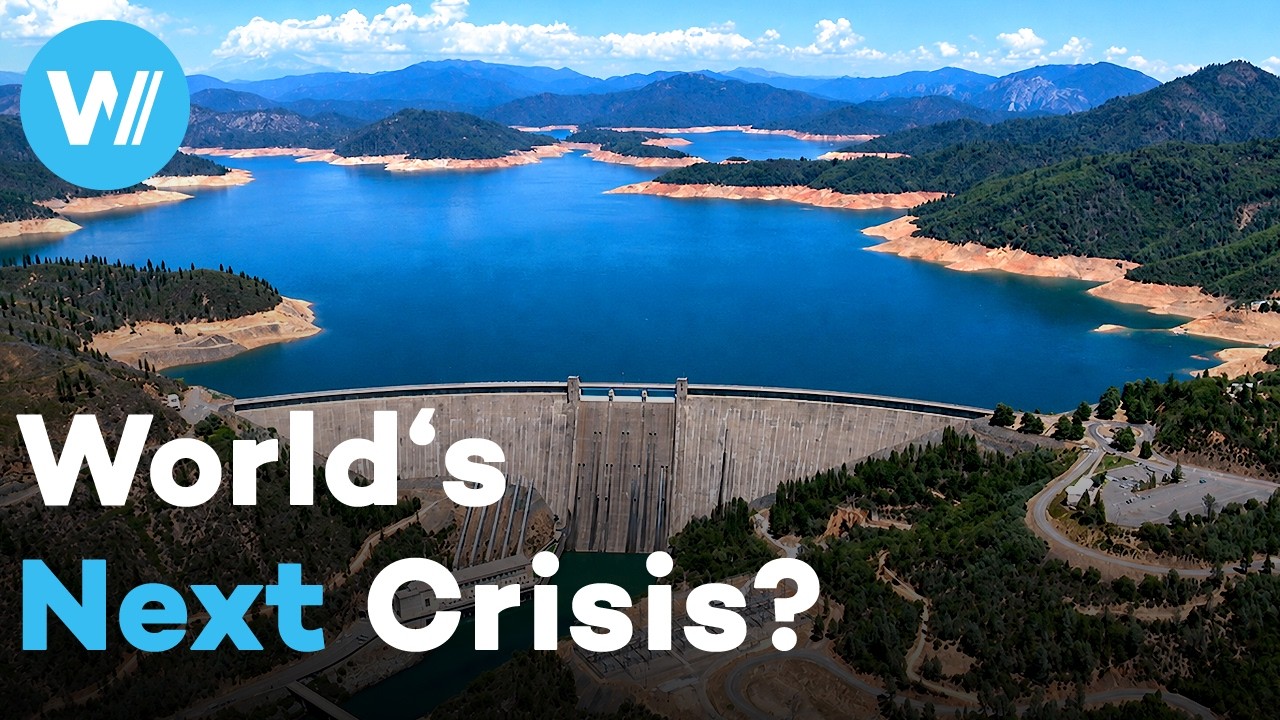
Water Scarcity: How Can We Prevent a Global Crisis? | Shapers of Tomorrow (7/8)
Keywords
Summary
155 words
Critical Evaluation
Value of the Information & Strength of the Argument
The video offers a broad overview of water-related innovations, combining expert interviews with field demonstrations. Its value lies in raising awareness about water waste and showcasing tangible technologies, from agricultural hydrogels to portable filters. However, the argumentation is sometimes one-sided: products like Polyter and Shower Loop are presented in a promotional light, with limited critical examination of their scalability, cost-effectiveness, or long-term environmental impact. While experts are brought in to validate certain claims, the overall evidence base is anecdotal rather than systematic.
Scientific Rigor, Source Quality, Title Accuracy
The documentary does not explicitly cite academic sources, but it includes interviews with researchers and professionals, such as agronomist Mark Miguel and water quality specialists. Visual demonstrations and case studies (e.g., California drought) lend credibility. The title accurately reflects the content. However, no independent verification is provided for key performance claims, and some segments rely on inventors’ self-reports. The adéquation between title and content is strong.
163 words
Title / Content Match
The title accurately reflects the content, which addresses water scarcity through technological and behavioral solutions.
Quality & Reliability
6/10
The documentary presents a variety of water-saving technologies and expert interviews, but relies heavily on promotional narratives and lacks independent verification of key performance claims.
Key Moments
Markers derived by PSI from the transcript: the creator did not define chapters.
- Introduction of Hydroretainer, a superabsorbent polymer for agricultural water retention.
- Presentation of Polyter, a plant biofertilizer that retains water and nutrients.
- Overview of the California drought and its impact on farmers.
- Showcase of WaterFX, a solar-powered desalination pilot project.
- Water-saving home inspections in San Francisco.
- Demonstration of the Shower Loop, a DIY shower water recycling system.
- Discussion on micropollutants and use of fluorescent fish larvae for detection.
- Visit to a wastewater treatment plant using ozonation.
- Introduction of Warka Water tower for atmospheric water harvesting.
- LifeSaver bottle, a portable water filtration device.
Cited Sources
- wocomoDOCS YouTube Channel — Official channel of the documentary series.
- wocomoHUMANITY — Sister channel for humanities documentaries.
- wocomoWILDLIFE — Sister channel for wildlife documentaries.
- wocomoHISTORY — Sister channel for history documentaries.
- wocomoTRAVEL — Sister channel for travel documentaries.
- wocomoCOOK — Sister channel for cooking documentaries.
Contribution & Novelties
This documentary provides an accessible overview of multiple cutting-edge water-saving technologies, from polymer-based soil enhancements to solar desalination and portable filters. Its original contribution is to highlight under-the-radar innovations and human stories, but it lacks deep scientific analysis and critical perspective. The segment on micropollutants and ozonation offers a valuable introduction to water quality challenges.
Pour aller plus loin :
- Superabsorbent polymer — Provides background on the chemistry and use of polymers like potassium polyacrylate in agriculture.
- Desalination — Explains the process and challenges of turning saltwater into freshwater.
- Ozonation — Details the use of ozone in wastewater treatment to remove micropollutants.
- Endocrine disruptor — Relevant to the discussion on micropollutants affecting fish and potentially humans.
- Atmospheric water generator — Relates to the Warka Tower concept.
- Point-of-use water treatment — Context for the LifeSaver bottle.
135 words
Radar Profile
The radar profile shows high information quantity but moderate technical depth and reliability, indicating a broad but not deeply rigorous documentary.