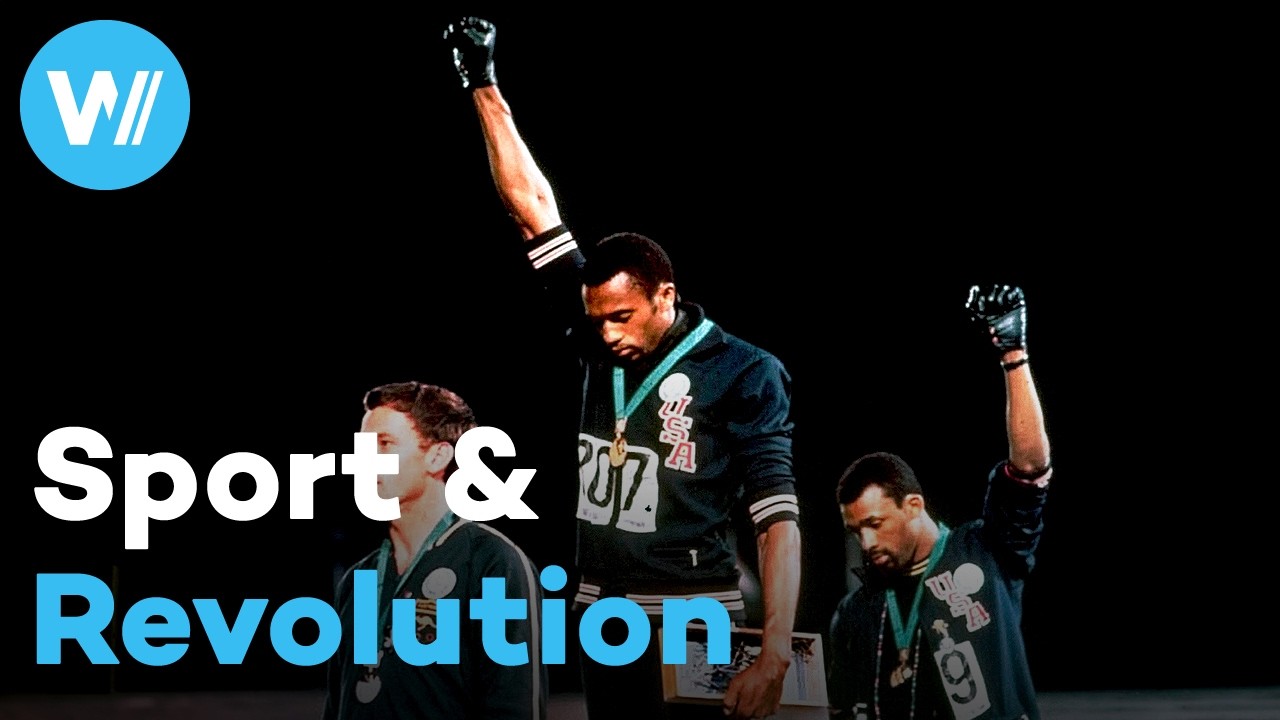
1968 Olympics in Mexico: When Sport and Politics Collided (Documentary, 2017)
Keywords
Summary
138 words
Critical Evaluation
Value of the Information & Strength of the Argument
The documentary excels in providing a rich contextual narrative, connecting sporting events to broader socio-political currents. It effectively argues that the 1968 Olympics were a turning point in the relationship between sports and politics, using firsthand testimonies and archival footage. The value lies in its synthesis of multiple perspectives: athletes, activists, and journalists. The argumentation is compelling, though occasionally leans on emotional recollections rather than rigorous analysis. The inclusion of lesser-known stories, such as Peter Norman’s sacrifice, strengthens the documentary’s depth and credibility.
Scientific Rigor, Source Quality, Title Accuracy
The film demonstrates high production standards, with sources primarily from interviews and original broadcast footage. While no formal bibliography is provided, the reliance on eyewitness accounts and contemporaneous records lends authenticity. The title is well-aligned with the content, as the film successfully intertwines sports and politics. However, the documentary lacks explicit citations for some claims, and the turbulent context of the Tlatelolco massacre is presented with a clear editorial stance. Overall, the rigor is commendable for a documentary, though academic scrutiny might demand more transparent sourcing.
184 words
Title / Content Match
The title accurately captures the film's dual focus on the 1968 Mexico City Olympics and the confluence of sport and political activism, matching the content precisely.
Quality & Reliability
8/10
The documentary is produced by a reputable channel and features interviews with athletes, historians, and eyewitnesses, along with archival footage. Events are presented with a balanced perspective, though some interpretations remain subjective. Overall, the reliability is high, but not flawless due to the absence of explicit scholarly citations.
Key Moments
Markers derived by PSI from the transcript: the creator did not define chapters.
- Introduction to the 1968 Olympics and the atmosphere of revolution.
- Student protests and the call 'No to the Olympics!' in Mexico City.
- The Black Power protest by Tommie Smith and John Carlos on the podium.
- The Olympic Project for Human Rights and plans for a boycott.
- Věra Čáslavská's quiet protest and Peter Norman's solidarity act.
- Discussion of the 24 world records set during the games.
- Introduction of the Tartan track and its impact on performance.
- Dick Fosbury and the revolutionary 'Flop' technique in high jump.
- Bob Beamon's incredible long jump and its significance.
- Omega's electronic timekeeping and the end of manual timing.
Cited Sources
- wocomoCOOK — Related channel in the wocomo network, not directly cited but listed in the description.
- wocomoHISTORY — Related channel providing historical documentaries.
- wocomoHUMANITY — Related channel focusing on human stories and society.
- wocomoTRAVEL — Related travel documentary channel.
- wocomoWILDLIFE — Related wildlife documentary channel.
Contribution & Novelties
The documentary provides a vivid, multi-faceted account of the 1968 Olympics, emphasizing the intersection of sport and politics. It brings together rare archival footage and contemporary interviews, offering insights into how the games became a flashpoint for social change. The film’s exploration of technological innovations, such as the Tartan track and electronic timing, adds a unique perspective on how the games evolved.
Pour aller plus loin :
- 1968 Olympics — Overview of the events and key facts.
- Tlatelolco massacre — The tragic event preceding the games, crucial to understanding the political context.
- Fosbury Flop — The revolutionary high jump technique introduced by Dick Fosbury.
- Olympic Project for Human Rights — The organization behind the boycott movement and the protest.
119 words
Radar Profile
The profile shows a strong performance in quantity of information and reliability, with slightly lower scores in technical level. This suggests a comprehensive and trustworthy documentary that is accessible to a broad audience without deep technical jargon.