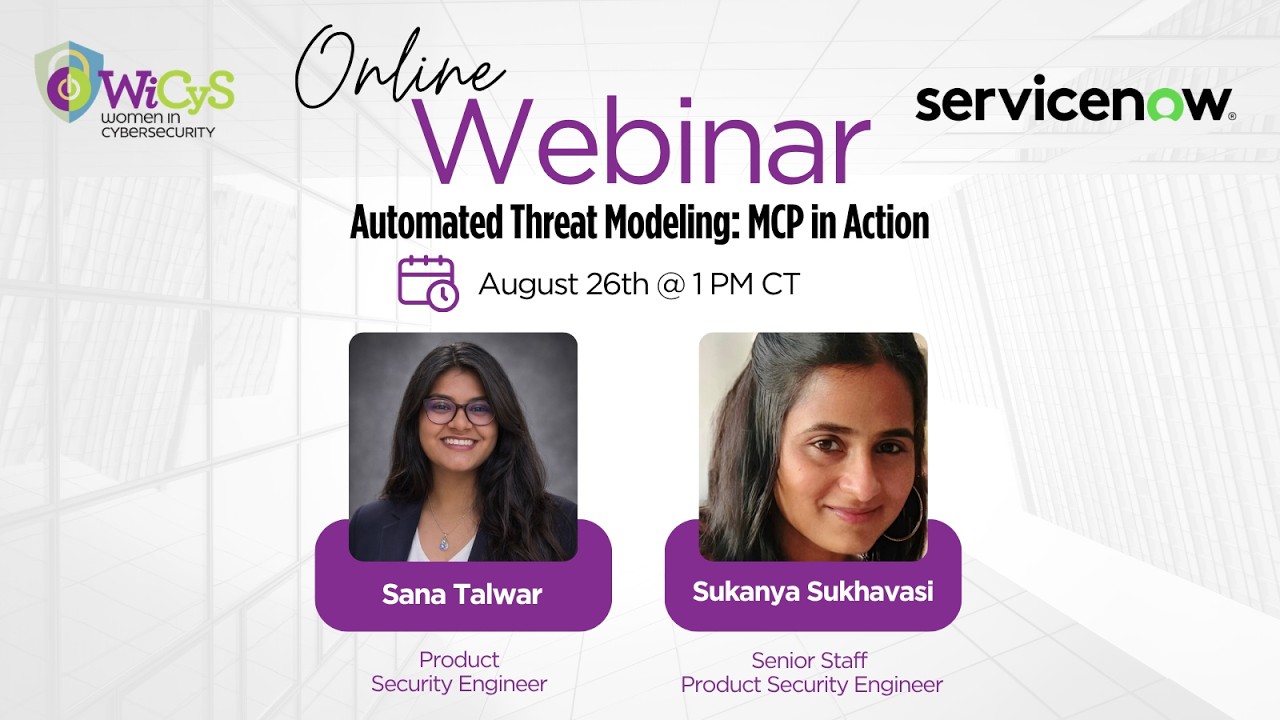
Automated Threat Modeling: MCP in Action
Keywords
Summary
217 words
Critical Evaluation
Value of the Information & Strength of the Argument
The video provides valuable insights into the practical application of MCP for security automation. The argumentation is solid: the speakers clearly identify the problems with manual threat modeling, explain the limitations of traditional frameworks for agentic systems, and logically introduce MCP as a solution. The live demo reinforces the claims by showing a concrete implementation. The discussion of threat modeling agentic systems, including prompt injection and agent-specific attack surfaces, adds depth and contemporary relevance. The reasoning is well-structured and grounded in recognized industry concepts.
Scientific Rigor, Source Quality, Title Accuracy
The presentation demonstrates scientific rigor by referencing established frameworks (STRIDE, Maestro) and naming key thought leaders like Adam Shostack. However, no specific publications or external sources are cited in the description or detailed during the talk, which limits traceability. The title accurately matches the content, and the demo provides practical evidence. The webinar is essentially an expert opinion/tutorial based on the speakers’ professional experience, with no systematic review of literature or independent verification. The lack of formal citations is a minor weakness, but the reliance on recognized methodologies and the live demonstration bolster credibility.
193 words
Title / Content Match
The title accurately reflects the content: the webinar explains how Model Context Protocol (MCP) can be used to automate threat modeling, including a live demo.
Quality & Reliability
8/10
The speakers are security professionals from ServiceNow's product security team, and the content is based on established frameworks (STRIDE, Maestro) and a live demonstration. However, no external sources are explicitly cited in the description or during the presentation beyond naming these frameworks, which limits verifiability.
Key Moments
Markers derived by PSI from the transcript: the creator did not define chapters.
- WiCyS introduction and housekeeping
- Introduction to threat modeling and Adam Shostack's four questions
- Pain points in manual threat modeling: context fragmentation, tool switching, and coverage gaps
- STRIDE framework explained and its limitations for agentic systems
- Maestro framework by Cloud Security Alliance for agentic threat modeling
- Overview of Model Context Protocol (MCP) architecture and benefits
- Live demo of automated threat modeling using MCP
- Conclusion and Q&A session
Cited Sources
- STRIDE model (Microsoft) — Mentioned as a traditional threat modeling framework originating from Microsoft in 1999
- Model Context Protocol (MCP) official documentation — The protocol discussed as the foundation for agent integration and standardization
- Maestro framework by Cloud Security Alliance — Referenced as a framework providing layers for threat modeling agentic systems
- Adam Shostack's four questions — Presented as the foundational framework for threat modeling
Contribution & Novelties
The video contributes an applied perspective on automating threat modeling with MCP, bridging the gap between theoretical frameworks and practical implementation. It highlights the unique challenges of threat modeling agentic systems, such as prompt injection and runtime decision-making, and shows how MCP can address these by enabling agents to access context and tools in a standardized way. The live demo provides a concrete example of the approach.
Pour aller plus loin :
- Model Context Protocol specification — Official documentation and specification for the protocol used in the demo.
- STRIDE model (Wikipedia) — Overview of the classic threat categorization framework mentioned in the video.
- Threat Modeling Manifesto — Community-driven principles for threat modeling, complementing the four questions approach.
- Prompt injection — A key attack vector for agentic systems discussed as a major threat layer.
- Cloud Security Alliance Maestro — General page for CSA; the specific Maestro artifact may be found in their research publications.
153 words
Radar Profile
The radar profile shows high scores in information quantity and quality, reflecting the detailed and structured presentation. The technical level is moderately high, suitable for a security professional audience, while reliability is strong due to the use of recognized frameworks and a practical demo. Overall, the content is well-rounded and credible for its targeted audience.