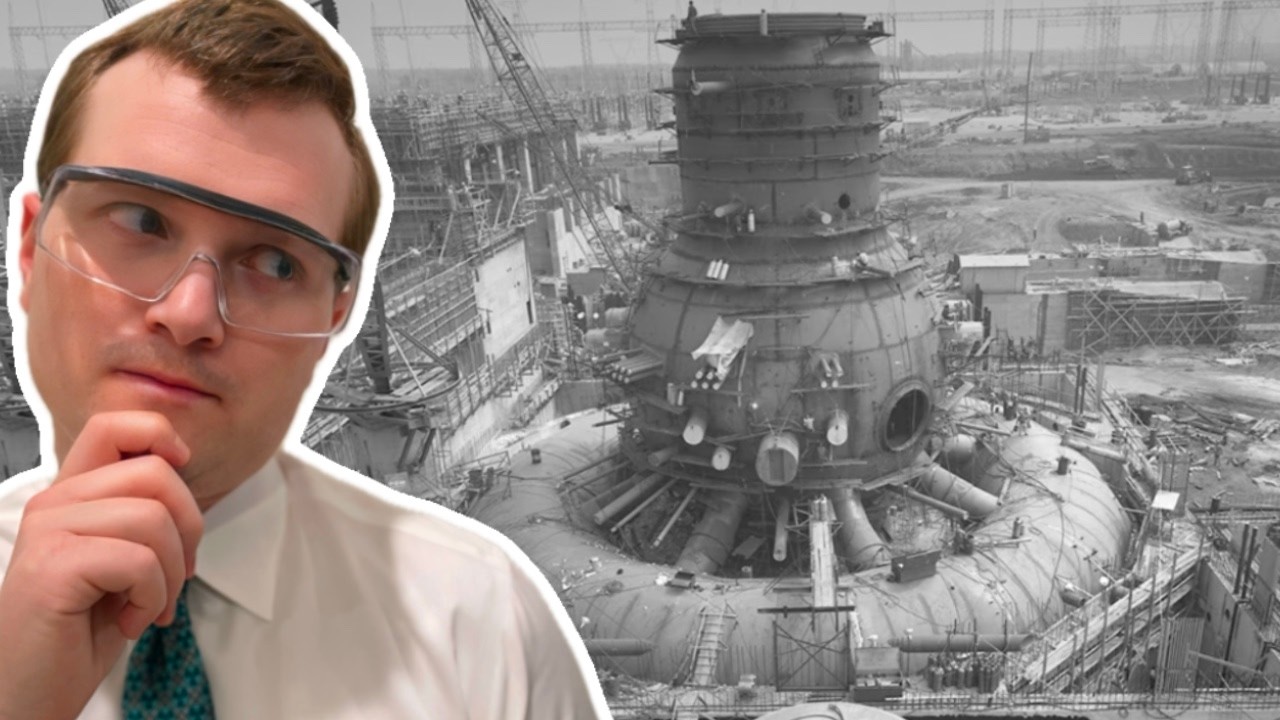
Inside a Nuclear Reactor Containment Building - Nuclear Engineer Reacts to SmarterEveryDay
Keywords
Summary
113 words
Critical Evaluation
Value of the Information & Strength of the Argument
The video delivers high-value information by leveraging the engineer’s direct experience in nuclear plant operations. It clarifies technical details that are often misunderstood, such as the distinction between design pressure and operating pressure, and the role of the suppression pool. The argumentation is solid, as every claim is tied to fundamental safety principles like defense in depth and conservative decision-making. The engineer explains the rationale behind system designs and emphasizes why single failures must not compromise safety. His points are well-structured and supported by references to reactor design and regulatory philosophy, making the content reliable and convincing.
Scientific Rigor, Source Quality, Title Accuracy
The video acknowledges and builds upon the original SmarterEveryDay video, providing a clear source for the underlying content. The engineer’s expertise adds credibility, and his explanations are consistent with recognized nuclear safety literature. The title precisely reflects the content, which is a reaction to a known video with additional expert commentary. No external sources are cited beyond the original video, but the speaker’s professional background reinforces the reliability. The title-to-content alignment is strong, as the entire video focuses on reactor containment and related safety systems.
197 words
Title / Content Match
The title accurately describes the content as a reaction to SmarterEveryDay's video on reactor containment, with the engineer providing in-depth commentary.
Quality & Reliability
8/10
The video features a nuclear engineer providing detailed and accurate explanations, correcting misconceptions, and inserting technical clarifications. The content is well-reasoned and aligns with standard nuclear safety principles.
Key Moments
Markers derived by PSI from the transcript: the creator did not define chapters.
- Discussion on scram solenoid pilot valves and automatic rod insertion upon loss of air or power.
- Explanation of the five levels of containment, starting with the fuel pellet as the first barrier.
- Detailed look at the cladding (zircaloy) as the second barrier, including fuel swelling and pellet-cladding interaction.
- Description of the reactor pressure vessel design pressure and safety valves, with a comparison to PWR vs BWR operating pressures.
- Explanation of the primary containment, including its pressure capacity, inerting with nitrogen, and the suppression pool's role.
- Containment isolation valves and their redundancy (AC/DC), fail-closed design, and the importance of maintaining containment integrity.
Cited Sources
- SmarterEveryDay - Inside a Nuclear Reactor — Original video that the reaction is based on
Contribution & Novelties
The video’s original contribution is the expert layer it adds to an existing presentation, providing operational insights and correcting technical details. It clarifies the physics and engineering behind containment barriers, the rationale for conservative setpoints, and the probabilistic risk assessment framework. The engineer’s real-world experience brings a practical perspective that complements the original content.
Pour aller plus loin :
- Defense in depth (nuclear engineering) — Explains the layered safety philosophy discussed throughout the video.
- Zircaloy — Details on the cladding material’s properties and use in nuclear fuel.
- Tenth-value layer — Radiation shielding concept mentioned for concrete’s effectiveness.
- Corium (nuclear reactor) — Further reading on the molten mixture formed in severe accidents.
111 words
Radar Profile
The radar profile shows high scores across information quantity, quality, technical level, and reliability, indicating a well-balanced and authoritative technical analysis. The video is dense yet accurate, with strong educational value.