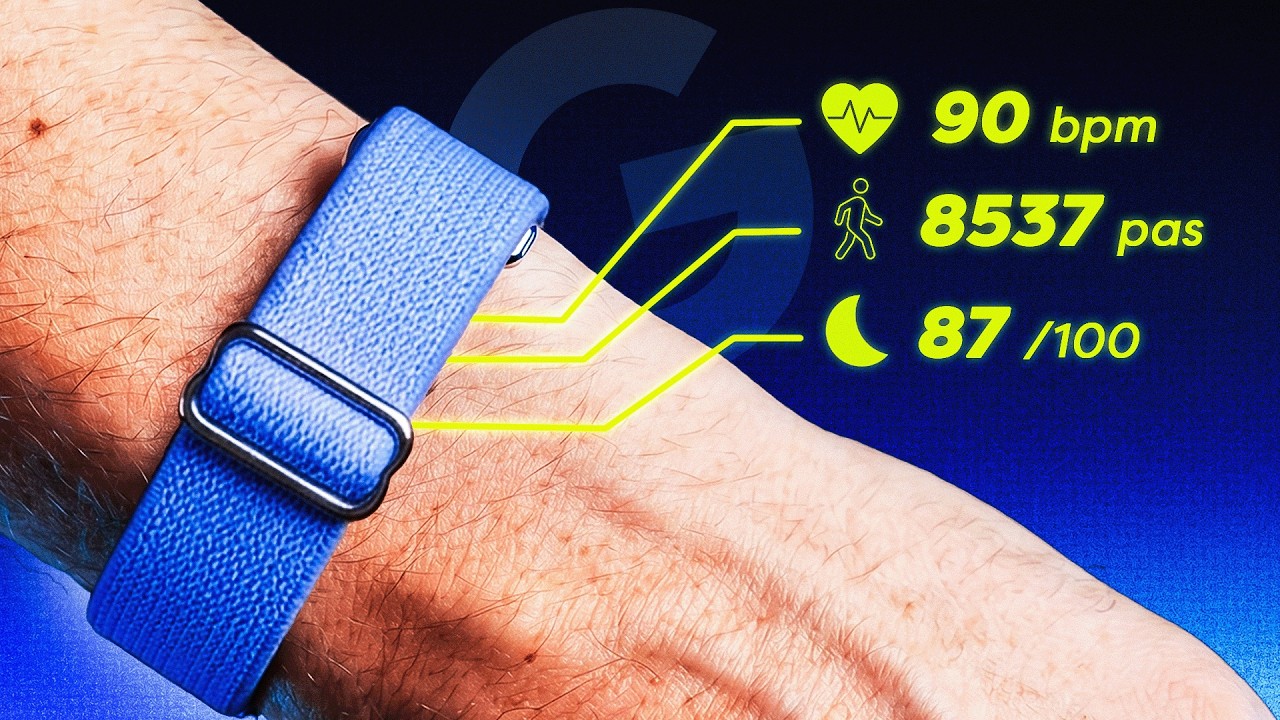
J’ai testé le GOOGLE FITBIT AIR : le bracelet qui cache un vrai COUP de GÉNIE !
I tested the GOOGLE FITBIT AIR: the bracelet that hides a real stroke of GENIUS!
Keywords
Summary
141 words
Critical Evaluation
Value of the Information & Strength of the Argument
The video’s value lies in its practical, hands-on testing, particularly the heart rate comparison against a reference chest strap during varied activities. The presenter provides clear explanations and demonstrates real-world usage over a week. The argumentation is sound, but it occasionally relies on subjective impressions rather than replicable protocols. The discussion of subscription and data privacy adds depth. The claim that the band is a ‘stroke of genius’ is somewhat overstated, as the innovation is mostly in the app ecosystem rather than the hardware itself.
Scientific Rigor, Source Quality, Title Accuracy
The video demonstrates scientific rigour through the use of a chest strap for validation and by referencing competitor products. The sources cited are the team’s own review articles and buying guides, which are from the same publication, thus not independent. The title accurately reflects the content, though it uses a hyperbolic phrase. No external studies or independent verification are mentioned, limiting the scientific authority. The presented data appears plausible but is not backed by peer-reviewed research.
176 words
Title / Content Match
The title accurately reflects the content, as the video tests the Google Fitbit Air and highlights its innovative features, though it uses a sensational tone.
Quality & Reliability
8/10
The video provides a hands-on test with comparative measurements against a reference chest strap, and discusses subscription and data privacy. However, it relies on the presenter's personal experience and lacks long-term independent verification.
Chapters
Cited Sources
- Google Fitbit Air - Full test by Frandroid — Written review with more details on the product and testing.
- Google Fitbit Air - Best price — Product page for purchasing options and technical specs.
- Best connected bracelets guide — Comparison guide for fitness trackers.
External References
Contribution & Novelties
The video’s original contribution is the specific test of the Fitbit Air’s heart rate accuracy during high-intensity intervals and the overview of the new Google Health app ecosystem. It clarifies the role of the device within Google’s health platform, emphasizing the app as the main revolutionary element.
Pour aller plus loin :
- Activity tracker — General background on wearable activity monitoring.
- Heart rate monitor — Explanation of HR measurement technologies, including optical and chest strap.
- Google Health Connect — Details on the interoperability platform for health data.
87 words
Radar Profile
The profile shows high scores in information quantity and quality, reflecting comprehensive coverage and reliable testing. The technical depth is moderate, suitable for general audiences, while the global reliability is high due to empirical measurements. The low level of critical distortion and balanced presentation support the overall positive rating.
💬 équilibré — Sur les 30 commentaires analysés, les avis sont mitigés mais globalement très positifs sur le confort et le design, avec des réserves sur la fiabilité des données de sommeil et l'obligation d'abonnement pour l'IA.