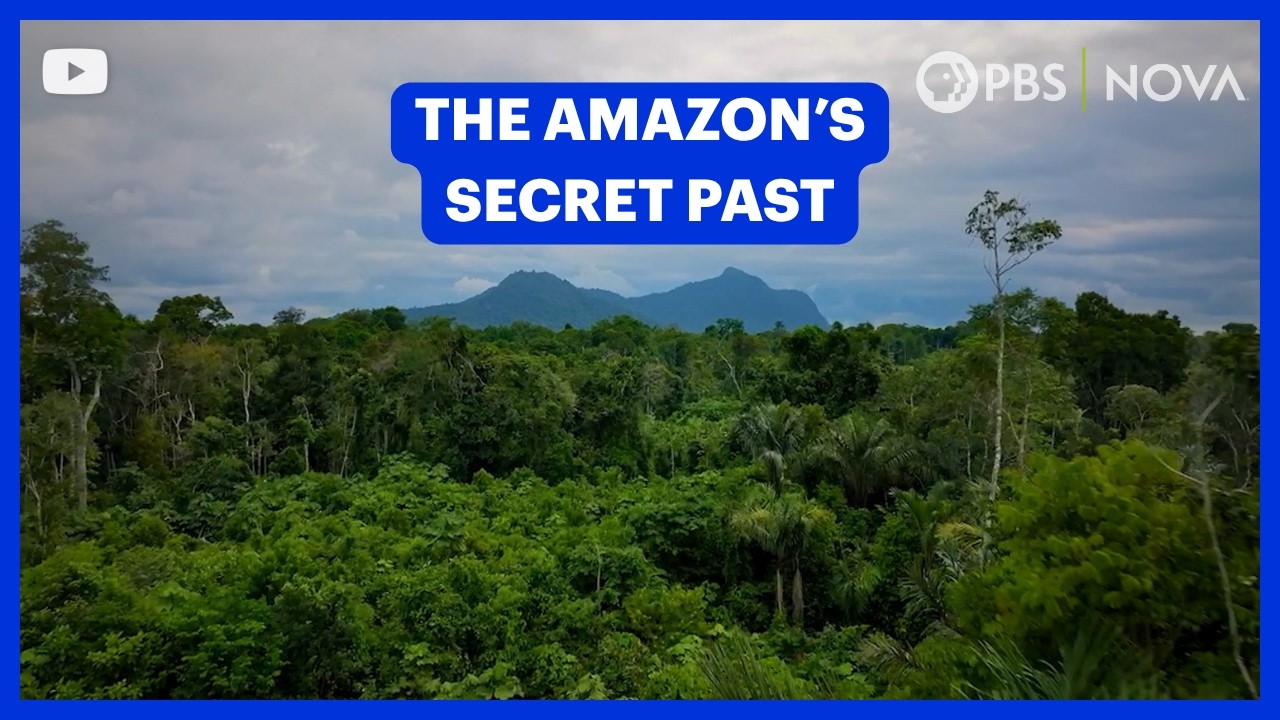
What Lies Hidden Beneath the Amazon Rainforest? | NOVA | PBS
Keywords
Summary
142 words
Critical Evaluation
Value of the Information & Strength of the Argument
The video provides valuable information by synthesizing multiple lines of evidence: rock art chronology, plant domestication records, soil analysis of terra preta, and ethnographic insights from indigenous communities. The argumentation is solid and well-structured, effectively countering the outdated ‘wilderness’ myth by presenting concrete archaeological findings and expert testimony. The reasoning moves from specific observations (paintings, soil layers) to broader conclusions about sustainable human-environment interaction, demonstrating a coherent scientific narrative
Scientific Rigor, Source Quality, Title Accuracy
The scientific rigor is high given the involvement of established researchers and the use of radiocarbon dating and stratigraphic analysis, though specific peer-reviewed publications are not cited in the video. The sources referenced are primarily the experts themselves, lending authority. The title accurately reflects the content, which indeed explores hidden historical layers beneath the rainforest. No significant discrepancy exists between the title and the material presented.
150 words
Title / Content Match
The title is appropriate: the video explores hidden archaeological and historical aspects of the Amazon, revealing human influence and ancient civilizations beneath the modern rainforest.
Quality & Reliability
8/10
Content from PBS NOVA, a well-known science broadcaster, featuring interviews with professional archaeologists and presenting evidence from ongoing research. The information is consistent with current scholarly understanding of Amazonian prehistory, though specific citations are not provided directly in the video.
Key Moments
Markers derived by PSI from the transcript: the creator did not define chapters.
- Introduction to the Guayabero River and the hypothesis that early humans used this canyon to enter the Amazon.
- Description of the La Lindosa rock paintings, including depictions of animals now extinct, and discussion of their age (12,600 years ago).
- Evidence of early agriculture in the Amazon, with emphasis on root crops like manioc and independent domestication centers.
- Explanation of terra preta: its creation through composting and its role in supporting intensive agriculture and large settlements.
- Discussion of forest management and the concept of a semi-domesticated landscape, concluding with the impact of human actions on the Amazon.
Cited Sources
- NOVA Newsletter — Sign-up link for NOVA updates; the only direct link provided in the video description beyond promotional content.
Contribution & Novelties
The video’s main contribution is presenting a compelling synthesis of recent archaeological evidence that challenges the pristine wilderness narrative, detailing how ancient Amazonians actively managed their environment through soil enhancement and selective forestry. It introduces viewers to specific sites like La Lindosa and the concept of terra preta, making complex research accessible.
Pour aller plus loin :
- Terra preta — Wikipedia article explaining the dark, fertile soil created by ancient human activities.
- Serranía de la Lindosa — Wikipedia entry on the Colombian site with extensive rock art.
- Cassava (manioc) — Overview of the staple root crop domesticated in Amazonia.
99 words
Radar Profile
The radar profile shows high scores in information quality and overall reliability, reflecting the trusted source and expert interviews. Quantity of information is moderate, typical for an 11-minute documentary, and technical level is accessible to a general audience while retaining scientific depth.