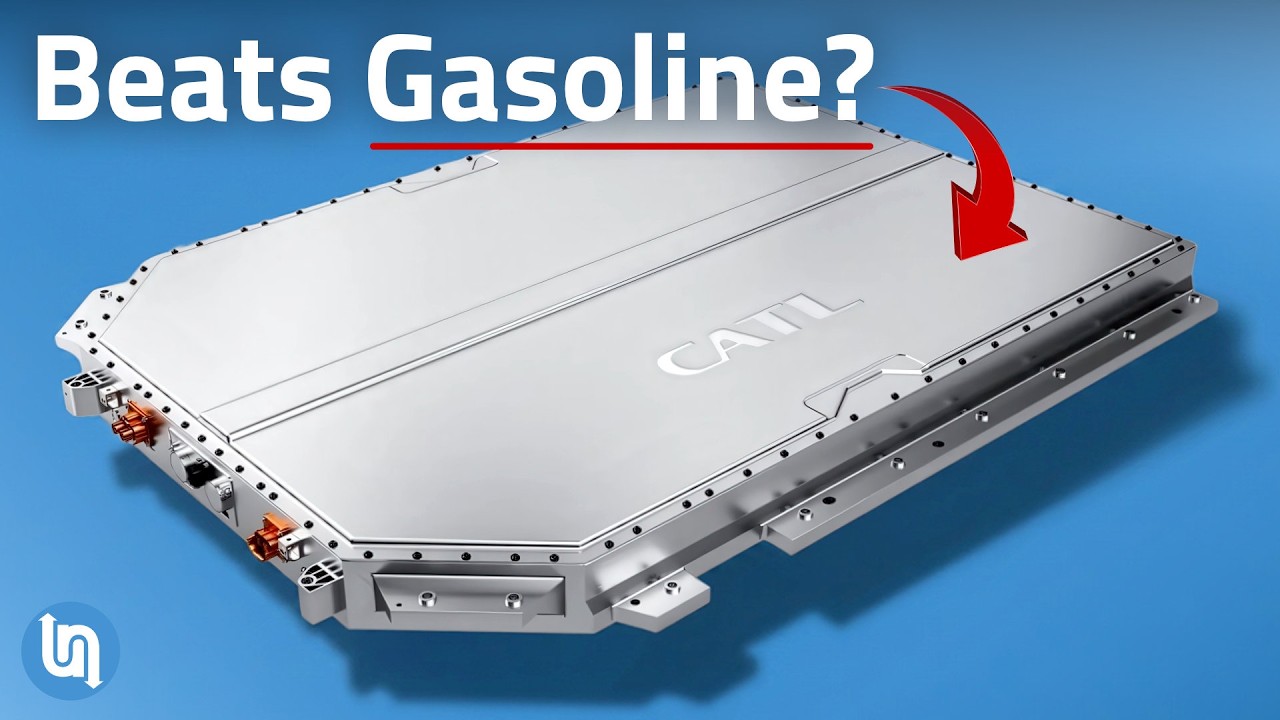
Why The Biggest Battery Company Is Betting On Lithium Air
Title history
- Why The Biggest Battery Company Is Betting On Lithium Air — observed on 20261101-0052 UTC (YouTube)
Keywords
Summary
177 words
Critical Evaluation
Value of the Information & Strength of the Argument
The video’s value lies in its clear, well-structured explanation of a complex battery chemistry, breaking down the reaction mechanisms and the difference between theoretical and practical energy densities. The argumentation is solid: the creator supports claims with specific numbers, citations to the script page with references, and expert quotes from Professor Asadi and CEO Benjamin Drake. The ‘hype check’ is particularly valuable, critically examining the 12,000 Wh/kg claim by explaining what it actually measures, and comparing it to gasoline with a reasoned back-of-envelope calculation. The video also contextualizes the technology’s readiness, acknowledging both its progress and the remaining hurdles, providing a balanced and credible assessment.
Scientific Rigor, Source Quality, Title Accuracy
The video demonstrates strong scientific rigor by referencing specific research from Argonne National Laboratory and the Illinois Institute of Technology, including funding from the DOE and published results. The description includes a link to the script and citations, offering transparency. The title accurately reflects the content without overhyping, and the president’s discussion of the accuracy of the claims is careful. The sponsor segment (IEEE Spectrum) is clearly disclosed and does not affect the analysis. The video’s handling of the hype-check, distinguishing active-material energy density from pack-level, shows a high standard of scientific literacy and source quality.
216 words
Title / Content Match
The title accurately captures the video's focus on CATL's bet on lithium-air batteries and the critical examination of the associated claims, matching the content precisely.
Quality & Reliability
8/10
The video provides a thorough explanation of lithium-air battery technology, distinguishes hype from realistic projections, and references recent research, funding, and expert statements. The creator acknowledges limitations and includes a hype check, offering a balanced and well-researched perspective.
Chapters
Cited Sources
- Video script and citations — The official script and reference list for the video, containing citations to the scientific publications and news sources mentioned.
- IEEE Spectrum — Mentioned as a sponsor and a reliable source for engineering journalism, with a subscription link provided.
External References
Contribution & Novelties
The video’s original contribution is its critical ‘hype check’, which dissects the 12,000 Wh/kg claim by clarifying that it refers only to the active material, not the entire battery. It also highlights the two technical innovations (molybdenum phosphide catalyst and composite solid-state electrolyte) that enable the 4-electron reaction, and provides a realistic comparison of pack-level energy densities against gasoline. The explanation of why a breathing battery is challenging and the historical context from 1970s to recent breakthroughs adds depth.
Pour aller plus loin :
- Lithium–air battery — Wikipedia article covering the principles, history, and challenges of lithium-air batteries.
- Solid-state battery — Wikipedia overview of solid-state battery technology, its advantages and limitations.
- Energy density — Wikipedia explanation of different energy density metrics, relevant to understanding the claims discussed in the video.
130 words
Radar Profile
The radar profile shows a well-rounded performance with high scores in information quantity and quality, reflecting the detailed and accurate content. Technical level is slightly lower, indicating the video is accessible to a general audience while still providing depth. The reliability score is strong, supporting the video's credibility.
💬 Positif. On the 30 comments analyzed, viewers are enthusiastic about the potential of lithium-air batteries and appreciate the balanced, in-depth analysis, though a few noted a minor audio issue.