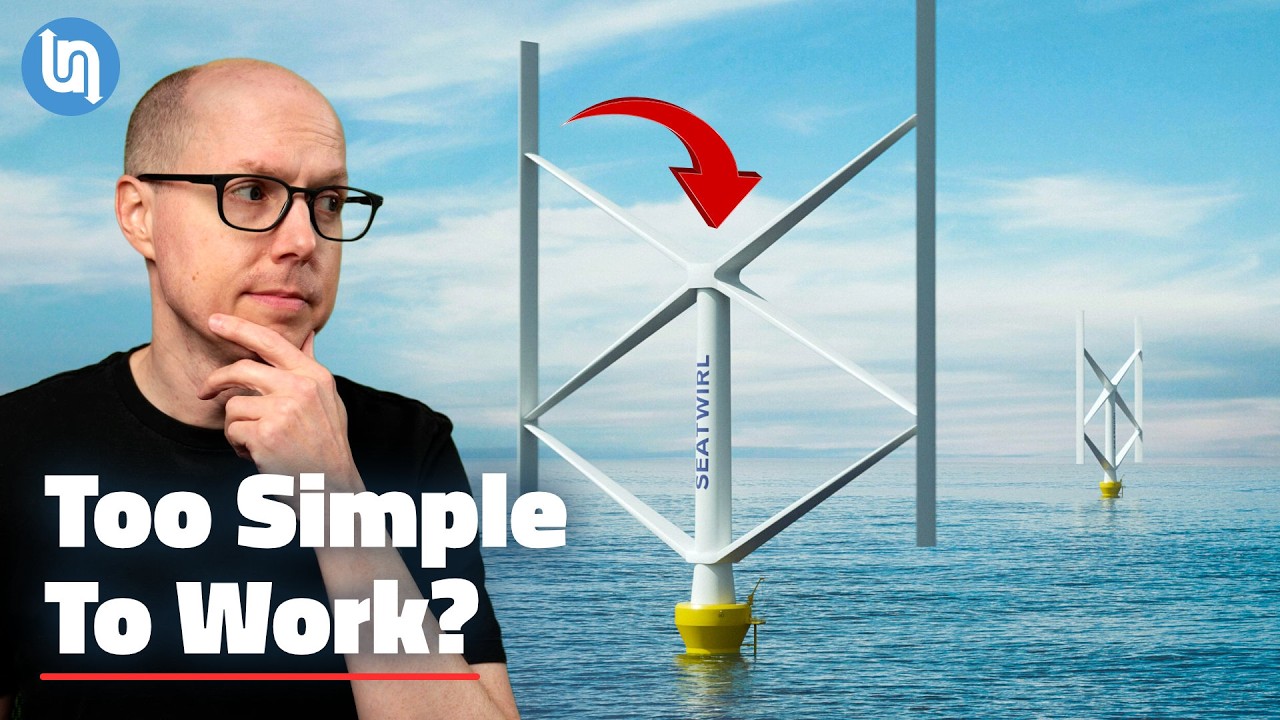
How IKEA-Style Wind Turbines Could Change Offshore Energy
Title history
- How IKEA-Style Wind Turbines Could Change Offshore Energy — observed on 20261101-0113 UTC (YouTube)
Keywords
Summary
151 words
Critical Evaluation
Value of the Information & Strength of the Argument
The video provides solid value by clearly explaining the technical trade-offs between HAWT and VAWT technologies in the offshore context. It uses concrete examples, such as the Éole turbine failure and cost comparisons from a Japanese study, to substantiate its points. The argumentation is balanced: the presenter acknowledges the historical shortcomings of VAWTs while presenting SeaTwirl’s specific innovations and potential niches. The reasoning is logical, and the presenter openly states his skepticism while remaining open to future evidence, which strengthens the credibility of the discussion.
Scientific Rigor, Source Quality, Title Accuracy
The video demonstrates strong scientific rigor by referencing the video script and citations page, which presumably contains links to the studies and reports mentioned. The presenter distinguishes between established data (like DOE estimates) and company claims, noting the lack of public LCOE data from SeaTwirl. The title is accurate and not overhyped, appropriately framing the content as an exploration of potential rather than a definitive breakthrough. No glaring discrepancies between title and content were identified.
175 words
Title / Content Match
The title accurately reflects the video's focus on flat-pack, floating vertical-axis wind turbines and their potential to expand offshore wind energy.
Quality & Reliability
8/10
Well-researched content with a clear presentation of technical details and trade-offs, though it relies on SeaTwirl's claims for some cost data and lacks independent verification.
Chapters
Cited Sources
- Video script and citations — Official script and source references for the video, cited at the end of the description.
External References
Contribution & Novelties
The video offers a concise, well-balanced analysis of an emerging offshore wind technology, synthesizing technical, economic, and practical considerations. It fills a niche by examining the specific case of SeaTwirl, a relatively obscure company, and contextualizing it within the broader offshore wind landscape. The presentation of the flat-pack concept as a potential cost-reduction strategy is a novel angle.
Pour aller plus loin :
- Vertical-axis wind turbine — Provides background on VAWT design, efficiency, and historical examples relevant to SeaTwirl’s approach.
- Floating wind turbine — Explains the different floating foundation types, including spar, and the technical challenges of deep-water deployment.
- SeaTwirl — Official company website with details on their technology and project status, useful for verifying claims.
116 words
Radar Profile
The profile shows strong scores in quantity, quality, and reliability, with a slightly lower technical depth. This indicates a well-informed presentation that is accessible to a general audience while maintaining substantive content.
💬 Positif. Sur les 30 commentaires analysés, l'ambiance est globalement positive et curieuse, avec des questions techniques et des plaisanteries, sans hostilité.