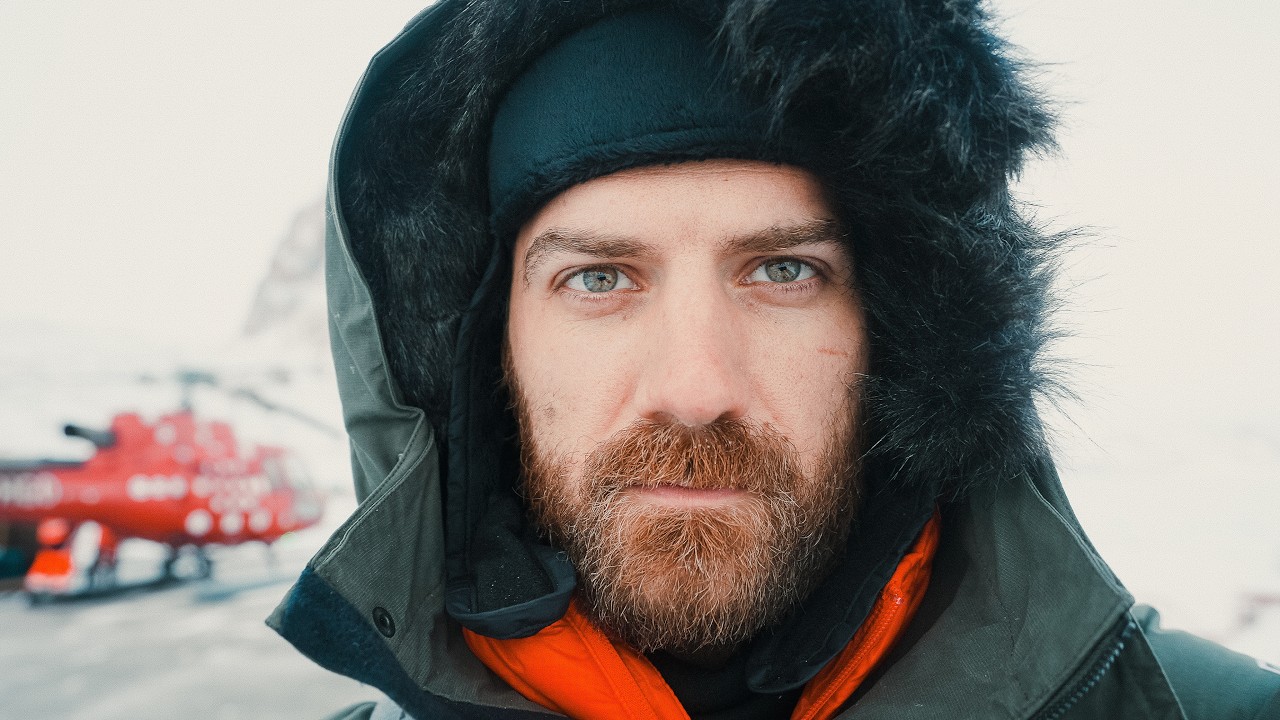
What I've learned from filmmaking around the world
Keywords
Summary
192 words
Critical Evaluation
Value of the Information & Strength of the Argument
The video’s primary value lies in its immersive, first-person storytelling that brings remote cultures and geopolitical issues to life through authentic human encounters. Harris’s narration and interviews provide a ground-level view rarely captured in traditional news media, fostering empathy and nuance. The argumentation is largely narrative and observational, relying on personal testimony rather than exhaustive data. While this approach effectively engages the audience, it occasionally leaves some claims under-supported, such as the exact number of bunkers or the socio-economic statistics mentioned. The inclusion of a source document mitigates this by offering a pathway for verification. Overall, the value is high in terms of cultural insight and awareness, though the depth of argumentation is limited by the documentary format’s focus on storytelling over systematic analysis.
Scientific Rigor, Source Quality, Title Accuracy
In terms of scientific rigor, the video is primarily a work of journalism rather than academic research. The creator provides a public Google Document listing sources, which is a positive step toward transparency. However, within the video itself, many factual claims are presented without citation, leaving verification to the viewer. The quality of sources appears to be a mix of personal interviews, expert commentary, and general historical knowledge, which is generally reliable but not exhaustive. The title accurately captures the content—a personal retrospective of fieldwork experiences—and does not overpromise a systematic academic analysis. The pacing and editing maintain viewer interest, and the creative use of maps, graphics, and cinematography enhances the presentation. While the video is not intended as a rigorous academic exercise, it succeeds as an informative and engaging documentary series.
271 words
Title / Content Match
The title accurately reflects the content: a compilation of documentary films made across the globe, sharing the author's personal learnings and experiences.
Quality & Reliability
6/10
The video provides firsthand field reports and personal observations, but some claims (e.g., precise bunker counts, historical assertions) are not fully verified within the footage. The creator offers a link to a source document, allowing external fact-checking, yet the inherent subjectivity of personal storytelling tempers the reliability score.
Chapters
Cited Sources
- All sources for this video - Google Docs — Link provided in the description to access the full list of sources used in the video.
- Tip Line - Google Forms — Form for viewers to submit story tips or unique information, linked in the description.
- Newpress — Community-driven hub for creator journalism, promoted in the description.
- NPR - Planet Money — Press coverage example of the creator's work, included in the description.
- NYTimes opinion article — Example of the author's contributions to the New York Times, listed in the description.
- NYTimes video - Covid pandemic response — Another example of the author's work for the New York Times, listed in the description.
- Vox Borders — Series produced by the author, referenced in the description.
Contribution & Novelties
The video compiles several years of field reporting into a single narrative, offering a unique blend of geopolitical storytelling with personal, human-centered approaches. Its novelty lies in the creator’s ability to highlight often-overlooked perspectives, such as the intimate details of Inuit ice vocabulary or the scale of Swiss bunkers, making complex issues more relatable. The compilation format serves as a retrospective of his work, providing new context and connections between disparate regions and topics.
Pour aller plus loin :
- Greenland — Overview of the island’s geography, culture, and history, directly relevant to the first segment.
- National Redoubt — The historical Swiss defense strategy involving extensive fortifications, directly linked to the bunker segment.
- NEOM — The planned Saudi megacity, topic of the third segment.
- Varosha, Famagusta — The ghost town sealed for 50 years, subject of the final segment.
138 words
Radar Profile
The radar profile suggests a well-rounded piece with strong informational density and quality, but moderate technical depth and average reliability. This aligns with a documentary that prioritizes engaging storytelling over rigorous scientific methodology, yet still provides substantial value through original footage and interviews.