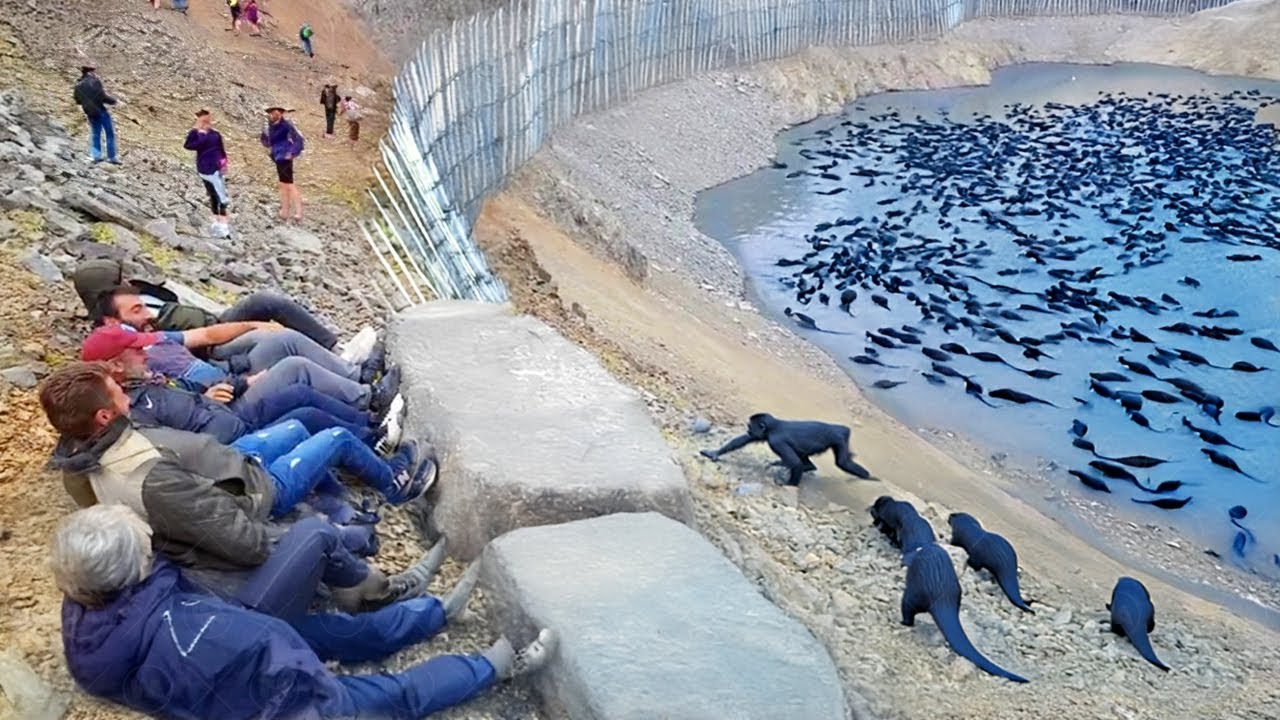
What Happens to Animals Raised for Food but No Longer Eaten
Title history
- What Happens to Animals Raised for Food but No Longer Eaten — observed on 20261101-0158 UTC (YouTube)
Keywords
Summary
192 words
Critical Evaluation
Value of the Information & Strength of the Argument
The video provides substantial information, covering multiple case studies that illustrate the phenomenon of feralization. The argumentation is logical, presenting each example to support the idea that farm animals can survive in the wild but with significant consequences. It uses concrete data, such as population figures and economic costs, to back its claims. The narrative structure is clear, progressing from the general question to specific historical and ecological examples, before circling back to the broader implications. The inclusion of the Przewalski horse study adds a scientific twist, showing that even ‘wild’ species may have domestic origins. The video is persuasive in highlighting the unintended consequences of abandoning domesticated animals, though it occasionally simplifies complex ecological and ethical issues.
Scientific Rigor, Source Quality, Title Accuracy
The video demonstrates a reasonable level of scientific rigor by referencing real studies and historical records. For instance, it mentions the DNA analysis of Przewalski horses published in 2018, and cites USDA statistics on animal populations. However, it does not provide direct citations or links to these sources, making verification difficult. The use of specific examples like the Campbell Island sheep and Cherikov Island cattle appears accurate based on known accounts. The title accurately reflects the content, which focuses on the fate of farm animals when they are no longer used for food. The video is generally well-researched, but the lack of explicit source references and occasional reliance on anecdotal evidence (e.g., the Shrek sheep story) lowers its overall scientific credibility. The title is appropriate, though slightly broader than the specific case studies presented.
267 words
Title / Content Match
The title accurately reflects the content, which explores the fate of farm animals through various historical and ecological case studies.
Quality & Reliability
7/10
The video cites specific studies (e.g., Przewalski horse DNA) and real-world examples, but lacks primary sources and some claims are simplified without references.
Key Moments
Markers derived by PSI from the transcript: the creator did not define chapters.
- Introduction of the question: what would happen if all farm animals were released?
- Story of Shrek, a New Zealand sheep that survived 6 years without shearing, highlighting sheep's dependency on humans.
- Campbell Island sheep: after abandonment, the population initially crashed then adapted, becoming feral over 40 years.
- Canadian super pigs: feral pigs from farm escapes and boar crosses, thriving and expanding across North America.
- Australian feral camels: history of introduction, abandonment, and current control efforts including culling from helicopters.
- Przewalski's horses: DNA study reveals they are descendants of domesticated Batai horses, not truly wild.
- Cherikov Island cattle: 200-year history of feral cattle causing ecological damage and cyclic die-offs due to overpopulation.
Contribution & Novelties
The video brings together multiple case studies to illustrate the concept of feralization, emphasizing that even heavily domesticated animals can revert to a wild state. It highlights the unexpected finding about Przewalski’s horses, which challenges common assumptions about what constitutes a ‘wild’ species. The comparative approach (pigs, camels, sheep, cattle) provides a comprehensive view of the ecological and economic impacts of abandoned farm animals. The video also touches on ethical considerations, such as the suffering of animals during the feralization process.
Pour aller plus loin :
- Feral animals on Wikipedia — Provides background on the process and examples of feralization.
- Rewilding — Discusses conservation efforts that sometimes involve reintroducing species, relevant to the Przewalski horse program.
- Invasive species — Covers the ecological impact of non-native species, like the feral pigs and camels.
- Domestication — Explains the evolutionary changes in domesticated animals, setting the stage for understanding feralization.
147 words
Radar Profile
The radar profile suggests a well-rounded video with high information quantity but moderate technical depth. It excels in providing diverse examples and pragmatic insights, while slightly lagging in scientific rigor due to lack of explicit citations.
💬 Sur les 30 commentaires analysés, le climat est très positif : les spectateurs expriment leur appréciation, partagent des anecdotes personnelles et des exemples complémentaires, et posent des questions sur des sujets connexes, montrant un engagement fort avec le contenu.