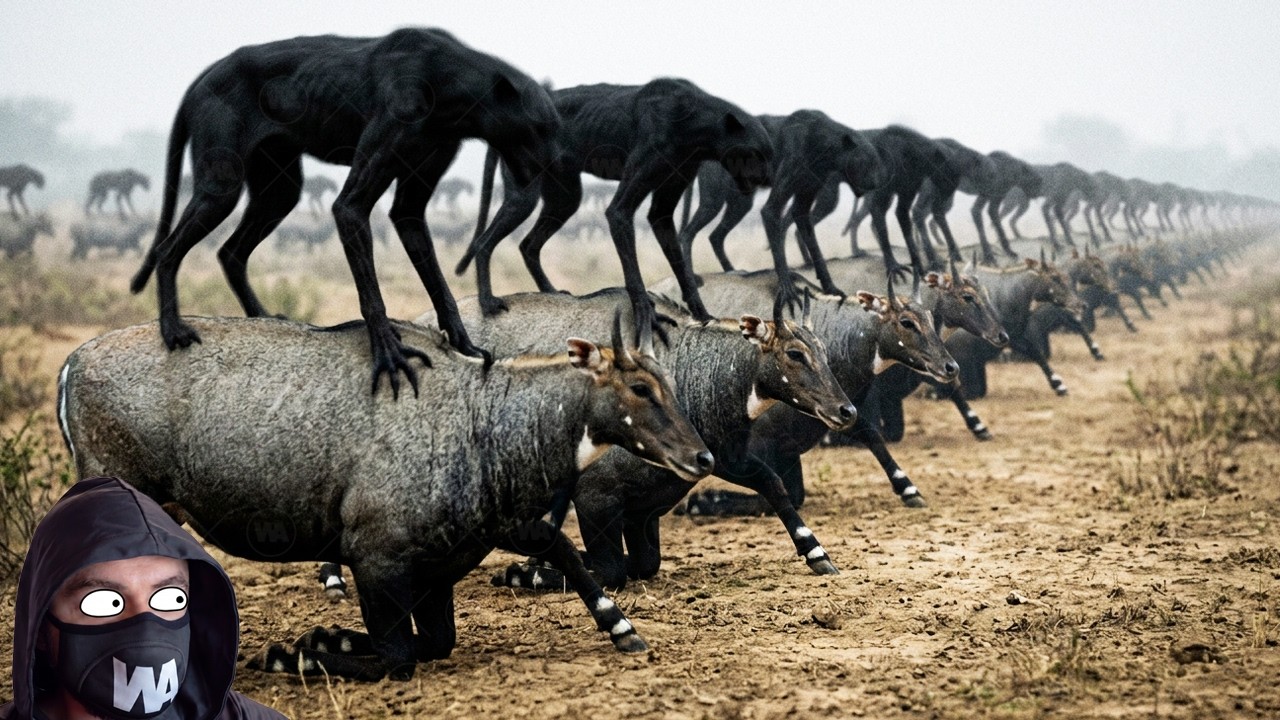
Texas Released 600-Pound Monsters Into the Wild, and Then THIS Started Hunting Them
Title history
- Texas Released 600-Pound Monsters Into the Wild, and Then THIS Started Hunting Them — observed on 20261031-2259 UTC (YouTube)
Keywords
Summary
173 words
Critical Evaluation
Value of the Information & Strength of the Argument
The video provides substantial information, drawing on specific studies such as GPS collar tracking, fence-crossing observations, and pregnancy rates. It presents a balanced argument: while it first suggests mountain lions could be a biological control, it systematically dismantles this idea by showing that nilgai rarely appear in mountain lion diet studies, and that the predators’ limited distribution and slow reproduction preclude them from being a major regulating force. The argumentation is logical and evidence-based, acknowledging uncertainties and conflicting economic interests. The narrative is compelling and avoids oversimplification, instead offering a nuanced view of an attempted ecological intervention.
Scientific Rigor, Source Quality, Title Accuracy
The video demonstrates scientific rigor by referencing empirical studies and historical records, and by discussing data limitations. However, it does not explicitly name or link most of the studies mentioned, which weakens traceability. The title is somewhat clickbait, but the content stays true to the subject. No public comments were provided for analysis, so audience reception cannot be evaluated.
171 words
Title / Content Match
The title accurately reflects the content: it describes the introduction of large nilgai to Texas and the subsequent hunting by mountain lions, though the sensational wording downplays the scientific tone of the video.
Quality & Reliability
8/10
The video relies on scientific studies and presents a nuanced perspective, but lacks explicit citations for all claims, and some numbers are contextualized without primary sources.
Key Moments
Markers derived by PSI from the transcript: the creator did not define chapters.
- Introduction to the encounter: mountain lion chasing a young nilgai in South Texas.
- Description of nilgai size: up to 660 lb, and mountain lion's weight and weapons.
- History of nilgai introduction to King Ranch from San Diego Zoo.
- Spread of nilgai and their role in carrying cattle fever ticks beyond quarantine zones.
- Discussion of nilgai movement, fence crossings, and home ranges based on GPS collar studies.
- Reproduction rates of nilgai: 79% of females pregnant, with twins and year-round breeding.
- Impact of cold winters: 1972-73 freeze killed 40% of the population, but recovery is rapid.
- Study of mountain lion diets: white-tailed deer, peccaries, and feral pigs, with no nilgai among confirmed kills.
- Discussion of mountain lion population decline and lack of statewide data; 2024 restrictions and 2026 withdrawn proposal.
- Overlap of nilgai and mountain lion distributions, showing only partial geographic overlap.
Contribution & Novelties
The video synthesizes existing research on nilgai ecology and mountain lion predation in Texas, offering a compelling narrative that highlights the conflict between invasive species control and predator conservation. It brings together disparate studies into a coherent overview, emphasizing the complexity of natural regulation. The main novelty is the critical evaluation of the idea that mountain lions can serve as biological control agents, showing that evidence is limited.
Pour aller plus loin :
- Nilgai (Boselaphus tragocamelus) — Background on the species’ biology and native range.
- Cougar (Puma concolor) — Information on mountain lion ecology, behavior, and conservation status.
- Invasive species — General concepts of invasive species and their ecological impacts.
- Rhipicephalus microplus (cattle fever tick) — Details on the tick species implicated in cattle fever and its lifecycle.
128 words
Radar Profile
The radar profile shows strong scores in information quantity and quality, with a moderate technical level and high reliability. This indicates a well-researched, informative video that balances scientific depth with accessibility, though it may not delve into primary literature.