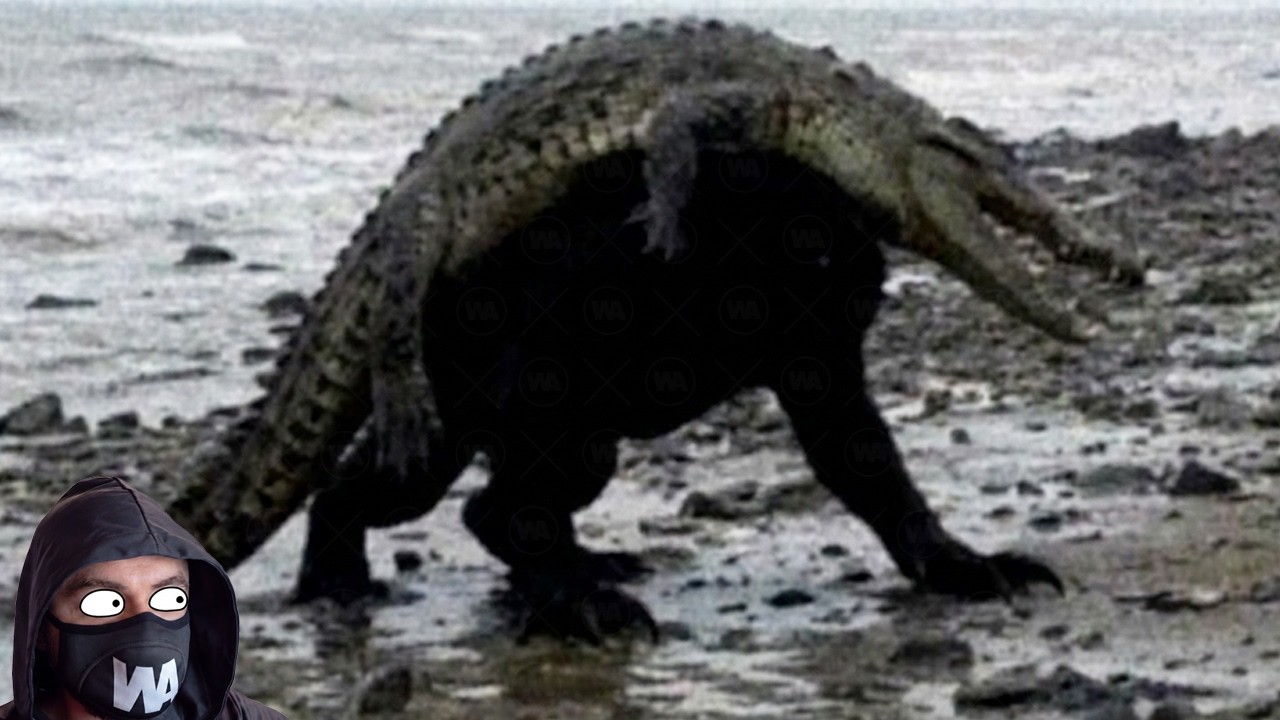
Something New Appeared in Florida and Started Killing Its Crocodiles
Title history
- Something New Appeared in Florida and Started Killing Its Crocodiles — observed on 20261101-0045 UTC (YouTube)
Keywords
Summary
142 words
Critical Evaluation
Value of the Information & Strength of the Argument
The video provides a compelling overview of a real ecological concern, explaining the biology and behavior of Nile crocodiles and their potential impact on Florida’s ecosystems. The argumentation is structured as a mystery narrative, building evidence from field observations, growth rate data, and genetics. However, it blends factual information with speculative dramatizations (e.g., hybrid scenarios, predator battles) that are not substantiated. The core scientific points, such as the DNA identification and the escape of five crocodiles during Hurricane Georges, are grounded in real events, but the narrative exaggerates the immediacy and certainty of outcomes.
Scientific Rigor, Source Quality, Title Accuracy
The video cites no external sources or links; all claims are presented without referencing scientific papers or official reports. The title is a clickbait-style formulation that matches the content’s dramatic tone. The lack of verifiable references reduces its scientific rigor, though it mentions real incidents (e.g., Hurricane Georges) and techniques like DNA testing that are plausible. The adéquation titre/contenu is good, as the title accurately summarizes the main theme, but the speculative elements undermine the presentation’s overall reliability.
187 words
Title / Content Match
The title accurately reflects the video's focus on a novel predator appearing in Florida and attacking native crocodiles, matching the content closely.
Quality & Reliability
6/10
The video presents a plausible scenario for the introduction of Nile crocodiles into Florida, supported by real incidents like Hurricane Georges and DNA testing. However, it includes dramatized speculative sequences (hybridization outcomes, fights with sharks and pythons) that are not backed by scientific evidence, detracting from overall reliability.
Key Moments
Markers derived by PSI from the transcript: the creator did not define chapters.
- Researchers find a mauled alligator carcass, triggering the investigation.
- A captured female crocodile measured at 5'6" and 37 pounds after two years, growing 28% faster than in Africa.
- DNA analysis reveals the crocodile is an African Nile crocodile, raising alarm.
- Discussion of the Nile crocodile's aggression and its attack on a house in Miami.
- Hurricane Georges is cited as an example of how flooding allowed five Nile crocodiles to escape a farm.
- Speculation about hybrid crocodiles and the difficulty of detecting them with thermal drones.
Contribution & Novelties
The video synthesizes available information on Nile crocodile sightings in Florida, highlighting their rapid growth rate in the new environment and the potential for hybridization with native species. It emphasizes the underappreciated risk these reptiles pose to human safety and local wildlife, and the inefficacy of current control methods, such as thermal imaging, due to their ectothermic nature.
Pour aller plus loin :
- Nile crocodile (Wikipedia) — Provides background on the species’ biology, distribution, and behavior.
- Invasive species in Florida (Wikipedia) — Overview of other invasive reptiles and management efforts.
- Hurricane Georges (Wikipedia) — Details the 1998 storm that allowed crocodile escape, as mentioned in the video.
107 words
Radar Profile
The radar profile shows a relatively high 'quantite_information' but moderate 'qualite_information' and 'fiabilite_globale', indicating that while the video is informational rich, its reliability is compromised by speculative elements. The low 'niveau_technique' score reflects the lack of depth in presenting scientific data, aligning with the documentary's popular-science approach.
💬 On the 30 comments analyzed, the orientation is negative: viewers express concern and anger about the invasive crocodiles and the inaction of authorities, with many calling for hunting or removal. A portion also shares amusement or respect for the channel's longevity.