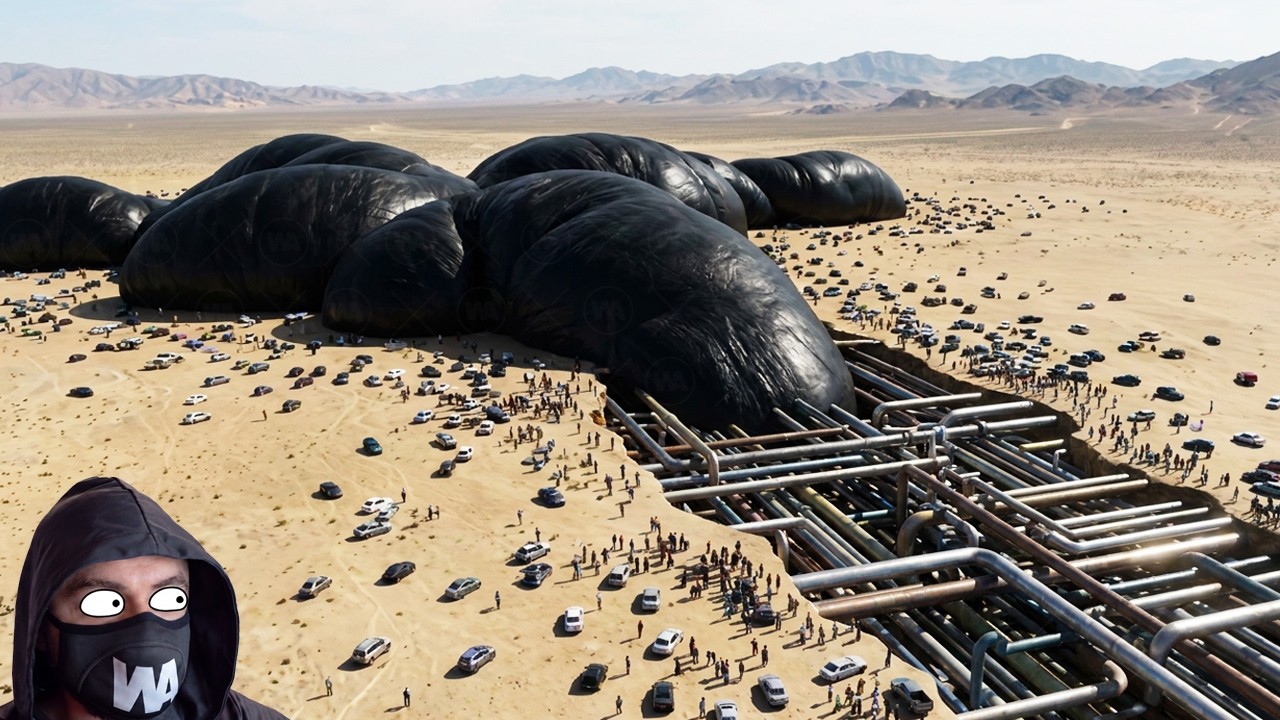
This is Why the Large Line City Finally Collapsed
Title history
- This is Why the Large Line City Finally Collapsed — observed on 20261101-0041 UTC (YouTube)
Keywords
Summary
147 words
Critical Evaluation
Value of the Information & Strength of the Argument
The video provides valuable insights into the flaws of megaproject planning, combining engineering, logistical, and financial perspectives. Its argumentation is persuasive, using specific examples such as the absurdity of importing sand into the desert and the massive cement demand (more than France’s annual output). The step-by-step breakdown of cost escalation and the gradual reduction of the project’s scope makes a compelling case. However, the argumentation occasionally relies on anecdotes from unnamed workers and internal estimates without thorough verification, which weakens its evidentiary base. Still, the logical progression from concept to failure is clearly articulated.
Scientific Rigor, Source Quality, Title Accuracy
The video maintains a documentary style with a generally rigorous tone, but it lacks explicit source citations in the description or on-screen. It references consulting firms (McKinsey, BCG, Oliver Wyman) and an Italian contractor (Webuild), but does not provide direct links. The title accurately reflects the content; the term ‘collapsed’ is apt given the project’s drastic reduction. No comments were provided for analysis, so public reception cannot be assessed from the video itself.
182 words
Title / Content Match
The title accurately reflects the content, which explains the collapse and scaling back of the linear city project.
Quality & Reliability
7/10
The video is well-structured, presents detailed technical and financial data, and cites plausible internal estimates. However, it lacks explicit source citations and relies heavily on anonymous former employees and unverified claims, giving it moderate reliability.
Key Moments
Markers derived by PSI from the transcript: the creator did not define chapters.
- Introduction to the Line's massive scale and construction site
- Overview of other Neom projects (Trojena, Oxagon, Sindalah) and their logistics
- Engineering and logistical problems: sand quality, cement demand, water transport
- Financial strain from falling oil prices and escalating costs, leading to scaled-back targets
- Conclusion: the original vision shrinks to a small fragment; buried foundations illustrate failure
Cited Sources
- NEOM — The megaproject under which The Line was developed, involving multiple sub-projects.
- McKinsey & Company — One of the consulting firms that contributed to the 2,000+ pages of planning documents.
- Boston Consulting Group (BCG) — Another consulting firm involved in the planning phase.
- Oliver Wyman — Consulting firm mentioned in the context of the project's overreach.
- Webuild — Italian construction company that terminated its work for NEOM in May 2026.
Contribution & Novelties
The video synthesizes a vast amount of information about a high-profile megaproject into a coherent narrative of failure, emphasizing the gap between visionary ambition and physical/economic realities. It brings attention to specific engineering absurdities, such as importing sand for glass production despite being in a desert, and the paradox of burying completed foundations. This contributes to public understanding of why such projects fail.
Pour aller plus loin :
- The Line (Saudi Arabia) — Detailed background on the project’s scope and status.
- Neom — Overview of the broader megaproject and its components.
- Saudi Vision 2030 — Framework of the national plan that includes NEOM.
- Megaproject — Scholarly insights into the recurring pitfalls of large-scale projects.
114 words
Radar Profile
The radar shows high scores in quantity and quality of information, indicating a well-repleted and detailed content. Technical level is moderately high, while reliability is slightly lower, reflecting the lack of direct sourcing. The overall profile points to an informative but moderately trustworthy documentary.
💬 Très négatif. Les 30 commentaires analysés expriment une critique quasi unanime, qualifiant le projet de gaspillage colossal et d'erreur de planification, avec un ton sarcastique et moqueur.