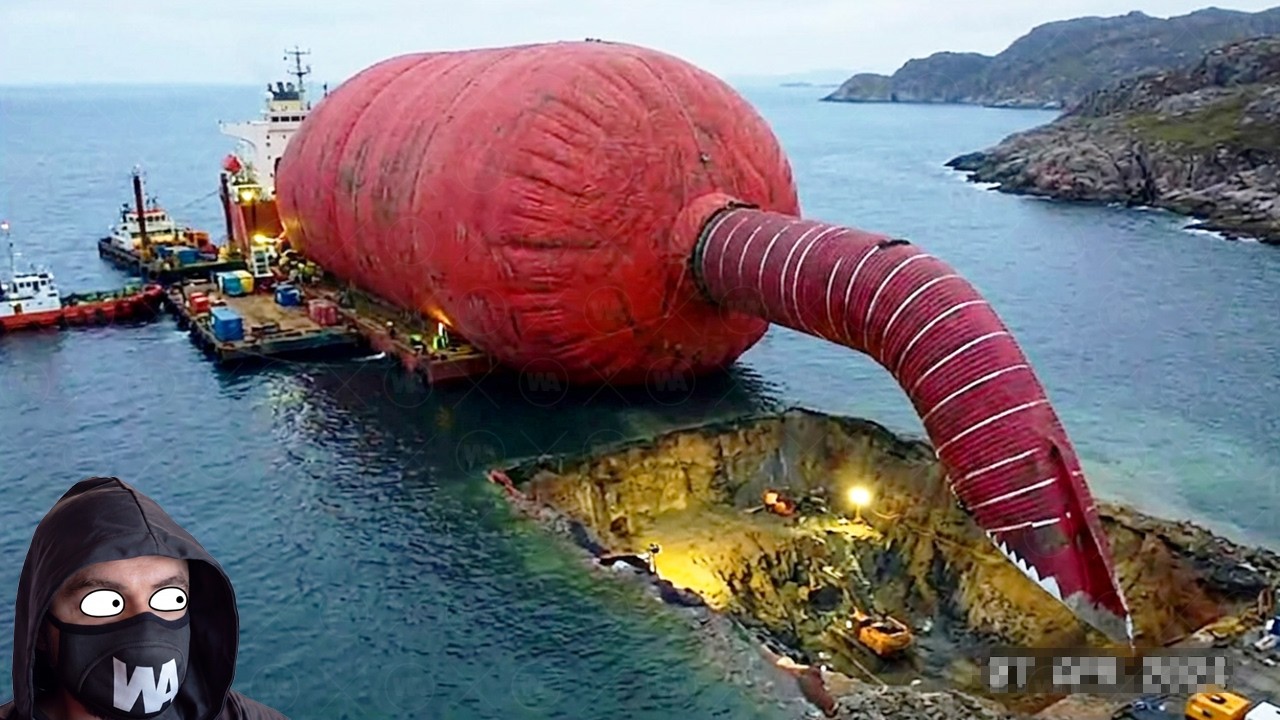
Australia's West Coast Was Dying, But They Did THIS for the First Time and Everything Began Changing
Title history
- Australia's West Coast Was Dying, But They Did THIS for the First Time and Everything Began Changing — observed on 20261031-2304 UTC (YouTube)
Keywords
Summary
159 words
Critical Evaluation
Value of the Information & Strength of the Argument
The video offers valuable insights into Perth’s multifaceted water management strategy, presenting quantitative data on rainfall decline and reservoir inflows, and explaining technical processes like reverse osmosis and aquifer recharge. The argumentation is logical and persuasive, showing the progression from traditional sources to innovative fixes. However, it oversimplifies some complexities and relies on dramatic narration, but the core technical information is sound and reasonably up-to-date.
Scientific Rigor, Source Quality, Title Accuracy
The video does not cite any external sources, and the description contains no references, which limits its scientific rigor. The title is eye-catching and aligns well with the content, but the lack of verifiable citations detracts from the overall reliability. The content appears based on publicly available information about Perth’s water projects, but the absence of sources means viewers cannot independently verify claims. The title’s dramatic tone is supported by the narrative, but the lack of citations means it should be considered a general overview rather than a rigorous scientific reference.
171 words
Title / Content Match
The title accurately reflects the content, which explains how Perth overcame a severe water crisis through engineering solutions, aligning with the dramatic narrative.
Quality & Reliability
7/10
The video provides specific data on rainfall decline, reservoir inflows, groundwater levels, and desalination capacities, but does not cite peer-reviewed sources or provide references. It is informative but relies on dramatized storytelling and lacks verifiable citations.
Key Moments
Markers derived by PSI from the transcript: the creator did not define chapters.
- Introduction to Perth's water scarcity and the need for new sources.
- Historical reservoir system and decline in rainfall since the 1970s.
- Groundwater extraction and the Gnangara Mound's depletion.
- First desalination plant in Kwinana and its capacity.
- Groundwater recharge project in Craigie and its success.
- Construction of the Alkimos desalination plant and tunnel details.
Contribution & Novelties
The video effectively explains the shift from reliance on rainfall to active water production, highlighting the technical details of desalination and aquifer recharge. Its unique contribution is the comprehensive narrative of how Perth combined multiple solutions to achieve water security, offering a model for other water-stressed regions. The use of tunnel boring machines for submarine tunnels is a notable engineering feat discussed in detail.
Pour aller plus loin :
- Desalination — Overview of the desalination process and its global applications.
- Groundwater recharge — Explanation of techniques for artificially replenishing aquifers.
- Perth Water Supply — Specifics on Perth’s water sources and infrastructure.
101 words
Radar Profile
The radar profile shows moderately high information quantity and quality, with lower technical depth and reliability due to lack of citations. The balance suggests a well-produced documentary that is informative but not academically rigorous.