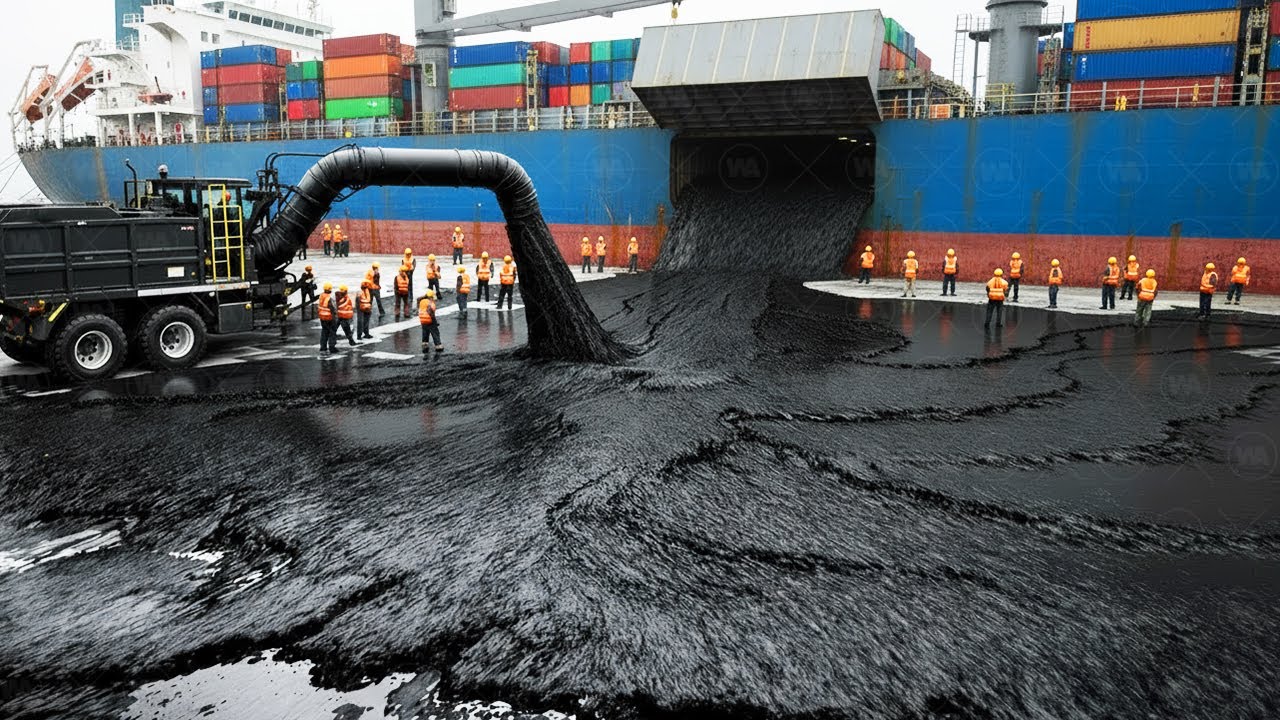
This Is Why Cargo Ships Drink Asphalt Instead of Diesel
Title history
- This Is Why Cargo Ships Drink Asphalt Instead of Diesel — observed on 20261101-0158 UTC (YouTube)
Keywords
Summary
126 words
Critical Evaluation
Value of the Information & Strength of the Argument
The video provides a detailed explanation of heavy fuel oil’s properties, usage, and environmental consequences, supported by specific examples and statistics. The argumentation is structured narratively, building from fuel characteristics to shipping operations to pollution incidents and regulatory challenges. However, the argumentative strength is diminished by sensationalism (e.g., comparing fuel to asphalt) and some errors, such as the claim that shovels are used for loading, which the video itself debunks later. The cost-benefit analysis of HFO versus alternatives is valid, but the discussion of ammonia’s potential is somewhat superficial, lacking deeper technical and economic context. Overall, the video offers a useful overview for lay audiences but lacks the rigor expected from a scientific source.
Scientific Rigor, Source Quality, Title Accuracy
The video does not cite specific sources or provide external links, relying on general claims and official reports mentioned only in passing (e.g., IMO, G7 statements). The title is deliberately misleading to attract clicks, which contradicts the actual content—ships do not consume asphalt. While the core facts about heavy fuel oil are mostly accurate, several details are oversimplified or incorrect, as pointed out by multiple commenters (e.g., the proper term is bunker fuel, not asphalt; VLSFO differs from traditional HFO). The lack of references and the presence of unverified claims reduce the scientific rigor. Public comments heavily criticize the terminology and factual errors, indicating a credibility gap.
236 words
Title / Content Match
The title is catchy but inaccurate: ships use heavy fuel oil, not asphalt. The content clarifies this, but the initial misrepresentation undermines trust.
Quality & Reliability
6/10
The video offers a broad overview of heavy fuel oil use in shipping, but contains inaccuracies and exaggerations (e.g., calling it asphalt). While the core information about viscosity, heating, and environmental impacts is largely correct, the title is misleading and several technical details are oversimplified or erroneous, as highlighted by viewer corrections in the comments.
Key Moments
Markers derived by PSI from the transcript: the creator did not define chapters.
- Introduction of cargo ships using thick black fuel resembling asphalt.
- Explanation of heavy fuel oil names and production from refinery residue.
- Discussion of fuel viscosity and heating requirements for pumping.
- Environmental impact: sulfur dioxide, particulate matter, and health costs.
- Case study: Mauritius oil spill and volunteer cleanup efforts.
- Arctic shipping risks and black carbon effects.
- Regulatory attempts: IMO ban, emission control zones, and loopholes.
- Introduction of ammonia as a potential alternative fuel.
- Challenges of ammonia: toxicity, cost, and infrastructure limitations.
Contribution & Novelties
The video synthesizes widely known information about heavy fuel oil in shipping, presenting it in an accessible format. Its novelty lies in the comparative discussion of environmental risks and alternative fuels, though it does not introduce new research.
Pour aller plus loin :
- Heavy fuel oil — Notes on the physical properties and nomenclature.
- International Maritime Organization — Official regulatory body for shipping emissions and fuel standards.
- Ammonia as marine fuel — Overview of ammonia’s potential and challenges.
- Black carbon in the Arctic — Explanation of soot effects on snow and ice.
92 words
Radar Profile
The radar profile indicates moderate to high scores on information quantity and technical level, but lower on quality and reliability, reflecting the video's broad coverage yet questionable accuracy. The scientific community would rate this as informative but not fully trustworthy.
💬 Negative — On the 30 comments analysed, most viewers correct the title's inaccuracy and point out that ships use bunker fuel, not asphalt, criticizing the sensationalism. Several express frustration over environmental implications.