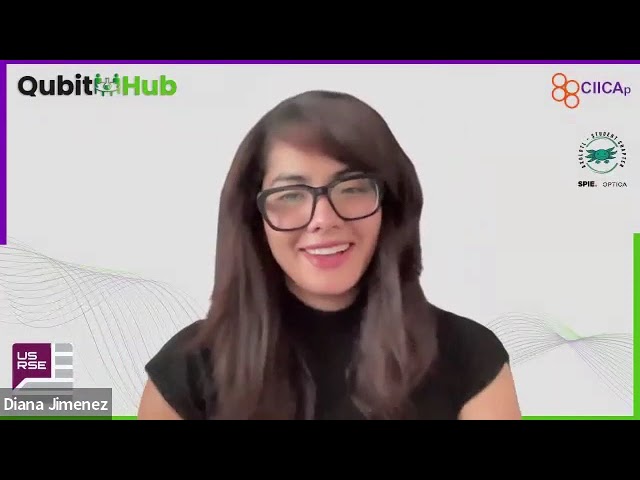
Women in Science & Quantum Technologies | Conversation with María Delgado Álvarez
Keywords
Summary
172 words
Critical Evaluation
Value of the Information & Strength of the Argument
The value of this video lies in its authentic, first-hand perspective from a young professional leading STEM education programs. Delgado’s arguments are coherent and grounded in her experiences, particularly regarding the barriers young students face and the design of immersive learning experiences. She articulates a clear rationale for inquiry-based learning, stressing that active participation is key to genuine understanding. However, the discussion lacks empirical evidence or concrete data to support claims about program effectiveness. The argumentation is persuasive in a motivational sense but does not provide measurable outcomes or comparisons with traditional educational methods. The conversation stays at a high level, avoiding deep technical details, which limits its value for someone seeking rigorous scientific insight.
Scientific Rigor, Source Quality, Title Accuracy
The interview references a few specific programs and individuals, such as The Coding School, World Science Scholars, and Dr. Philip Bark, but does not provide external citations or scholarly references. The sources mentioned are credible in the education technology space but are not examined in detail. The title, ‘Women in Science & Quantum Technologies,’ is somewhat accurate, as the conversation touches on these themes, but the majority focuses on educational approaches and career advice. The alignment between title and content is good overall, though the quantum technology aspect is not as central as the title suggests. The lack of formal sources and the conversational format limit scientific rigor.
238 words
Title / Content Match
The title broadly matches the content, as it centers on a woman in science discussing quantum technologies and STEM education. However, the focus is more on education and career pathways than on the technologies themselves, which might slightly overemphasize the quantum aspects.
Quality & Reliability
6/10
The conversation is an informal expert opinion based on personal experience rather than empirical data. The speaker is a professional in the field, but the statements are anecdotal and not supported by references. The discussion lacks quantitative evidence or detailed technical explanations, affecting reliability.
Key Moments
Markers derived by PSI from the transcript: the creator did not define chapters.
- Introduction of María Delgado Álvarez and her role at Thinking Beyond Education.
- Explanation of the educational methodology based on inquiry and researcher perspective.
- Discussion on different student profiles, including neurodivergent learners, and program intensity.
- Personal journey: early interest in math, participation in Quantum Computing program by The Coding School.
- Advice for young people: follow intuition, overcome barriers, and seek help.
- Discussion on age-related barriers and the mission to create opportunities for younger students.
- Focus on critical thinking and navigating the overwhelming amount of online information and AI tools.
- Future of science and technology: interdisciplinary nature and the role of AI and quantum computing.
Cited Sources
- Introduction to Quantum Computing by The Coding School — María participated in this online program, which sparked her interest in quantum computing.
- World Science Scholars — Online program that allowed her to connect with peers and work on projects.
- New York Science Academy — Another online program she attended.
- Dr. Philip Bark — Co-founder of Thinking Beyond Education, developed the inquiry-based methodology.
- Christopher Bishop (book on future careers) — Referenced as an author who writes about preparing for careers that do not yet exist.
Contribution & Novelties
The video offers a fresh perspective on STEM education by highlighting the importance of personalized, inquiry-driven learning for young students, particularly in emerging fields like quantum computing and AI. It emphasizes the need to remove systemic barriers and to foster mentorship and critical thinking. The original contribution lies in the concrete example of Thinking Beyond Education’s approach and the founder’s personal narrative, which can inspire educators and students.
Pour aller plus loin :
- Inquiry-based learning — A pedagogical approach central to the methodology discussed, where students learn through exploration and questioning.
- Quantum computing — The field that María introduces to young learners; understanding its fundamentals is crucial for future STEM careers.
- Artificial intelligence in education — Discusses the role of AI in learning environments, relevant to the conversation about filtering information and personalized learning.
134 words
Radar Profile
The radar profile shows moderate scores across information quantity and quality, with lower technical depth. The fiabilite_globale is relatively acceptable given the conversational nature. The video is more strong on qualitative insights and personal experience than on quantitative or technical rigor, reflecting its role as an inspirational expert opinion rather than a research-based review.