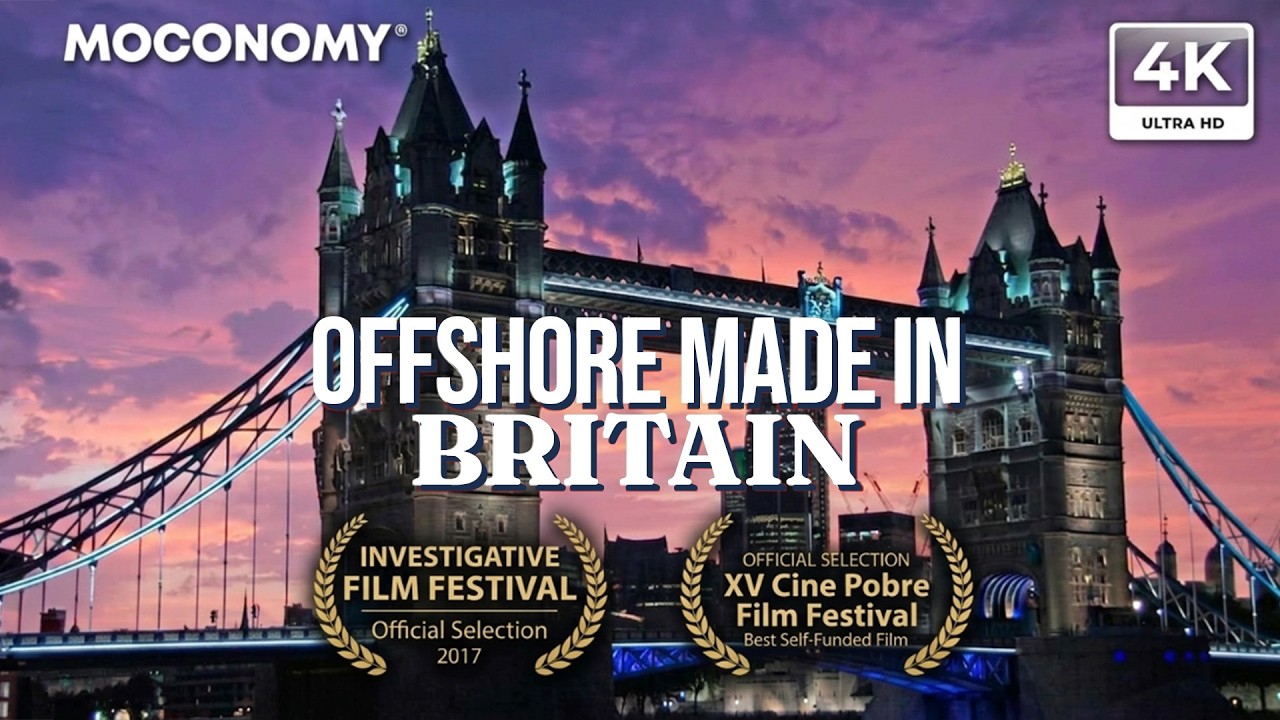
The Spider's Web: Britain's Second Empire | How London Runs the World's Dirty Money | 4K
Keywords
Summary
166 words
Critical Evaluation
Value of the Information & Strength of the Argument
The value of the information lies in its comprehensive expose of the mechanisms linking the City of London to offshore tax havens. The documentary provides concrete examples, historical documents, and expert testimony, making a compelling case. The argumentation is logical and persuasive, though it is one-sided, presenting a strong critique without significant counterarguments. It effectively connects the dots between imperial decline, the birth of the Eurodollar market, and the modern secrecy jurisprudence. The strength of the film is its ability to make complex financial structures understandable to a general audience while providing enough detail for credibility.
Scientific Rigor, Source Quality, Title Accuracy
The documentary sources its claims through interviews with academics, former insiders, and leaked documents. It references the Panama Papers and the Financial Secrecy Index, lending weight to its assertions. However, it does not include opposing viewpoints, which may reduce its perceived objectivity. The title matches the content well, and the narrative is coherent. The film’s rigor is high for a documentary, but it is clearly an advocacy piece rather than neutral reporting.
183 words
Title / Content Match
The title accurately reflects the content: the documentary details how Britain transformed from a colonial empire to a global financial empire via offshore jurisdictions and secrecy.
Quality & Reliability
8/10
The documentary is well-researched and features expert testimony, archival footage, and references to leaked documents. However, it adopts a critical perspective that may influence objectivity.
Key Moments
Markers derived by PSI from the transcript: the creator did not define chapters.
- Introduction: Britain's transformation from colonial power to financial power.
- The Suez crisis and the humiliation that triggered the decline of the British Empire.
- Establishment of the London Eurodollar market and the Bank of England's non-regulation.
- Creation of secrecy jurisdictions in the Cayman Islands and other British overseas territories.
- The role of the City of London Corporation and its unique political power.
- The BCCI scandal and the Bank of England's failure to regulate.
- Trusts as the core mechanism of British secrecy and offshore structures.
- The Panama Papers and the extent of Britain's offshore control; conclusion on the second empire.
Cited Sources
- Panama Papers — Mentioned as a leaked document revealing offshore activity.
- Financial Secrecy Index — Referenced to quantify the UK's share of global financial services exports.
- BCCI (Bank of Credit and Commerce International) — Detailed as an example of a bank that exploited London's light-touch regulation.
Concurring Sources
- Tax Justice Network — A leading NGO researching tax havens and financial opacity, supporting the documentary's claims.
Contribution & Novelties
This documentary offers a comprehensive synthesis of how Britain’s colonial legacy was transformed into a modern financial empire, linking historical events to contemporary offshore structures. It brings together expert interviews and leaked documents to expose the hidden architecture of tax havens. The film’s contribution is in providing a cohesive narrative that connects the decline of empire, the rise of the Eurodollar market, and the creation of British secrecy jurisdictions.
Pour aller plus loin :
- Offshore financial centre — Key concept for understanding the jurisdiction-based secrecy.
- Trust law — Explanation of the legal mechanism central to British secrecy.
- City of London Corporation — The unique institutional actor with regulatory influence.
109 words
Radar Profile
The radar profile shows high scores in quantity and quality of information, moderate technical depth, and a slightly lower reliability score due to the documentary's evident advocacy angle. The profile suggests a well-sourced but opinionated piece.