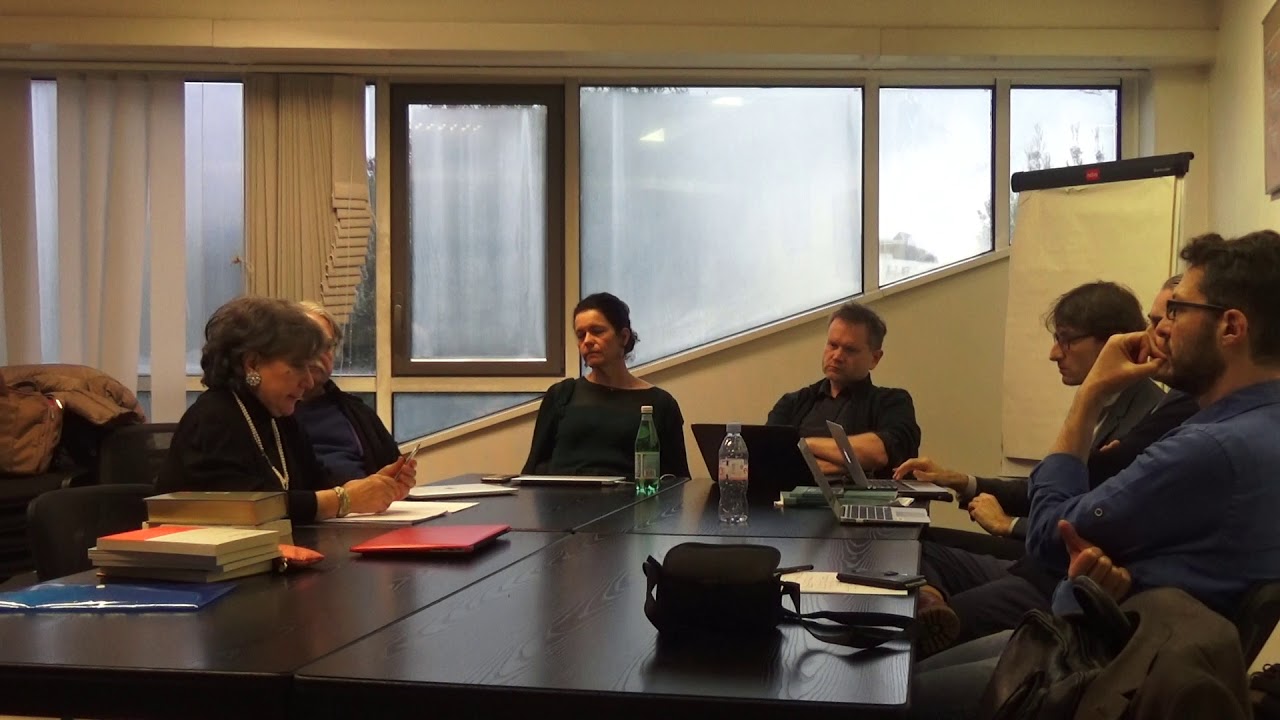
Séminaire d'Histoire des idées. Méthodes, enjeux, études de cas. 17/11/2018 (PARTIE 2)
Seminar on the History of Ideas. Methods, issues, case studies. 17/11/2018 (PART 2)
Keywords
Summary
181 words
Critical Evaluation
Value of the Information & Strength of the Argument
The information value lies in its nuanced treatment of methodological questions, with first-hand academic experience from Italy and France. The argumentation is solid, grounded in specific examples and comparisons, and demonstrates the complexity of interpreting philosophical texts. The speakers carefully justify their positions, though the discussion occasionally remains at a general level without deep dives into specific sources. The strength of the argumentation is notable in the critique of purely systematic readings versus contextual approaches, with well-supported claims about the importance of original language and textual genres.
Scientific Rigor, Source Quality, Title Accuracy
The scientific rigor is high due to the academic setting and the expertise of participants. Though no explicit bibliographic references are given, the discussion implicitly relies on major scholars like Garin, Kristeller, and modern editors. The sources mentioned are not formally cited, but the arguments align with established historiography. The title matches the content well: it clearly indicates the seminar’s scope. No public comments were available for analysis, so no community feedback is assessed.
176 words
Title / Content Match
The title accurately reflects the seminar's focus on methods, themes, and case studies in the history of ideas, with this being the second part of the session.
Quality & Reliability
8/10
The content is an academic seminar featuring specialized scholars in a critical, dialectical exchange. No formal peer review is involved, but the discussion is grounded in well-established scholarly traditions and cites concrete examples (e.g., Descartes, Spinoza). The quality is high due to the expertise of the participants, though the informal nature and lack of referenced printed sources limit perfect reliability.
Key Moments
Markers derived by PSI from the transcript: the creator did not define chapters.
- Discussion on the importance of national traditions in the history of philosophy, focusing on the Italian context.
- Spallanzani explains her pedagogical approach, requiring students to read texts in the original language, stressing the lexicon.
- Debate on the relationship between texts and context, with examples from Descartes' Meditations and Spinoza's works.
- Comparison of French and Italian academic structures and their influence on the practice of the history of philosophy.
- Concluding remarks on the value of philological and editorial work, and the importance of content and physical format of books.
Cited Sources
- Séminaires de recherche - Labex Comod — Description link to the seminar series; this is the only provided source, listing related research seminars.
Contribution & Novelties
The seminar contributes original perspectives on the methodological self-understanding of the history of philosophy, particularly by juxtaposing the French and Italian traditions and emphasizing the practical pedagogical decisions that shape the discipline. It highlights the need to balance historical contextualization with philosophical relevance, moving beyond the simple opposition between history and philosophy. The discussion also brings attention to the understudied role of linguistic and editorial factors in philosophical communication.
Pour aller plus loin :
- History of ideas — Overlaps directly with the seminar’s theme, providing a broader academic context.
- Intellectual history — Relevant for understanding the methodological approaches discussed, particularly contextualism.
- Descartes’ Meditations — Used as a central case study; exploring it helps grasp the specific text-based analysis proposed.
119 words
Radar Profile
The radar profile shows moderate to high scores across all dimensions, with slightly lower technical level (6) compared to information quality (8). This indicates a balanced yet accessible seminar, strong in theoretical content and reliability, with a lower barrier for non-specialists.