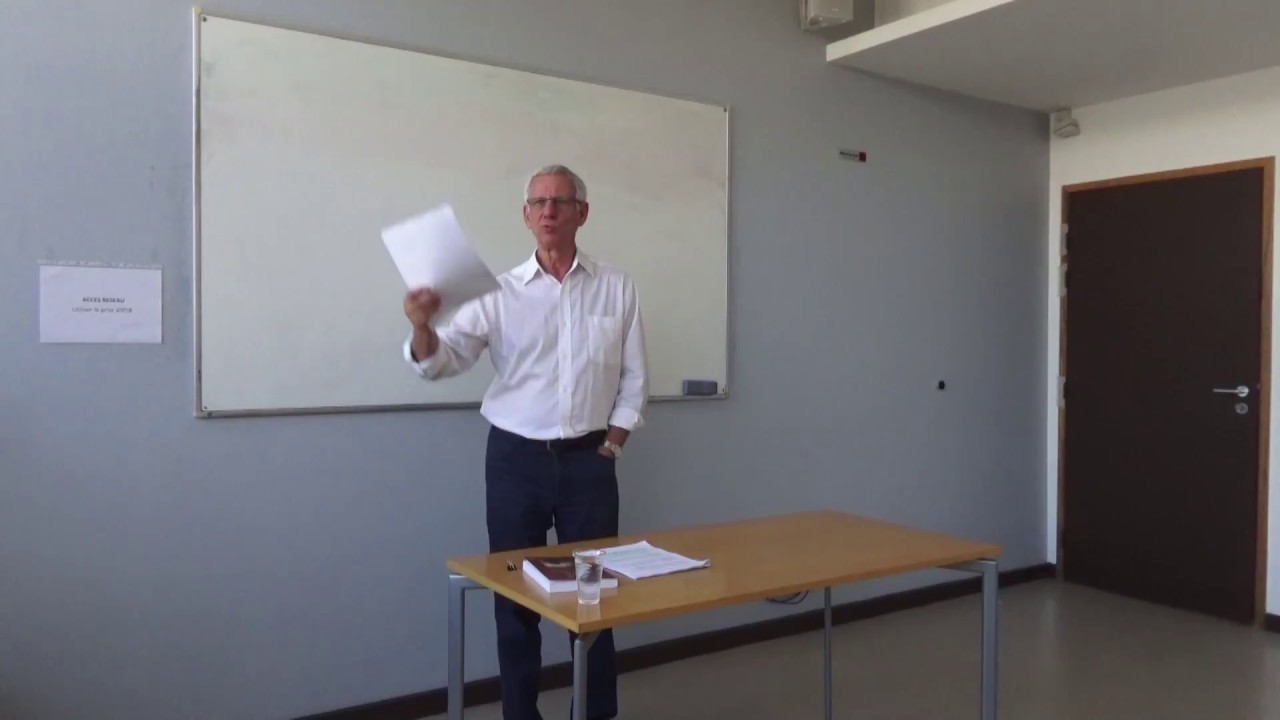
Raymond Massé (Université Laval) - "Les contributions de l’anthropologie à la morale et à l’éthique"
Raymond Massé (Université Laval) - "The Contributions of Anthropology to Morality and Ethics"
Keywords
Summary
161 words
Critical Evaluation
Value of the Information & Strength of the Argument
The lecture offers a valuable synthesis of anthropology’s engagement with morality, drawing on decades of research and personal experience. The argument is well-structured, tracing the evolution of anthropological thought from descriptive relativism to more nuanced positions. Massé effectively contrasts the relativist and universalist schools, using historical examples such as the post-WWII debates and the drafting of the Universal Declaration of Human Rights. He argues for a middle path that respects cultural specificities while acknowledging the need for universal ethical standards, particularly in protecting vulnerable groups. The strength of his argument lies in its balance and the integration of historical and contemporary perspectives. However, some points could benefit from more concrete examples or case studies, and occasional references to specific studies are not always fully developed.
Scientific Rigor, Source Quality, Title Accuracy
The lecture is rigorous in its intellectual framework, drawing on a wide range of anthropological scholarship, though specific citations are not explicitly named in the transcript. Massé demonstrates deep familiarity with the field and discusses influential works and projects, such as the comparative study led by Kluckhohn. The title accurately represents the content, as the entire talk is dedicated to examining how anthropology contributes to ethical and moral understanding. While the lecture does not provide formal bibliographic references, its convincing narrative and the speaker’s expertise support its scientific credibility. The link to the Labex COMOD website in the description provides further context for the lecture series, but no direct scholarly sources are cited in the transcript itself.
257 words
Title / Content Match
The title accurately reflects the content: the speaker systematically reviews how anthropology contributes to the study of morality and ethics, including historical and contemporary perspectives.
Quality & Reliability
8/10
The lecture is delivered by a senior anthropologist with extensive research experience, providing a coherent and well-structured synthesis of the field. However, explicit citations are sparse in the transcript, relying on general references rather than precise sources.
Key Moments
Markers derived by PSI from the transcript: the creator did not define chapters.
- Introduction by Pierre-François Moreau, presenting Raymond Massé and his background.
- Massé describes his career trajectory from public health to anthropology of ethics.
- Historical overview of anthropological studies on morality since the 1950s, including early works and the role of relativism.
- Discussion of the two major approaches: relativist and universalist, with examples from post-WWII debates and human rights declarations.
- Contemporary relevance and the proposal for an engaged anthropology that balances diversity with universal human rights.
- Concluding remarks on the contributions of anthropology to ethics and the need for a nuanced, context-sensitive approach.
Cited Sources
- Labex COMOD conference page — Official page for this conference, providing details on the lecture series and Raymond Massé's presentation.
Contribution & Novelties
This lecture provides a comprehensive, historically informed overview of anthropology’s contributions to the study of morality and ethics, synthesizing decades of scholarship. It highlights the persistent tension between relativist and universalist perspectives and offers a call for an engaged anthropology that navigates cultural diversity while upholding human rights. The speaker’s personal trajectory adds authenticity and practical insight.
Pour aller plus loin :
- Moral relativism — Foundational concept in anthropological ethics, central to the lecture.
- Anthropology of ethics — Contemporary field that builds on these debates, exploring morality as a cultural practice.
- Universal Declaration of Human Rights — Key example of universalist aspirations discussed in the video.
106 words
Radar Profile
The radar profile shows high scores in quantity of information and reliability, reflecting the comprehensive and authoritative nature of the lecture. Quality and technical level are moderate, suggesting that while the content is well-organized, it is not deeply technical or empirically detailed.