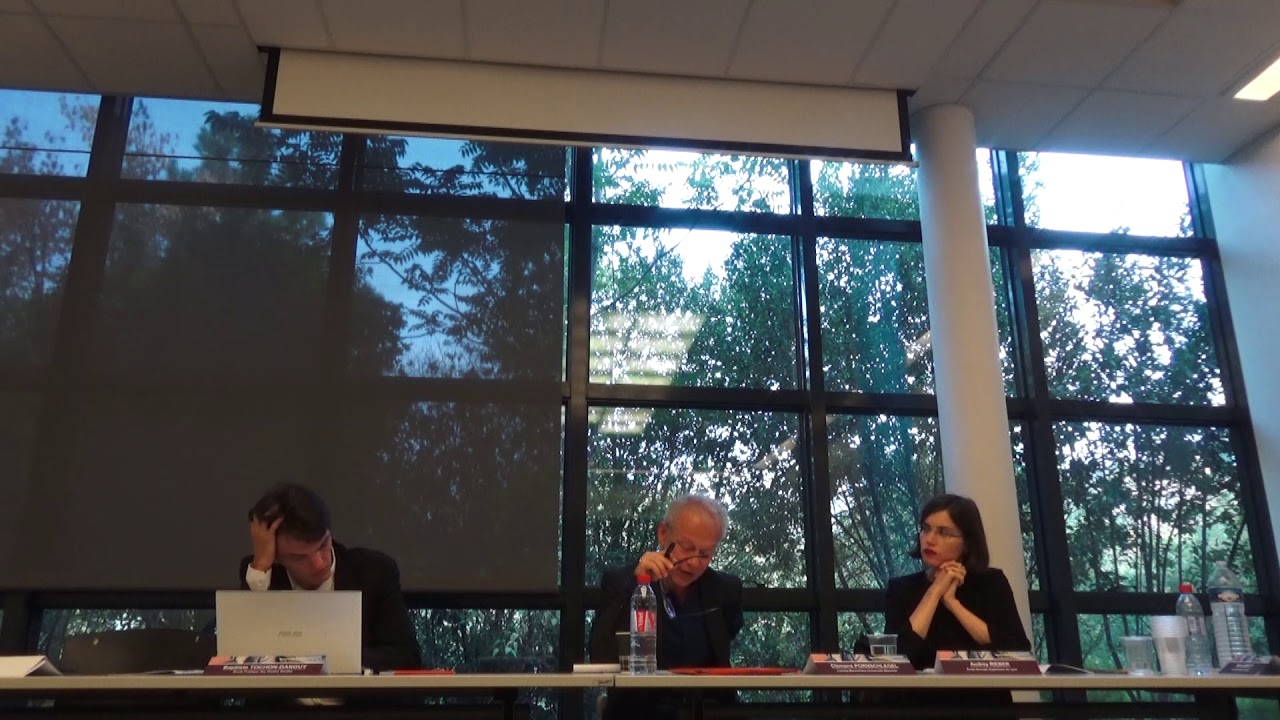
« Moderne / Modernisme. Qu’est-ce que la modernité en art ? » - Clemens Pornschlegel
Modern / Modernism. What is modernity in art?
Keywords
Summary
181 words
Critical Evaluation
Value of the Information & Strength of the Argument
The value lies in the original synthesis of literary analysis with critical social theory. The argumentation is systematic and well-structured: starting from the historical transformation of the early 19th century, it traces how Faust embodies both humanist aspirations and their perversion into capitalist discipline. The speaker supports his claims with direct quotes from Faust and references to canonical theorists (Benjamin, Weber, Marx), creating a cohesive interpretive framework. While the reading is provocative, it is grounded in textual evidence and engages with counterpoints, notably whether Faust’s enterprise can be seen as a prefiguration of totalitarianism. The logic is compelling, though somewhat one-sided, as it tends to present a singular interpretation without fully exploring alternative readings.
Scientific Rigor, Source Quality, Title Accuracy
The scientific rigor is high: the talk is delivered in an academic context, relies on primary and secondary literature, and explicitly cites sources (e.g., Goethe, Benjamin, Marx, Weber). However, the use of sources is selective and serves the argument, which is typical of scholarly interpretations rather than an exhaustive literature review. The title of the colloquium adequately frames the general theme, and the specific focus on Faust is clearly announced in the presentation. The adequacy is good, though the video’s title itself (‘Moderne / Modernisme…’) could mislead viewers expecting a broader survey. No public comments were analyzed, so no trends can be reported.
232 words
Title / Content Match
The title of the colloquium is broader than the specific focus on Goethe's Faust, but this intervention is part of a larger event addressing modernity in art, so the title is acceptable as a framing, even if slightly generic.
Quality & Reliability
8/10
The talk is given by a university professor at an academic conference, grounded in canonical texts and theoretical frameworks. The argumentation is coherent and supported by textual evidence, though it remains a single interpretive perspective rather than a comprehensive scholarly review.
Key Moments
Markers derived by PSI from the transcript: the creator did not define chapters.
- Introduction by the moderator and presentation of the speaker.
- Pornschlegel introduces the core theme: the shift from classical representation to productive order.
- Discussion of paper money in Faust, symbolizing the modern economic sphere.
- Faust's colonial project and its interpretation as an allegory of the bourgeoisie.
- The paradox of emancipation leading to new slavery through relentless labor.
- Conclusion: Faust's redemption as affirmation of capitalist modernity; final remarks on the German path.
Cited Sources
- Colloque Moderne/Modernisme – Programme et détails — Official page of the conference where this talk was presented.
Contribution & Novelties
The talk offers a novel interpretation of Goethe’s Faust as a direct allegory of capitalist modernity, emphasizing the contradictory nature of emancipation and servitude. It connects literary analysis with sociological theories to argue that Faust’s project prefigures modern technology and industry, while also exposing the dehumanizing forces of productivity. The speaker’s contribution lies in framing Faust’s redemption not as a moral triumph but as an affirmation of the imperative of endless work, aligning with Benjamin’s critique of capitalism as a religion.
Pour aller plus loin :
- Modernité — Pour comprendre le concept général de modernité.
- Goethe’s Faust — Le texte source analysé.
- L’éthique protestante et l’esprit du capitalisme — L’ouvrage de Max Weber souvent invoqué.
- Walter Benjamin — Penseur cité pour son analyse du capitalisme comme religion.
127 words
Radar Profile
Le profil radar montre des scores équilibrés entre quantité et qualité de l'information, avec une fiabilité globale élevée, mais un niveau technique modéré, reflétant un exposé académique accessible à un public connaisseur en lettres et en sciences humaines.