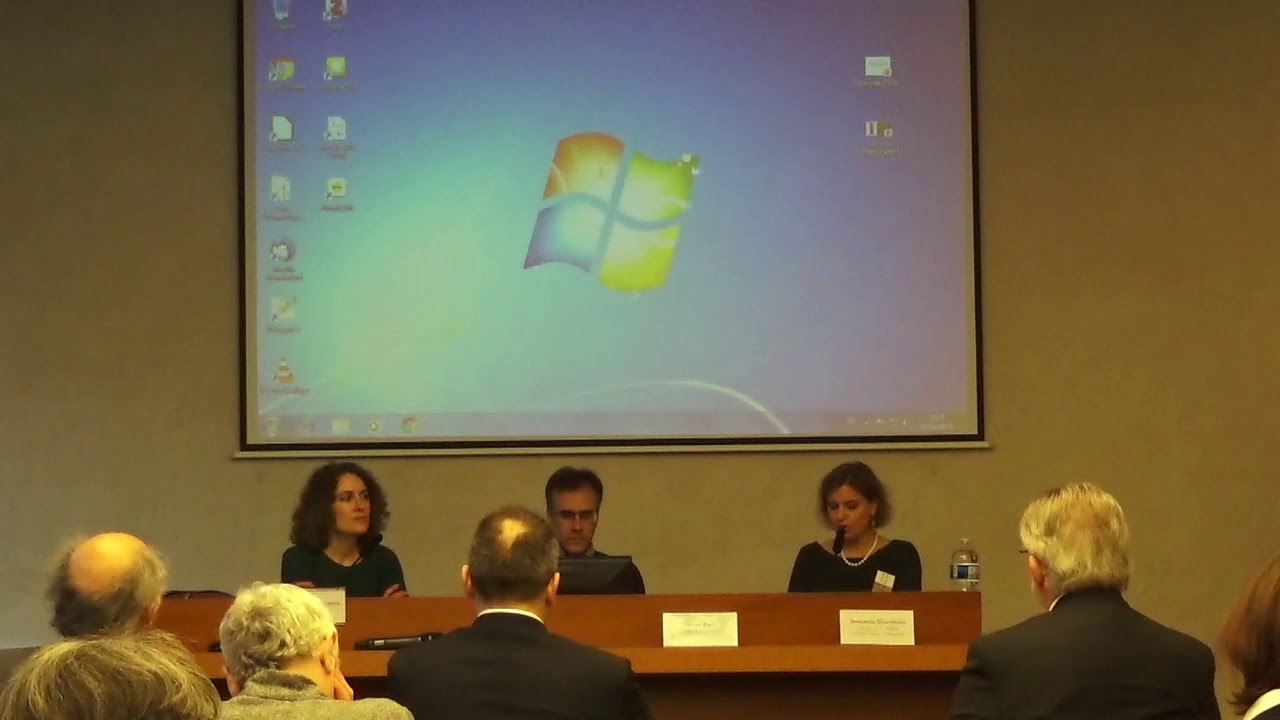
Colloque international "Philon d'Alexandrie dans l'Europe moderne" - Introduction
International Symposium "Philo of Alexandria in Modern Europe" - Introduction
Keywords
Summary
191 words
Critical Evaluation
Value of the Information & Strength of the Argument
The value of the information lies in its detailed examination of a foundational edition in the history of scholarship. Sterling’s argumentation is meticulous, based on direct inspection of manuscripts and the edition itself, as well as careful cross-referencing with ancient sources like Eusebius. He presents clear principles underlying Turnebus’s editorial choices and evaluates their merits and limitations. The talk integrates biographical, historical, and textual evidence, making a compelling case for the importance of the 1552 edition in shaping modern understanding of Philo. The argument is well-structured, moving from general context to specific analysis, and ultimately to broader implications for the reception of Philo. The speaker’s expertise is evident in his mastery of the material and his ability to relate the edition to larger intellectual trends.
Scientific Rigor, Source Quality, Title Accuracy
The scientific rigor is high: the presentation is based on primary sources, including Renaissance manuscripts and early printed books, and the speaker cites specific manuscript sigla and the catalog of the royal library. The reliance on Turnebus’s own preface and the testimonia included in the edition demonstrates careful source engagement. The title of the video accurately matches the content: it is indeed the introduction to the colloquium, encompassing both the opening remarks and the first scholarly presentation. The YouTube description provides a direct link to the conference program on the LabEx COMOD site, which serves as a reliable source for further details. No external sources are cited within the talk itself beyond the primary materials, but the scholarly context is well established. The overall rigor is excellent, appropriate for an academic conference.
272 words
Title / Content Match
The title accurately reflects the video content: it is the introduction of an international colloquium, including opening remarks and the first keynote presentation.
Quality & Reliability
8/10
High-quality scholarly presentation by a recognized expert, based on primary sources and archival research. The content is well-documented and credible, though limited to a specific aspect of Philo's reception.
Key Moments
Markers derived by PSI from the transcript: the creator did not define chapters.
- Opening remarks and welcome by the colloquium organizers.
- Introduction of the first keynote speaker, Gregory Sterling, by the session chair.
- Start of Professor Sterling's talk on the 1552 editio princeps of Philo by Adrianus Turnebus.
- Discussion of the structural principles used by Turnebus to order Philo's corpus.
- Examination of the challenges faced in reconstructing the sequence of Philo's works.
Cited Sources
- Colloque Philon d'Alexandrie dans l'Europe moderne — Official page of the symposium on the LabEx COMOD website, providing the program and details of the event.
Contribution & Novelties
The video provides an expert analysis of the 1552 Turnebus edition of Philo, offering valuable insights into its structure, editorial principles, and significance. It contributes to the understanding of how Philo’s corpus was assembled and transmitted in the Renaissance. The talk highlights the interplay between humanist scholarship and the reception of a Jewish-Hellenistic author, filling a gap in the study of early modern intellectual history.
Pour aller plus loin :
- Philo of Alexandria — Overview of Philo’s life, works, and philosophical significance.
- Adrianus Turnebus — Background on the French humanist and printer responsible for the 1552 edition.
- Editio princeps — Concept of the first printed edition of a work, relevant to the context of Turnebus’s publication.
116 words
Radar Profile
The radar profile shows uniformly high scores, with particular strength in quality and reliability of information, reflecting the authoritative and well-grounded nature of the presentation. The slightly lower but still strong scores in quantity and technical level indicate a dense but focused talk that is accessible to specialists.