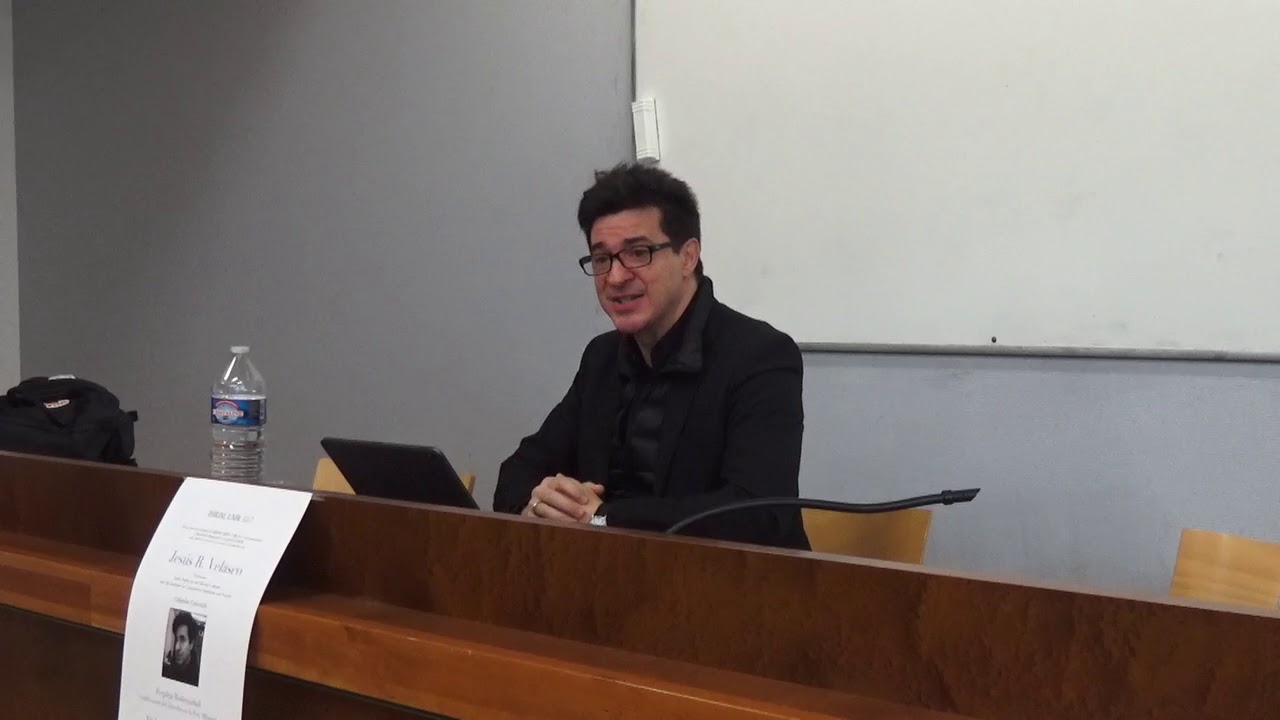
Perpleja Modernidad : Codificación del Derecho en la Era Alfonsina
Perplexing Modernity: Codification of Law in the Alfonsine Era
Keywords
Summary
160 words
Critical Evaluation
Value of the Information & Strength of the Argument
The lecture offers fresh perspectives on medieval legal codification by foregrounding the concept of perplexity as a generative force rather than a state of confusion. The speaker’s argument is well-structured, moving from philosophical foundations (Maimonides) to concrete legal innovations (Alfonso X’s Siete Partidas). He provides detailed evidence from primary sources, including specific titles and laws, and engages with a wide range of secondary literature. The reasoning is coherent, though at times dense, and the connections between philosophy, aesthetics, and law are convincingly argued. The introduction of ‘vox mortua’ as a legal fiction is particularly insightful, as it explains how writing acquired present authority. However, some claims could benefit from more explicit textual citations to support the innovative nature of Alfonso’s approach.
Scientific Rigor, Source Quality, Title Accuracy
The speaker demonstrates rigorous scholarship by referencing numerous primary and secondary sources, including Maimonides, Aristotle, and contemporary historians. He acknowledges the complexity of the topic and avoids oversimplification. The title accurately reflects the content, focusing on the ‘perplexity’ of modernity in the Alfonsine legal context. The presentation is consistent with academic standards, though the lack of visual aids or direct quotes might hinder accessibility. Nevertheless, the argumentation is solid, and the speaker’s engagement with existing research is evident.
214 words
Title / Content Match
The title accurately reflects the central theme of perplexity in legal codification, which the lecture develops in depth.
Quality & Reliability
8/10
The lecture is based on extensive research and cites numerous primary and secondary sources, but specific claims are not independently verified.
Key Moments
Markers derived by PSI from the transcript: the creator did not define chapters.
- Introduction and thanks; presentation of the topic of perplexity in legal codification.
- Discussion of Maimonides' question about the perplexity caused by law and philosophy.
- Overview of recent scholarship on documentary culture and the materiality of medieval documents.
- Introduction of the concepts 'vox mortua' and 'vox viva', and the legal fiction that gives presence to written law.
- Explanation of how Alfonso X incorporates Aristotelian aesthetics and the science of the soul into the Siete Partidas.
- Discussion of juridical memory as a present-centered concept, and concluding reflections on subjectivity and modernity.
Cited Sources
- Maimonides, The Guide for the Perplexed — Central philosophical text discussing perplexity in the confrontation between law and philosophy.
- Alfonso X, Siete Partidas — Primary legal code analyzed in the lecture, particularly the Third Partida on procedural law.
- Aristotle, De Anima — Source for the science of the soul (psychology) integrated into Alfonsine jurisprudence.
- Bedos-Rezak, Brigitte — Her work on seals and documentary materiality is cited as foundation for the concept of intermediate mediality.
Contribution & Novelties
This lecture contributes to the understanding of medieval legal history by proposing that the codification of law under Alfonso X was driven by a response to existential perplexity, integrating philosophical and aesthetic dimensions into legal practice. The original idea of ‘vox mortua’ as a legal fiction that grants permanence and presence to written law is a significant theoretical contribution. It also bridges the gap between legal theory and sensory experience, suggesting a ‘juridical aesthetics’ that shaped subjectivities.
Pour aller plus loin :
- Maimonides’ Guide for the Perplexed — Directly relevant to the concept of perplexity in legal-philosophical thought.
- Siete Partidas — The primary text discussed, essential for understanding Alfonsine law.
- Legal fiction — The theoretical basis for the ‘vox mortua’ concept.
- Aristotle’s De Anima — Key philosophical source for the science of the soul incorporated into law.
137 words
Radar Profile
The radar profile shows high scores in technical level and information quality, indicating a rigorous academic content. The lower score in reliability reflects the lack of independent verification, while the high quantitative information suggests a comprehensive treatment.