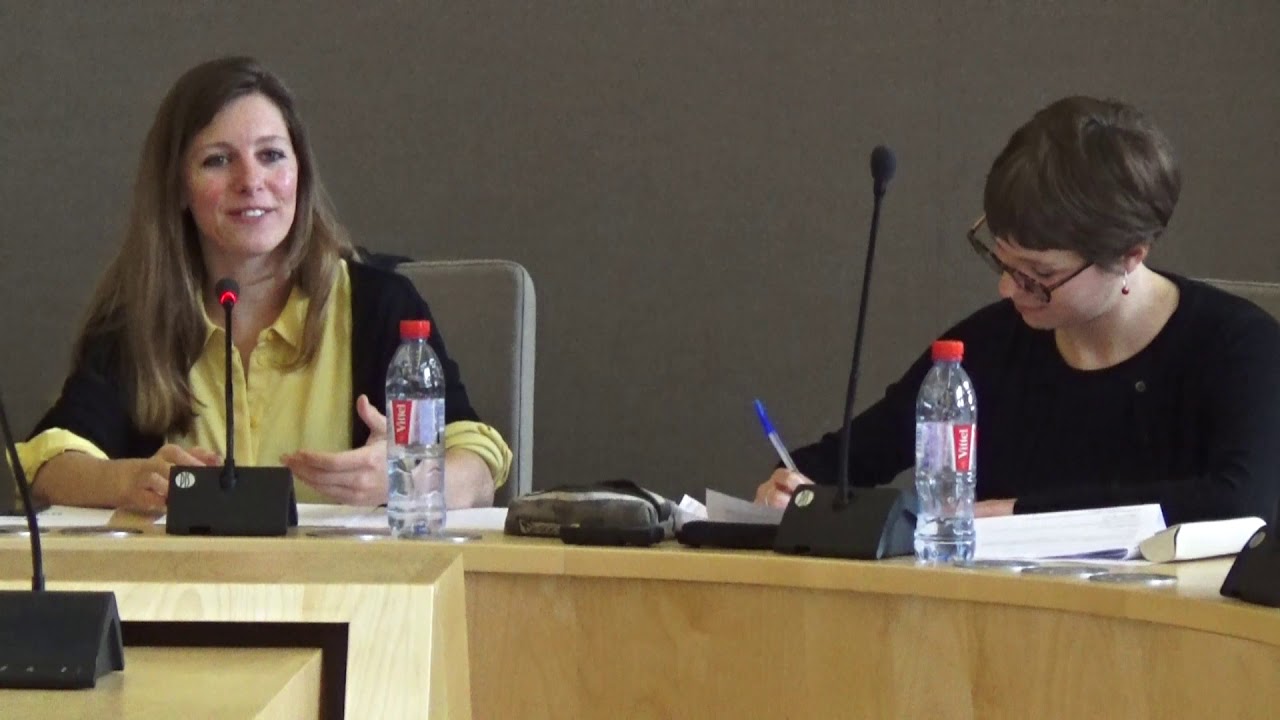
Anahid Roux Rosier : formation doctorale "Une philosophie de terrain?"
Anahid Roux Rosier: doctoral training "A field philosophy?"
Keywords
Summary
195 words
Critical Evaluation
Value of the Information & Strength of the Argument
The value of this talk lies in its intimate and honest depiction of a philosopher’s engagement with fieldwork. Roux Rosier argues convincingly that philosophical concepts can emerge from practical encounters, giving weight to her claim that permaculture practitioners are themselves thinkers. However, the argumentation is primarily anecdotal and personal; she provides no systematic analysis or empirical data to support her broader claims. Her reasoning is coherent and articulate, but it rests heavily on her own subjective experience, limiting its generalizability. The strength of the presentation is its authenticity and the clarity with which she describes her methodological choices, such as how she selects sites and conducts interviews.
Scientific Rigor, Source Quality, Title Accuracy
From a scientific standpoint, the talk is rigorous in its introspection and methodological transparency, but it lacks external verification and explicit citations. Roux Rosier mentions key figures like Mollison and Holmgren without providing precise references, and no academic sources are cited during the presentation. The structure is logical, moving from personal motivation to historical context to methodological detail, but the reliance on narrative rather than evidence reduces its overall scientific robustness. The title ‘A philosophy of fieldwork?’ is well aligned with the content, as the speaker repeatedly addresses the nature and implications of her fieldwork practice. There are no audience comments provided for analysis.
226 words
Title / Content Match
The title accurately reflects the content: the speaker discusses her fieldwork practice and the philosophical implications of conducting field research in permaculture contexts.
Quality & Reliability
6/10
The talk is given by a PhD student in philosophy at a recognized academic institution (Labex Comod). The content is descriptive of her own field research methodology on permaculture practitioners. While the presentation seems informed, the transcript suffers from poor speech recognition, and no external sources are cited to verify claims. The arguments are qualitative and based on personal experience.
Key Moments
Markers derived by PSI from the transcript: the creator did not define chapters.
- Presentation of the research topic and the central question about the link between philosophy and fieldwork.
- Historical overview of permaculture, including its origins with Mollison and Holmgren and its political dimensions.
- Description of the fieldwork method: visiting sites, conducting semi-structured interviews, and using photographs and notes.
- Anecdote about an interviewee dancing in a garden, illustrating the embodied and transformative nature of the experience.
Contribution & Novelties
The original contribution of this talk is to articulate how a philosopher can integrate ethnographic methods into their practice, arguing that field encounters can generate and reshape philosophical concepts. Roux Rosier’s emphasis on the practitioner as a thinker and on the embodied nature of understanding offers a fresh perspective within environmental philosophy. She also highlights the creative potential of research formats beyond traditional academic writing.
Pour aller plus loin :
- Permaculture — Background on the movement she studies, useful for understanding the practical and ethical principles.
- Qualitative research — Methodological context for her interviews and observational approach.
- Philosophy of ecology — Relevant field connecting ecological science and philosophical interpretation.
109 words
Radar Profile
The radar profile shows moderate to high scores across the board, with qualitative information and technical level being the strongest aspects. This reflects a talk that is intellectually rich and methodologically detailed, though somewhat limited in quantitative data and external verifiability, which the lower reliability score captures.