« Moderne / Modernisme. Qu’est-ce que la modernité en art ? » - Michael Zimmermann
Modern / Modernism. What is modernity in art?
Keywords
Summary
167 words
Critical Evaluation
Value of the Information & Strength of the Argument
The talk provides a nuanced interpretation of how artistic identity was constructed in the mid-19th century, moving beyond simple romantic notions of the genius. Zimmermann’s argument that the selfie, or ‘self-fashioning’, is not narcissistic but a complex social performance is compelling, as he roots it in historical practices such as the commedia dell’arte and the modern art of impression management. He builds his case through close readings of specific artworks, contemporary texts, and caricatures, showing how artists like Courbet actively shaped their public image. The discussion of Baudelaire’s ‘modernity’ is sophisticated, recognizing the tension between the eternal and the transitory, and the way Benjamin later reinterprets the allegorical dimension. The argument is well-structured and dense, though the transcription’s poor quality sometimes obscures the clarity of the reasoning.
Scientific Rigor, Source Quality, Title Accuracy
The speaker relies on primary sources such as Baudelaire’s ‘Le Peintre de la vie moderne’ and letters, as well as art historical works by authors like Stephen Greenblatt (though not explicitly mentioned, the concept of self-fashioning is central) and Walter Benjamin. The talk references specific documents, such as the caricature by Bonnaire and the photograph by Nadar, but without proper citations in the transcript. The title accurately reflects the content, focusing on the question of modernity in art, and the talk contributes to a critical understanding of the concept. The academic rigor is high, but the lack of accessible references in the video description limits the ability to verify all claims. The conference page link provides context but not detailed sources.
263 words
Title / Content Match
The title accurately reflects the content: a focused exploration of the concept of modernity in art, with specific reference to Baudelaire and Manet. Although the talk centers on particular case studies, these serve to illustrate the broader question raised in the title.
Quality & Reliability
7/10
The talk is a scholarly presentation by an art historian, but the automatic transcription is often garbled, making some arguments hard to follow. The content is dense and references classic texts, though the reliability of specific claims cannot be fully verified from the given transcript.
Key Moments
Markers derived by PSI from the transcript: the creator did not define chapters.
- Introduction to the talk and the concept of self-fashioning, with a modern example of the selfie.
- Discussion of Courbet's self-portraits and the tension between authenticity and masquerade.
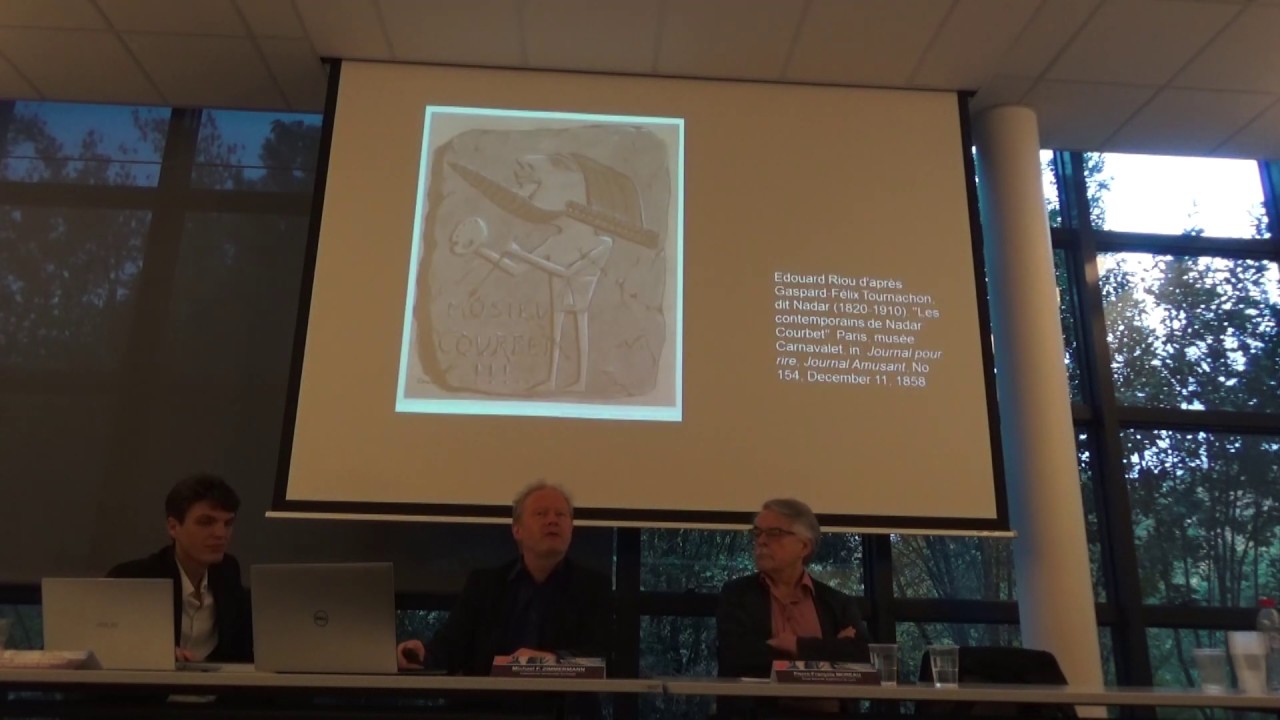
- Analysis of the caricature of Courbet by Nadar and Bonnaire, highlighting the creation of a public image.
- Baudelaire's concept of the 'eternal and transitory' in art, and the role of the flâneur.
- Examination of Manet's 'Music in the Tuileries' and the artist's place in the crowd.
- Conclusion on the prostitute as allegory of commodified modernity and the influence of Walter Benjamin.
Cited Sources
- Colloque: Moderne / Modernisme. Qu’est-ce que la modernité en art ? — Official conference page providing context for the talk and the event.
Contribution & Novelties
The talk offers a fresh perspective on the concept of modernity by linking Baudelaire’s aesthetic theory to the practice of self-fashioning in art. It challenges the common association of the selfie with narcissism, arguing instead for a historical genealogy that goes back to the 19th century. The analysis of Courbet’s self-presentation through caricatures and photographs reveals an early form of personal branding, and the connection to contemporary AI-generated self-images is provocative. The discussion also nuances the eternal/transitory dichotomy, showing its complexity through Benjamin’s allegorical reading.
Pour aller plus loin :
- The Painter of Modern Life — Baudelaire’s seminal essay that is central to the talk’s argument.
- Self-fashioning — Stephen Greenblatt’s concept, directly relevant to the notion of performing identity.
- Walter Benjamin’s Arcades Project — Relevant for understanding the allegorical and commodity aspects discussed in the final section.
137 words
Radar Profile
The radar profile shows high scores in quantity and technical level, but slightly lower in reliability due to the transcription issues. The overall balance suggests a highly informative but specialized talk, best suited for audiences with prior knowledge of art history and critical theory.