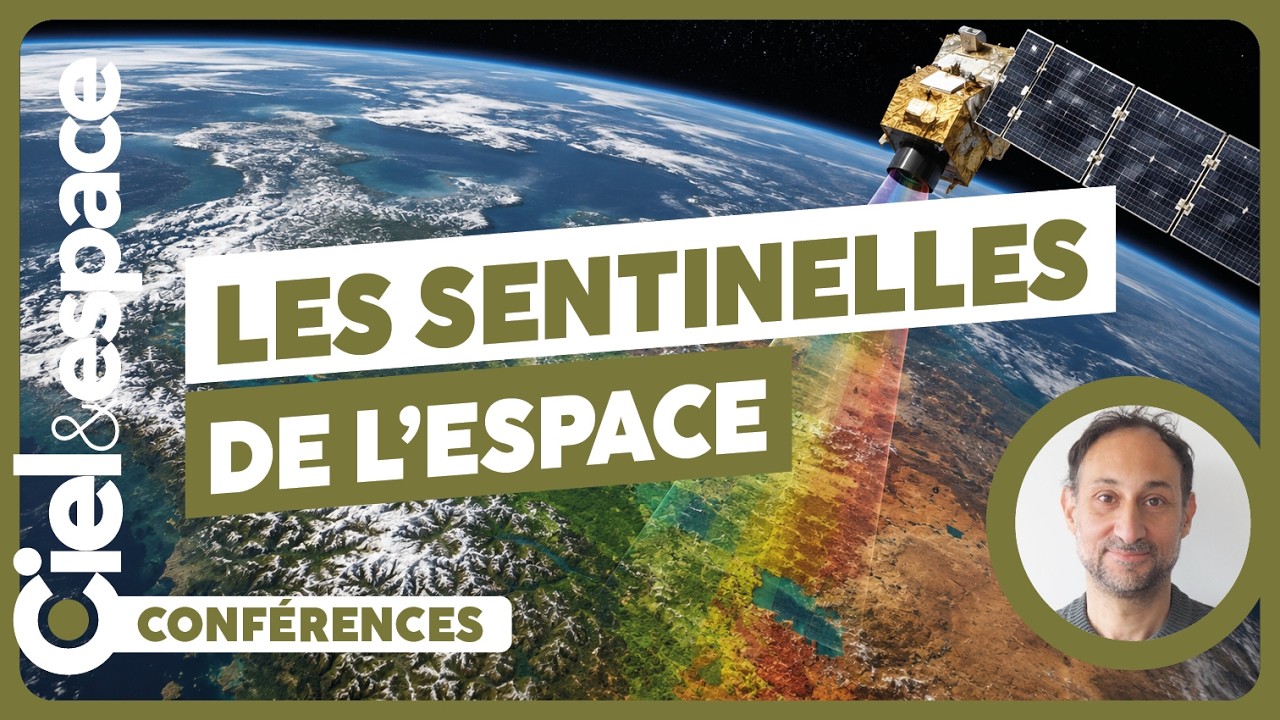
La Terre sous haute surveillance de ses satellites par Francesco D'Ovidio
Earth under high surveillance by its satellites with Francesco D'Ovidio
Keywords
Summary
180 words
Critical Evaluation
Value of the Information & Strength of the Argument
The value of the information is high: it provides a clear and up-to-date overview of ocean observation techniques and highlights the novel capabilities of the SWOT mission. The argumentation is coherent, linking physical oceanography with biological and conservation outcomes. The speaker supports claims with concrete examples, such as elephant seal tracking, and explains the importance of mesoscale processes in climate and biodiversity. The argument that better understanding of mesoscale dynamics is crucial for marine protected areas and climate policy is well-structured and convincing.
Scientific Rigor, Source Quality, Title Accuracy
The scientific rigor is strong: the speaker is a researcher and references real missions (Sentinel 3, SWOT, etc.) and reports from IPBES. The sources are credible, though specific citations are not provided on-screen or in the description beyond a subscription link. The title-content adequacy is acceptable, as the video indeed deals with satellite surveillance of Earth, albeit primarily ocean. No comments were provided for analysis, so public reception trends are not discussed.
170 words
Title / Content Match
The title accurately reflects the general theme of Earth observation via satellites, but the content is more focused on oceanography and biological applications, so it is slightly broad yet not misleading.
Quality & Reliability
8/10
The presentation is given by a researcher (Francesco D'Ovidio) at a scientific event (Rencontres du ciel et de l'espace) and relies on credible satellite data (Sentinel 3, SWOT) and peer-reviewed concepts. It is public-oriented but technically accurate; the reliability is high, though not formally peer-reviewed.
Key Moments
Markers derived by PSI from the transcript: the creator did not define chapters.
- Introduction to ocean observation from space and the focus on mesoscale dynamics.
- Discussion on COP16 and the global target to protect 30% of marine areas by 2030.
- Explanation of mesoscale eddies and filaments, and the role of satellite imagery in revealing ocean structure.
- Example of elephant seal biologging at Kerguelen, showing how seal foraging relates to mesoscale features.
- Launch and capabilities of the SWOT satellite mission, a breakthrough for oceanography.
- Implications for marine protected area design and climate policy, summarizing the talk's main messages.
Cited Sources
- Ciel & Espace subscription offer — Mentioned in the video description as a resource for further information.
- IPBES (Intergovernmental Science-Policy Platform on Biodiversity and Ecosystem Services) — Referenced as the biodiversity equivalent of IPCC, mentioned during the COP16 discussion.
- SWOT (Surface Water and Ocean Topography) mission — Described as a recent satellite mission providing unprecedented ocean surface measurements.
Contribution & Novelties
The talk provides an excellent synthesis of modern oceanographic observation, integrating satellite altimetry with biological tagging, and presents the SWOT mission as a revolutionary tool. Its original contribution is highlighting how mesoscale ocean structures serve as crucial foraging grounds for top predators and how this knowledge informs conservation. The speaker’s personal field experience adds authenticity.
Pour aller plus loin :
- Mesoscale eddy — Overview of mesoscale ocean eddies and their role in ocean dynamics.
- SWOT satellite mission — Detailed description of the SWOT mission and its objectives.
- Marine protected area — Definition and global status of marine protected areas, relevant to the 30% target.
104 words
Radar Profile
The radar profile shows high scores in quantity and technical level, reflecting the dense scientific content and specialized terminology. Quality and reliability are also high, but slightly lower than the technical aspect due to the presentation being a general-audience talk rather than a peer-reviewed publication. The overall performance strongly indicates an expert-led, well-illustrated lecture suitable for an informed audience.