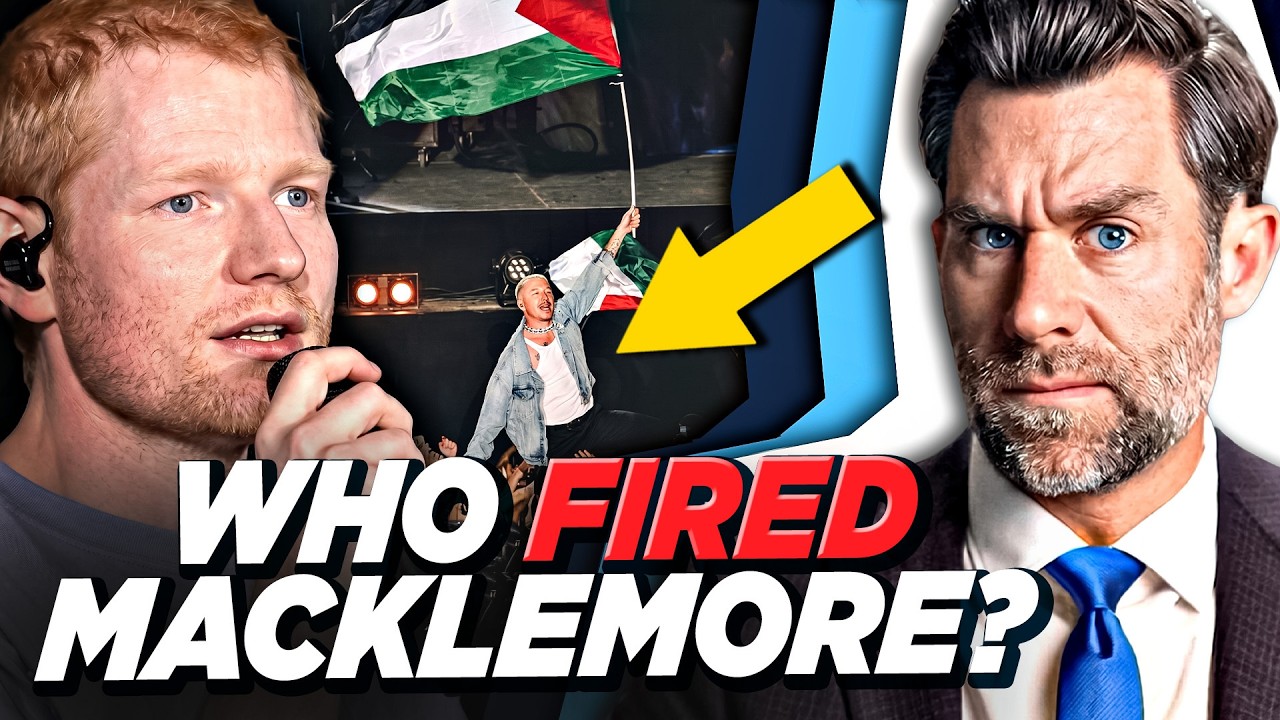
Who Fired Macklemore From The Ed Sheeran Tour?
Keywords
Summary
184 words
Critical Evaluation
Value of the Information & Strength of the Argument
The video offers substantial value by demystifying the complex contractual web behind stadium tours and providing a structured legal framework to attribute responsibility. It argues cogently, presenting multiple perspectives and cautiously noting where evidence is lacking. The argumentation is strengthened by the use of analogous legal cases and industry expert quotes, which illustrate how similar disputes have been resolved. However, it avoids overstatement, acknowledging uncertainties and the influence of non-legal factors such as economic coercion and public opinion.
Scientific Rigor, Source Quality, Title Accuracy
The video demonstrates strong scientific rigor by grounding the analysis in real contracts (e.g., AEG Live–Michael Jackson), specific legal precedents (e.g., Mendenhall v. Hanes, Southeastern Promotions v. Conrad), and credible reporting from AP, Hollywood Reporter, and Rolling Stone. It transparently discusses the limits of available information, such as the undisclosed terms of Msina’s contracts. The sources are credible and relevant to the legal issues. The title, presented as a question, is aptly matched to the content, which systematically explores the possible answers without definitively choosing one, thus fulfilling the promise of an investigative legal analysis.
188 words
Title / Content Match
The title poses a question that the video addresses comprehensively, although it does not provide a definitive answer, making it adequately matched.
Quality & Reliability
8/10
The video provides a thorough legal analysis, citing relevant case law and contractual structures, with clear reasoning and acknowledgment of uncertainties.
Key Moments
Markers derived by PSI from the transcript: the creator did not define chapters.
- Introduction to the controversy and the question of who fired Macklemore
- Explanation of the three-party contract structure involving headliner, promoter, and venues
- Discussion of morals clauses and relevant case law (Lowe v. Cole, Mendenhall v. Hanes)
- First Amendment analysis for public vs. private venues, referencing Southeastern Promotions v. Conrad
- Assessment of Sheeran's leverage and the practical/legal consequences of cancellation
Cited Sources
- LegalEagle's Law School Guide — Referenced as a resource for those interested in law school, not directly cited in the video.
- LegalEagle's Copyright Course — Promoted in the description, tangentially related to legal education.
- LegalEagle on Nebula — Streaming platform for early, ad-free episodes, mentioned as a channel distribution method.
External References
Contribution & Novelties
The video contributes a clear, legal-centric lens to a widely discussed current event, explaining the contractual hierarchy and the role of morals clauses in the entertainment industry. It innovatively connects the incident to longstanding First Amendment doctrines and illustrates the balance between private contracts and public rights.
Pour aller plus loin :
- Morals clause — A contract provision allowing termination based on conduct, crucial to this case.
- Prior restraint — Government action preventing speech, relevant to the public venue analysis.
- Independent contractor — Legal relationship category that applies to supporting acts like Macklemore.
93 words
Radar Profile
The radar profile shows high scores in information quality and quantity, reflecting a dense and well-sourced analysis. Technical level and global reliability are slightly lower but still strong, indicating an accessible yet expert treatment of the subject. This balance suggests the video suits both general audiences and those with legal interest.
💬 Sur les 30 commentaires analysés, l'orientation est très négative, avec une levée de boucliers contre les propriétaires de stades et une large approbation de Macklemore, tout en critiquant le manque de défense de la liberté d'expression par Ed Sheeran.