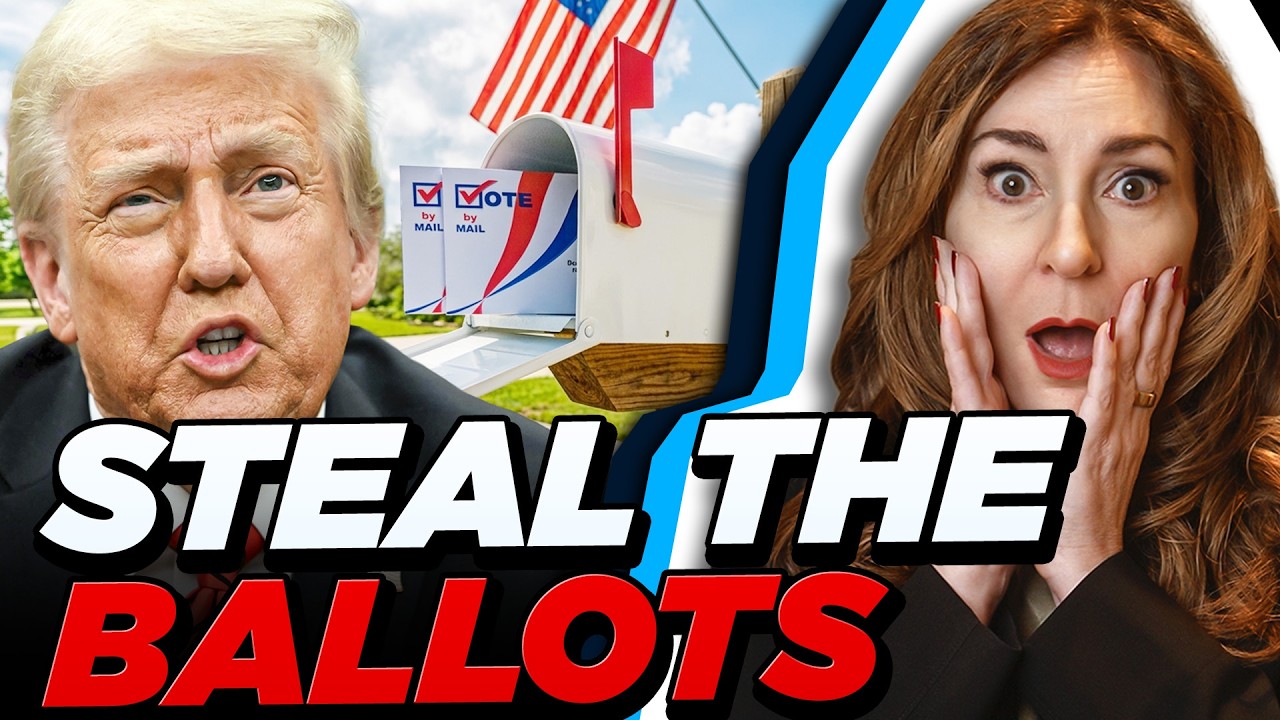
Trump Announces Scheme To Rig November Elections
Keywords
Summary
128 words
Critical Evaluation
Value of the Information & Strength of the Argument
The video provides significant value by breaking down complex legal and procedural issues in an accessible manner. The argumentation is solid, relying on specific statutes, court rulings, and legal precedents. The presenter challenges the administration’s claims with logical reasoning and factual evidence, such as the 0% failure policy and the practical impossibility of compliance. The inclusion of a whistleblower report adds weight. The video also explains the broader implications of the Supreme Court’s willingness to accept appeals of TROs, which is a systemic concern. Overall, the argument is well-structured and persuasive.
Scientific Rigor, Source Quality, Title Accuracy
The scientific rigor is high for a legal commentary. The video cites specific laws (e.g., 39 U.S.C. § 401, § 404) and court cases, and references the major questions doctrine. The source quality is based on legal knowledge and public records. However, the video does not provide direct citations to those laws or cases in the description, but relies on the presenter’s expertise. The title accurately reflects the content. There is a sponsor segment for Incogni and Nebula, approximately 3 minutes, which is clearly marked. The video also promotes additional content on Nebula, but this does not affect the legal analysis.
207 words
Title / Content Match
The title accurately reflects the video's focus on Trump's executive orders and legal challenges aimed at altering election procedures. The content directly addresses the alleged scheme to use the USPS to reject mail-in ballots.
Quality & Reliability
8/10
The video provides a detailed legal analysis based on actual court documents and statutes. The presenter is a licensed attorney and former federal prosecutor. The content is well-argued and references specific cases and legal doctrines. There is a clear sponsor segment for Incogni and Nebula, but this does not detract from the legal analysis.
Key Moments
Markers derived by PSI from the transcript: the creator did not define chapters.
- Trump's decade-long claims about voter fraud and mail-in ballots.
- First executive order on election integrity and its immediate block by courts.
- Second executive order instructing USPS to create a portal and refuse ballots for mismatches.
- Judge Talwani's injunction and the Supreme Court's stay, with dissents.
- Whistleblower report revealing the 0% failure policy and potential system crashes.
- Final preliminary injunction, withdrawal of appeals, and current status of the case.
Cited Sources
- Nebula Streaming Service — Full version of the video with additional analysis is available on Nebula.
- Watch Nebula — Early access to videos on Nebula.
- LegalEagle Law Guide — Guide for law school aspirants.
- Copyright Course — Educational course on copyright law.
- Eagle Team Legal Help — Referral service for legal assistance.
External References
Contribution & Novelties
The video provides an original synthesis of recent legal developments, offering insight into procedural abuses by the administration. It highlights the unprecedented nature of the Supreme Court’s willingness to hear appeals of temporary restraining orders. The discussion of the major questions doctrine in the context of election law is particularly insightful.
Pour aller plus loin :
- Major Questions Doctrine — Explains the legal principle used to invalidate the executive order.
- Elections Clause — Constitutional provision that grants states and Congress authority over election timing and procedures.
- Privacy Act of 1974 — Law governing the use of personal data by federal agencies, relevant to the SSA database issue.
107 words
Radar Profile
The profile shows high scores across all dimensions, indicating a well-researched and technically detailed legal analysis. The content is dense with facts and arguments, suitable for an audience comfortable with legal terminology.