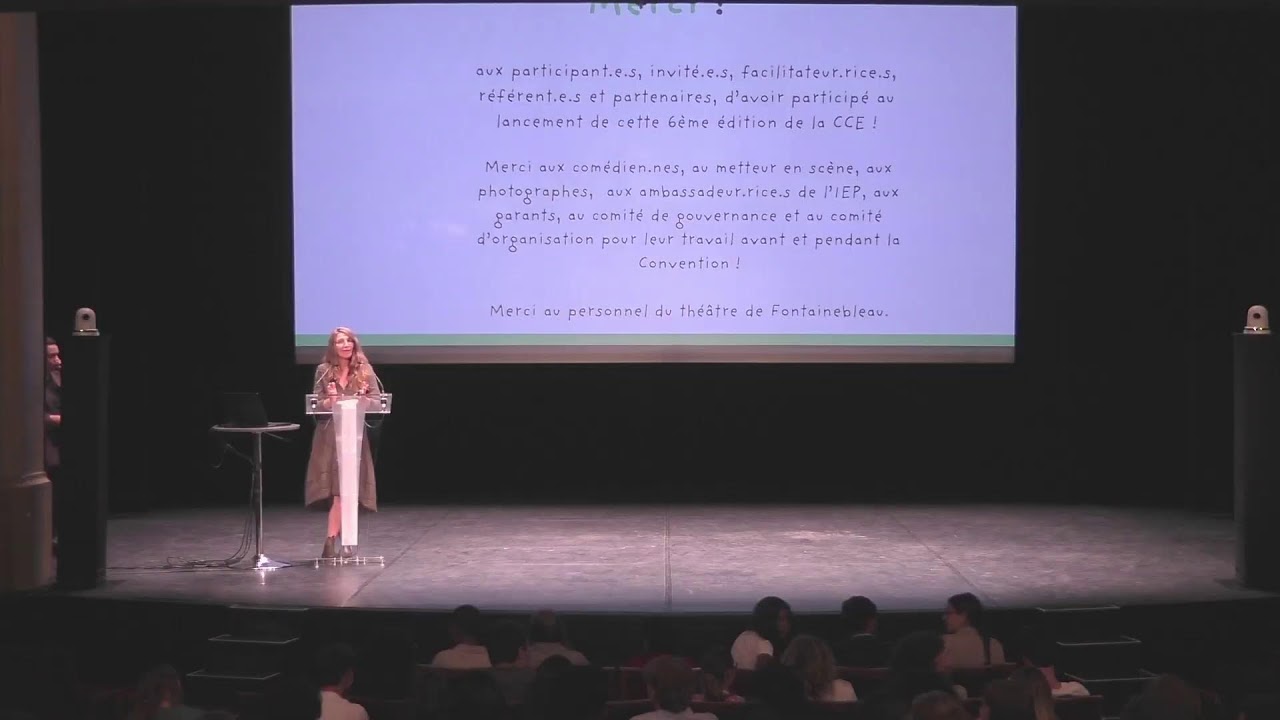
CCE 2026 : Santé et environnement
Keywords
Summary
203 words
Critical Evaluation
Value of the Information & Strength of the Argument
The value of the information lies in its direct representation of student concerns and innovative ideas. Each presentation is concise and often based on concrete observations (e.g., lack of food quality, housing issues, forest fires). The argumentation is generally persuasive in a civic context, using emotional appeals and factual references (e.g., the L230-5-1 law). However, the depth of analysis is limited; proposals are presented as ideas without feasibility studies or evidence-based impact assessments. The strength of the argumentation is in its participatory nature, but scientifically it remains superficial.
Scientific Rigor, Source Quality, Title Accuracy
The rigor is moderate. Presenters cite a few legal texts (e.g., L230-5-1) and refer to associations (LPO, ONF) but without detailed validation. The title accurately reflects the content, and the adéquation is apparent. No external sources are provided in the description, so the video relies solely on student statements. The overall reliability is acceptable for a documentary record of a student event, but it lacks scientific sourcing.
170 words
Title / Content Match
The title accurately reflects the central theme: the plenary session on health and environment, as evidenced by the student proposals presented.
Quality & Reliability
6/10
The video is an authentic recording of a student citizens' convention, presenting a variety of health and environment proposals. The content is grounded in real student concerns and some legal references, but it lacks external validation and rigorous scientific sourcing.
Key Moments
Markers derived by PSI from the transcript: the creator did not define chapters.
- Opening remarks and introduction to the restitution session.
- First group presents the Coblo app: a community platform for campus services and carpooling.
- Second group proposes mobil outdoor arrangements: sports cages and student-managed gardens in parking areas.
- Third group voices complaints about CROUS food quality, citing the L230-5-1 law and demanding action.
- Fourth group introduces 'No Addiction November' to raise awareness on addictions and their health and environmental impacts.
- Fifth group proposes a heating kit for students in poorly insulated accommodation.
- Sixth group proposes creating water points (marais) to support biodiversity and cool the campus.
- Seventh group advocates for mandatory outdoor TD in forests with expert interventions to understand ecosystem health.
- Q&A session and institutional reactions from Émilie Franquel, promising follow-up.
- Transition to the next theme on health and colonial heritages, with a presentation on 'Mediterranean syndrome' and decolonizing curricula.
Cited Sources
- L230-5-1 du Code rural et de la pêche maritime — Invoked by the third group to demand that CROUS respect quotas for sustainable and organic food.
- Ligue pour la Protection des Oiseaux (LPO) — Mentioned as a potential partner for student forest activities.
- Office National des Forêts (ONF) — Cited as an expert body for forest management education.
Contribution & Novelties
The video captures a unique moment of student-led policy proposals on health and environment within a French political science institute. It highlights the creativity and civic engagement of students, offering a grassroots perspective on campus life and sustainability. The proposals, while not scientifically elaborated, represent a social thermometer of student needs and environmental consciousness.
Pour aller plus loin :
- One Health — This concept, linking human, animal, and environmental health, is directly relevant to several proposals (water, forest, food).
- Citizens’ assembly — The CCE itself is an example of a citizens’ assembly applied to a university context.
- Environmental racism — Mentioned indirectly in the colonial heritage theme, this concept is key to understanding health disparities.
- University social responsibility — The proposals align with the growing movement for universities to take on sustainability and ethical commitments.
135 words
Radar Profile
The radar profile shows moderate scores on information quantity and quality, with a lower technical level. The reliability is medium. This suggests a content that is rich in student voices but lacks scientific depth, typical of civic engagement events.