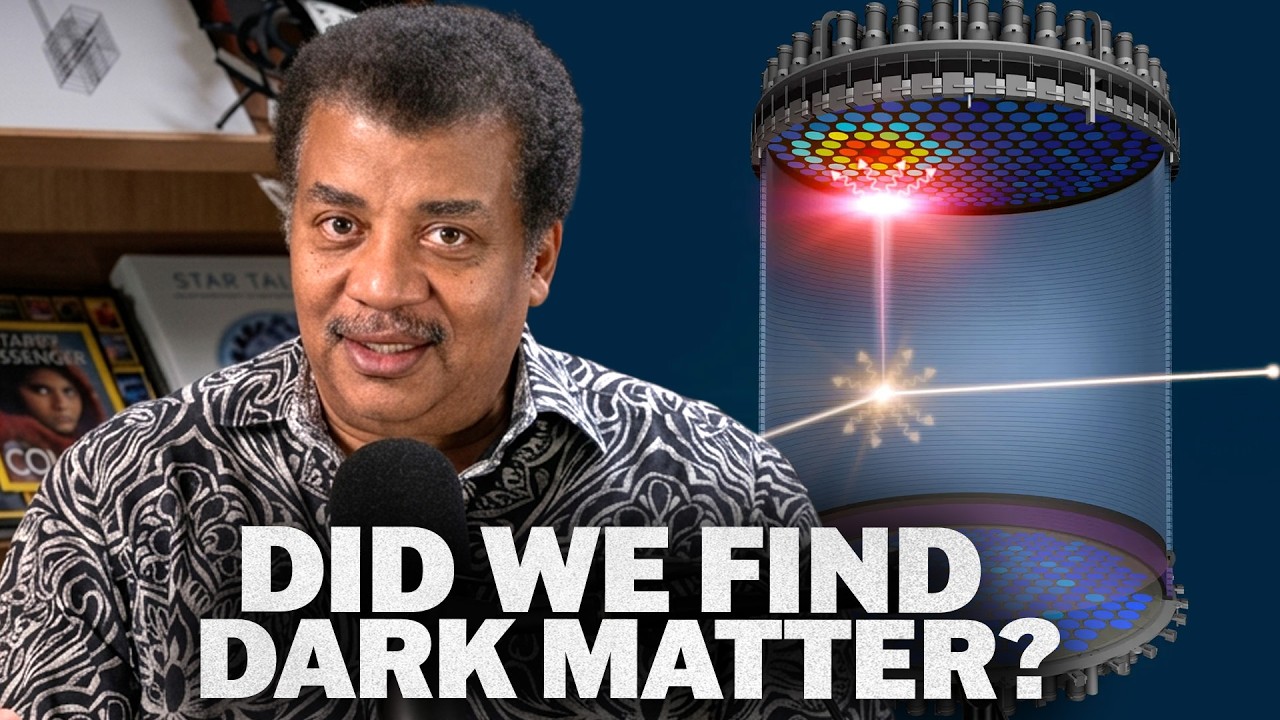
Did We Finally Detect Dark Matter?
Keywords
Summary
157 words
Critical Evaluation
Value of the Information & Strength of the Argument
The video provides valuable insight into current dark matter experiments and the significance of a single candidate event. Freese’s argumentation is scientifically grounded: she explains the design of liquid xenon detectors, the role of the weak force, and why high recoil energy is distinctive. She is honest about the limitations, noting that statistical confidence is low but that small‑number statistics can still be meaningful if backgrounds are well understood. The suggestion of the Higgsino hypothesis is presented with a clear testable prediction, making the argument robust despite the preliminary nature of the result.
Scientific Rigor, Source Quality, Title Accuracy
The scientific rigor is high for a popular science show: the guest is an established expert, and the discussion accurately reflects current methods. However, no specific papers or external references are provided directly in the video or description, aside from book promotions. The title accurately reflects the content and does not overstate the result—the video emphasizes that this is not yet a confirmed detection. The absence of cited literature limits the ability to verify details, but the explanation is internally consistent and aligns with known dark matter research.
196 words
Title / Content Match
The title directly matches the content: the video discusses whether a dark matter particle has been detected, presenting the candidate event and its caveats.
Quality & Reliability
7/10
Accurate and well‑explained content based on expert opinion, but the detection is preliminary and lacks peer‑reviewed sources at the time of discussion. The reasoning is credible and transparent about uncertainties.
Chapters
Contribution & Novelties
The video offers an accessible, up‑to‑date glimpse into a potential breakthrough in dark matter physics, specifically the high‑recoil‑energy event in LZ and the Higgsino interpretation. It bridges theoretical predictions and experimental observations, and highlights the interplay between direct and indirect detection strategies.
Pour aller plus loin :
- Weakly interacting massive particle — Background on WIMP theory and detection.
- LUX-ZEPLIN experiment — Details on the liquid xenon detector mentioned in the video.
- Higgsino — Explanation of the supersymmetric candidate particle.
- IceCube Neutrino Observatory — Indirect detection through neutrinos.
87 words
Radar Profile
The radar shows strong scores in information quality and reliability, moderate in quantity and technical depth. This reflects a focused, expert‑driven discussion that is scientifically sound but not extremely technical or data‑heavy.