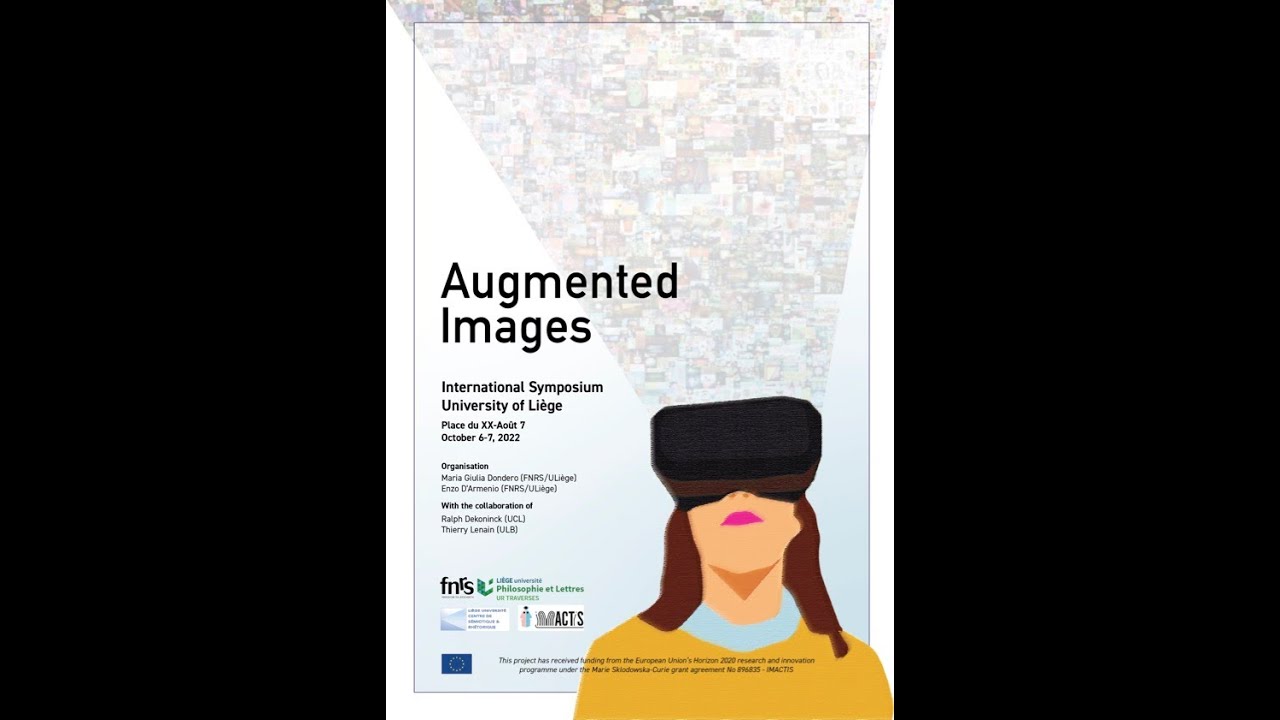
Massimo Leone — Augmented Images (ULiège)
Keywords
Summary
262 words
Critical Evaluation
Value of the Information & Strength of the Argument
The lecture’s value lies in its original semiotic framing of digital images, linking contemporary AI practices to ancient rhetorical traditions. Leone crafts a compelling argument that the distinction between technique and rhetoric is fragile, and that augmented images can serve to construct authority rather than to convey truth. The argumentation is well-structured: he builds a conceptual framework, then tests it against a specific case study, showing how the DeepDream project’s initial scientific intent is undermined by its aesthetic outcomes. The use of the augur metaphor is effective and thought-provoking, providing a fresh lens for examining the credibility of data-driven disciplines. However, the argument is largely theoretical and relies on a single case; some claims could be seen as overstated, and the speaker acknowledges his ‘Catholic provincial’ perspective as a form of self-deprecating irony.
Scientific Rigor, Source Quality, Title Accuracy
The scientific rigor is moderate: the talk references classical texts and semiotic theory, but the only specific source mentioned is the Inceptionism blog post, which is correctly identified. The speaker does not cite empirical studies or provide extensive literature, instead offering a conceptual analysis. The title’s adequacy is acceptable: the video title is general, but the talk’s specific focus on the augmented face is clearly stated at the beginning. The quality of sources is limited due to the absence of explicit citations, but the speaker’s authority and the logical coherence of the argument contribute to its overall reliability. The use of the Google blog as a case study is appropriate, as it is a primary source that illustrates the phenomenon under discussion.
270 words
Title / Content Match
The video title refers to the speaker and the symposium theme, while the actual talk focuses on the augmented face and its semiotic implications. The title is adequate but not highly specific.
Quality & Reliability
8/10
The talk demonstrates rigorous theoretical argumentation, grounded in semiotics and classical rhetoric, with a well-chosen case study. The speaker is a renowned scholar, but the content is primarily interpretive and does not present empirical data.
Key Moments
Markers derived by PSI from the transcript: the creator did not define chapters.
- Introduction of Massimo Leone by the moderator, highlighting his academic background and ERC project.
- Leone introduces the concept of 'augmented' from Latin etymology, linking it to the augur figure and the distinction between rhetoric and technique.
- Discussion on how sign augmentation constructs authorship and authority, and the role of devices and computation in modern pseudo-technique.
- Presentation of the case study: Google's Inceptionism blog post on reverse-engineering neural networks, and the initial scientific motivations.
- Analysis of DeepDream-generated images, the shift from scientific investigation to aesthetic production, and the comparison to augur's robes.
- Concluding remarks on the implications for semiotics and the humanities, urging suspicion of pseudo-technical rhetoric in digital methods.
Cited Sources
- Inceptionism: Going Deeper into Neural Networks — Leone explicitly refers to this blog post by Alexander Mordvintsev, Christopher Olah, and Mike Tyka (2015) as the main case study, discussing its objectives and outcomes.
Contribution & Novelties
The talk provides a novel semiotic perspective on augmented images, drawing an analogy between the ancient practice of augury and contemporary AI-generated imagery. It critiques the conflation of technical rigor and rhetorical flourish in digital research, offering a framework to distinguish between genuine causal understanding and sign-based authority. This contributes to ongoing debates about AI explainability and the cultural status of digital artifacts.
Pour aller plus loin :
- DeepDream — The specific AI project analyzed, illustrating how neural network reverse-engineering can produce artistic images.
- Pareidolia — The phenomenon of perceiving patterns (like faces) in random stimuli, which Leone invokes to explain the visual effects of DeepDream.
- Turing test — Referenced in the talk as a philosophical touchstone for distinguishing simulated intelligence from authentic understanding.
124 words
Radar Profile
The profile shows balanced scores across the metrics, with qualitative depth and technical level relatively high, while quantity of information is moderate due to the focused nature of the lecture. The fiabilite is solid for an expert opinion, though the discussion remains within a theoretical framework.