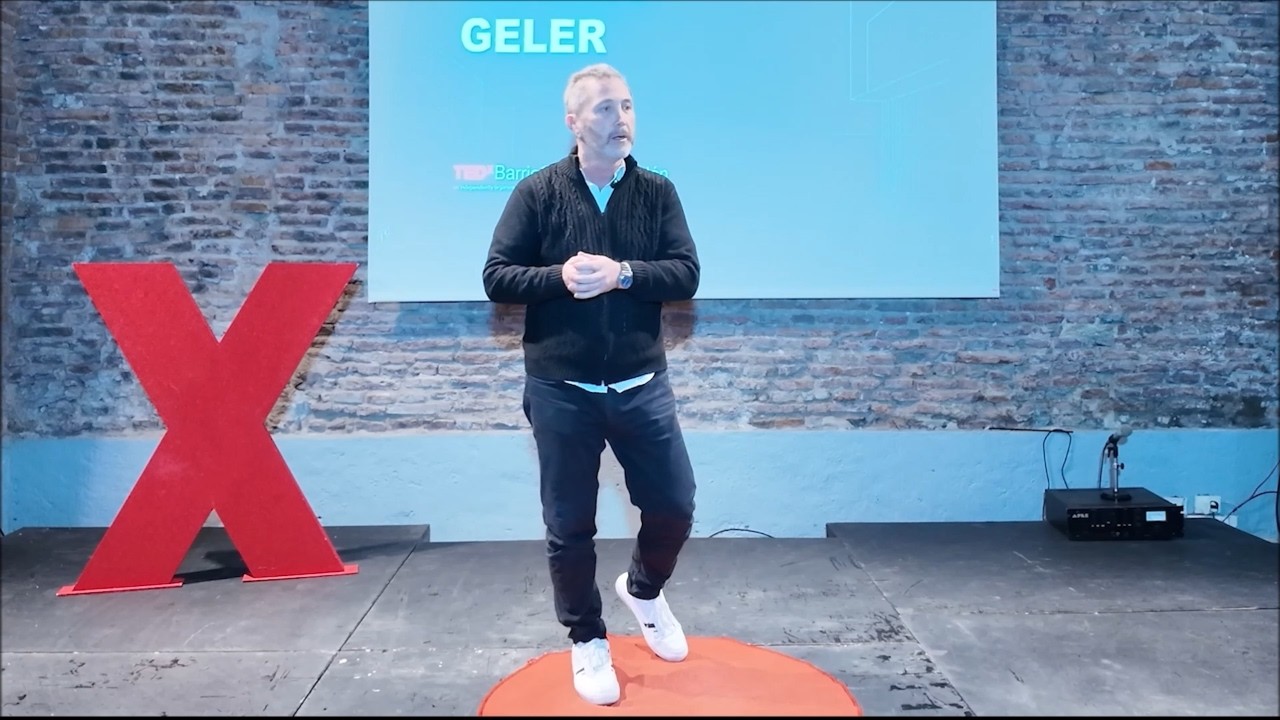
“Todos somos genios en algo.” | Silvano Geler | TEDxBarrioSanNicolasSalon
“We are all geniuses at something.” | Silvano Geler | TEDxBarrioSanNicolasSalon
Keywords
Summary
201 words
Critical Evaluation
Value of the Information & Strength of the Argument
The talk’s value lies in its reframing of success away from comparative achievements (like silver medals) and towards personal fulfillment and resource utilization. The argumentation is solid in its internal logic, building from cultural anecdotes to a practical, step-by-step exercise. The speaker’s personal story, having succeeded in architecture without a degree, adds credibility to the anti-establishment, self-knowledge-driven approach. The main weakness is that the argument lacks empirical evidence and relies heavily on anecdotal tales and rhetorical questions. The exercise proposed, while simple and potentially effective, is presented as the definitive solution without acknowledging psychological or structural barriers to success that individuals may face.
Scientific Rigor, Source Quality, Title Accuracy
The speaker does not cite any scientific sources, studies, or external data to support his claims; his authority is derived solely from personal experience. The only reference provided is the generic TEDx link, which does not serve as a substantive source. The title is perfectly aligned with the content; it serves as the thesis statement for the entire talk. The absence of rigorous sources is typical for motivational TEDx talks, but it limits the scientific reliability of the information presented. The speaker’s argument is purely anecdotal, making it difficult to generalize the advice to a wider audience.
215 words
Title / Content Match
The title accurately reflects the core message of the video: everyone is a genius at something, provided they inventory their resources. The content successfully delivers on this promise.
Quality & Reliability
4/10
Personal anecdotal narrative combined with a practical self-help exercise. The claims are subjective and not backed by empirical data or scientific studies, but the logic is coherent internally and the advice is practical and actionable.
Key Moments
Markers derived by PSI from the transcript: the creator did not define chapters.
- Speaker introduces himself and his background in real estate and architecture without a formal title.
- An analysis of the football match where his team was runner-up, highlighting the public's contradictory reaction.
- Discussion of the binary concept of 'win or die' and its negative implications, referencing a Paraguayan slogan.
- The story of an Argentine field hockey team celebrating their silver medal, contrasting with the German team's focus on winning.
- Rhetorical question asking the audience to value their own body parts, introducing the concept of unrecognized resources.
- Proposal of the main exercise: making a private list of all personal resources and ranking them by importance.
- Discussion of the conclusions drawn from the exercise, including the discovery of hidden resources and the importance of using the top ones.
- Introduction of the taxi driver story, an architect forced to abandon his studies due to family obligations.
- Resumption of the story: the taxi driver supported his daughter's architectural studies and they graduated together.
- Concluding statement about success being about living your own life and being happy with your available resources.
Cited Sources
- TEDx Program — Mentioned in the video description as the official organization and format for the talk.
Concurring Sources
- TEDx Program — The video is an official TEDx talk, implying a baseline standard of presentation quality and an aligned mission of spreading ideas.
Dissenting Sources
- Academic research on the psychology of success — The speaker's anecdotal claims about the nature of success and happiness are not corroborated by specific scientific publications, and the talk explicitly avoids referencing any.
Contribution & Novelties
The talk’s contribution lies in its pragmatic reframing of success and failure, advocating for a personal audit of one’s unique resources as a foundation for professional and personal fulfillment. It addresses the psychological trap of binary thinking (win/lose) by proposing a self-inventory system.
Pour aller plus loin :
- Self-knowledge (psychology) — Relevant to the speaker’s suggestion that understanding your resources leads to success.
- Personal development — Related to the overarching theme of the talk, which focuses on methods for self-improvement.
- Sunk cost — Relevant to the taxi driver’s story, where he abandons his architecture degree due to family pressure but later uses that knowledge to help his daughter.
- Growth mindset — The speaker’s emphasis on celebrating small wins and learning from errors aligns with the concept of a growth mindset.
130 words
Radar Profile
The radar profile shows a talk that is moderate in quantity and quality of information, but very low in technical level and reliability due to its anecdotal nature. The profile is characteristic of a motivational speech aimed at general inspiration rather than a rigorous scientific or technical lecture.