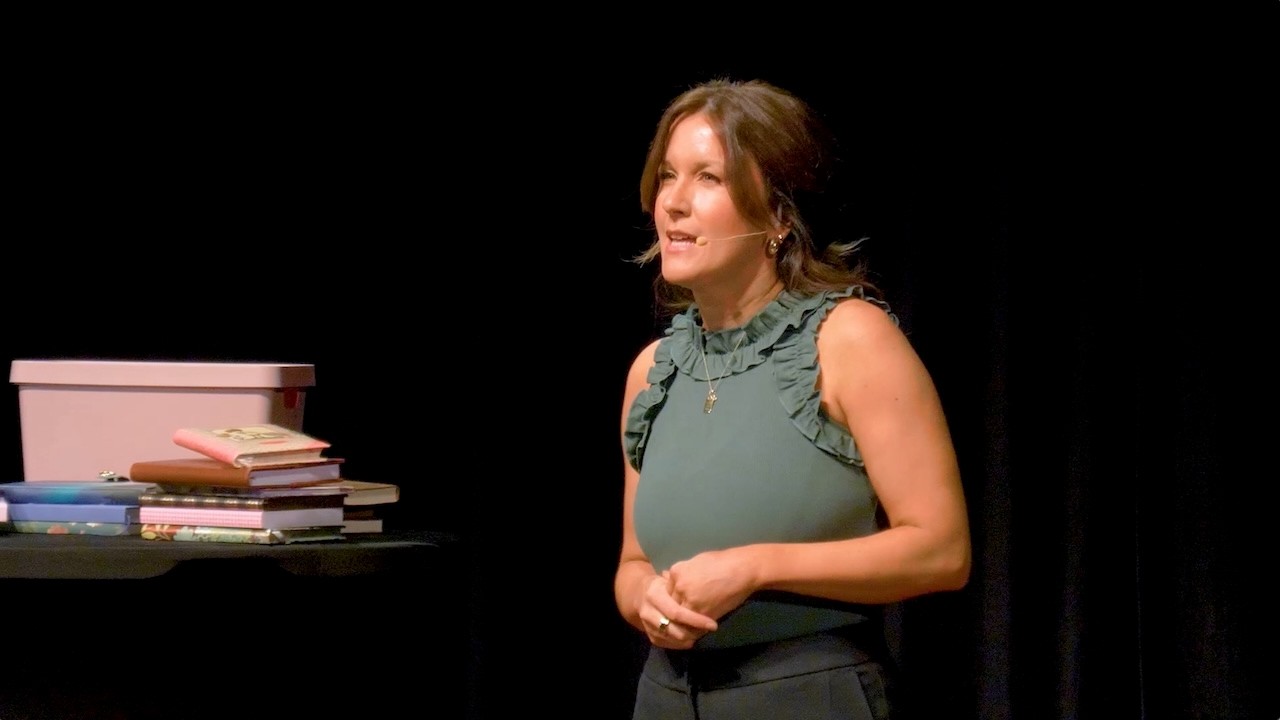
The Questions We Carry in Silence - and How to Answer Them | Suzi Friesen | TEDxWinnipeg
Keywords
Summary
170 words
Critical Evaluation
Value of the Information & Strength of the Argument
The value lies in the relatable personal narratives that humanize mental health struggles and illustrate tangible benefits of reflective practice. Argumentation is built on anecdote and professional insight rather than empirical data, making it persuasive on an emotional level but less rigorous scientifically. The speaker effectively distinguishes reflection from rumination, positioning reflection as a constructive tool for insight and healing. Her argument that reflection enables intentional choice and resilience is coherent, though general and lacking in specificity regarding mechanisms or evidence.
Scientific Rigor, Source Quality, Title Accuracy
The talk does not cite external research or sources; it relies on personal experience and professional observations. The speaker’s credentials (Canadian Certified Counsellor, Master’s in Counselling Psychology) lend authority, but the absence of references weakens scientific substantiation. The title is closely aligned with the content, accurately capturing the theme of unspoken questions and the practice of reflection. No public comments were provided for analysis.
160 words
Title / Content Match
The title accurately reflects the content: the talk explores how we hold silent questions and offers reflection as a means to answer them, matching the speaker's personal and professional journey.
Quality & Reliability
7/10
The speaker is a licensed counsellor and educator with relevant professional experience, but the talk relies predominantly on personal anecdotes and narrative rather than empirical evidence. The principles align with established psychological concepts (reflection, journaling, mental wellness), lending credibility, though the lack of cited studies and the anecdotal nature limit rigorous scientific rigor.
Key Moments
Markers derived by PSI from the transcript: the creator did not define chapters.
- Introduction: Invitation to consider the data within our own lives, contrasting external metrics with internal reflection.
- Definition of reflection as a pause to notice, distinguished from rumination.
- Childhood gift of a journal, marking the beginning of a lifelong reflective practice.
- Friend's cancer diagnosis and the use of writing to process grief and loss.
- Grade 12 pivotal moment with the teacher, revealing mother's mental illness and sparking career direction.
- Creation of 'Healthy Mind, Body, and Environment' course and expansion of Project 11.
- Motherhood as a deepening of attention and presence, linking reflection to leadership.
- Conclusion: The most valuable wisdom is within us, accessible through pausing to listen.
Cited Sources
- TEDx Program — Reference to the TEDx event format; source for the talk's context but not directly cited.
Contribution & Novelties
The talk offers a personal perspective on reflection as a daily practice, distinguishing it from rumination and framing it as a form of self-collected data. It contributes an accessible, narrative-driven case for integrating reflective habits into life and work. The speaker’s dual background in education and counseling bridges theory and application, though it introduces no novel scientific findings.
Pour aller plus loin :
- Journaling — Overview of the practice, its benefits, and psychological research supporting its role in self-reflection and emotional processing.
- Mindfulness — The psychological concept of present-moment awareness, closely related to reflection and mental health.
- Reflective practice — A professional and educational framework for learning through reflection, relevant to the speaker’s work with students and educators.
118 words
Radar Profile
The radar profile shows moderate scores across information quantity and quality, with a lower technical level, indicating an accessible yet moderately substantive talk. The low technicality and moderate reliability suggest the content is more inspirational than evidence-based, appealing to a general audience interested in personal growth.