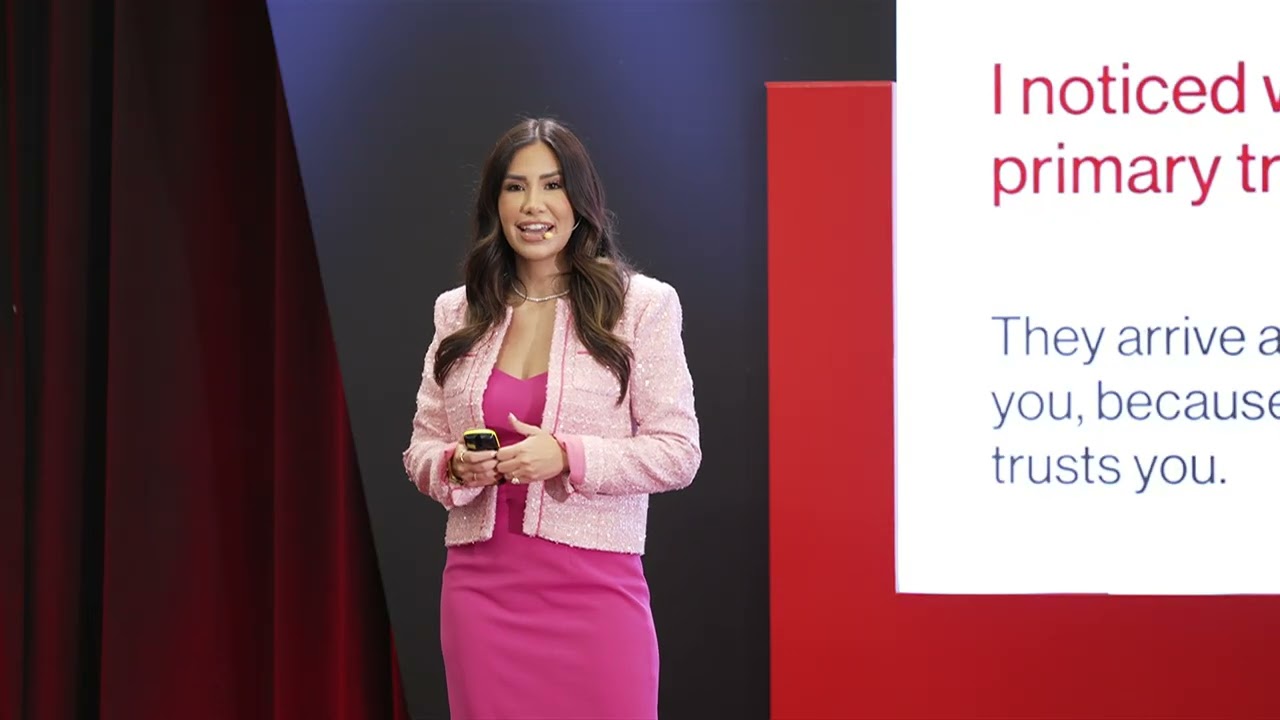
Why the person who buys is not always the person who matters most | Leah Wise | TEDxBrownsville
Keywords
Summary
135 words
Critical Evaluation
Value of the Information & Strength of the Argument
The value of the talk lies in its introduction of the ’trust holder’ concept, which reframes marketing from targeting end consumers to targeting influential intermediaries. Wise argues convincingly that this shift is supported by her personal experience and demographic data on Latinas’ decision-making influence. However, the argumentation is primarily anecdotal, relying on her own business outcomes and a handful of statistics without rigorous citations. The four-stage trust framework is intuitive but not deeply tested. While the ideas are thought-provoking and actionable, the evidence is suggestive rather than conclusive.
Scientific Rigor, Source Quality, Title Accuracy
The talk lacks explicit citations for the statistics and research mentioned, though the description references ‘cited research’ without providing links. The title is apt: it captures the essence of the talk—that the buyer is not always the primary decision-maker. The adéquation between title and content is strong. Scientifically, the talk is more opinion than rigorous study, with limited methodological transparency. No conflicting sources are addressed, and the reliance on personal testimony limits generalizability. Overall, the rigor is moderate, suitable for a general audience but not for academic reference.
191 words
Title / Content Match
The title accurately reflects the core message that the trust holder, not necessarily the buyer, is the key target for effective marketing.
Quality & Reliability
5/10
The talk is largely anecdotal, relying on personal experience and a few statistics without precise sourcing, but the concept of trust holders is plausible and aligns with known marketing principles like social proof.
Key Moments
Markers derived by PSI from the transcript: the creator did not define chapters.
- Introduction and her background as an attorney.
- She initially marketed broadly to everyone.
- Decision to niche down to Latinas and the pushback she received.
- Business growth and client interviews revealing referral patterns.
- Introduction of the 'trust holder' concept.
- Explanation of the four stages of trust: accumulation, holding, transfer, expansion.
- Statistics on Latinas' economic influence and household decision-making.
- Conclusion about shifting corporate marketing toward trust holders.
Cited Sources
- TEDx Talks — Official TEDx page for the event and talk.
Contribution & Novelties
The talk introduces the ’trust holder’ concept as a distinct market segment, synthesizing personal experience with demographic data to propose a shift from direct-to-buyer marketing to trust-holder marketing. This reframe is novel and practical.
Pour aller plus loin :
- Social proof — The psychological phenomenon where people copy others’ actions, underpinning the trust holder’s influence.
- Word-of-mouth marketing — The mechanism through which trust holders transmit recommendations.
- Trust (social science) — The theoretical basis for credibility and its transfer in social networks.
81 words
Radar Profile
The radar profile shows moderate quantity and quality of information, low technical level, and moderate reliability, indicating an accessible, anecdote-driven talk with practical insights but limited scientific depth.