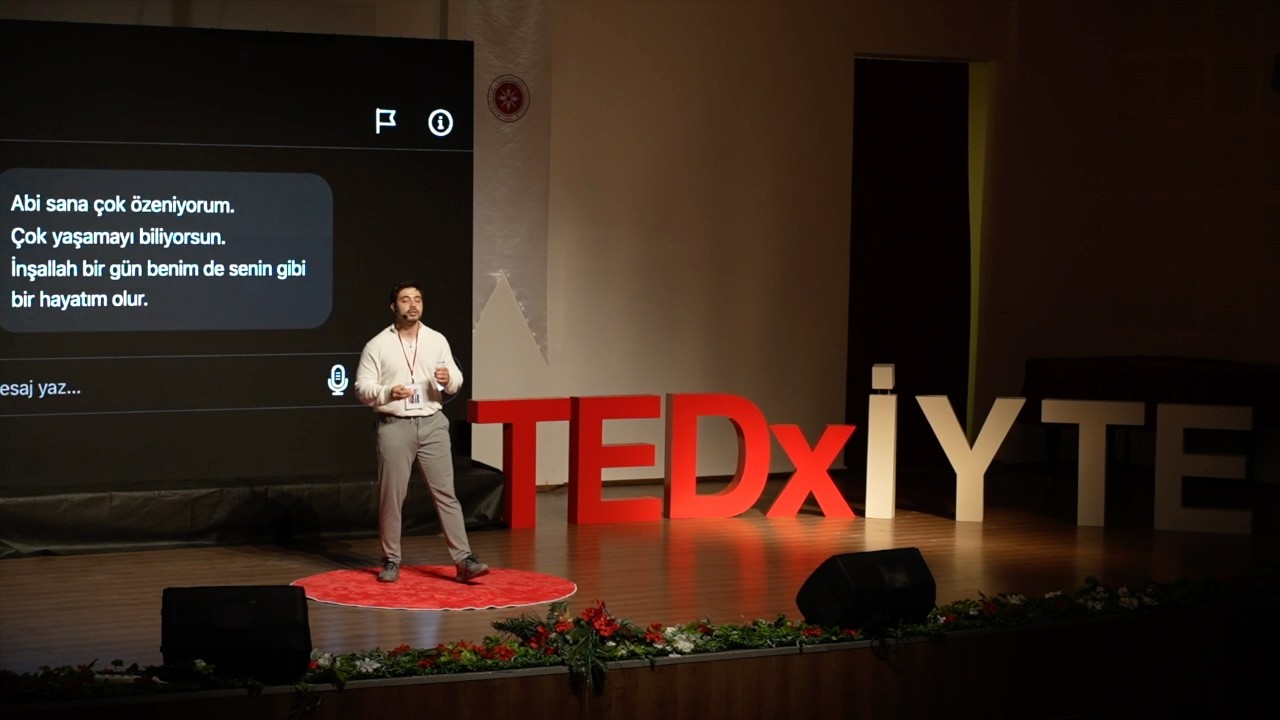
Maalesef Ben Geç Kaldım | Doğukan Bayazıtoğlu | TEDxİYTE
Unfortunately, I Am Late | Doğukan Bayazıtoğlu | TEDxİYTE
Keywords
Summary
186 words
Critical Evaluation
Value of the Information & Strength of the Argument
The value of the information lies in its relatable exploration of social media-induced anxiety and the explanation of survivorship bias in an accessible manner. The argumentation is primarily anecdotal, drawing on personal experiences and a brief reference to a psychological concept. While not scientifically rigorous, it effectively communicates a common psychological phenomenon and offers practical reassurance. The speaker’s engineering background adds a logical structure to his reflections, though emotional arguments dominate. The story of the shipwreck and the reference to therapy lend some credibility, but the talk would benefit from more empirical evidence or citation of studies.
Scientific Rigor, Source Quality, Title Accuracy
The scientific rigor is limited: the speaker mentions survivorship bias without citing formal sources, and he references a classical anecdote from Cicero but does not provide a specific reference. The only external link provided is the general TEDx website, offering no direct support for the claims. The title accurately matches the content, as the talk indeed centers on the feeling of being ’late’ or left behind. The description mentions that the talk was independently organized under TEDx, which is standard. Given the lack of robust citations and the personal nature of the talk, the scientific basis is moderate at best. No comments were provided for analysis.
218 words
Title / Content Match
The title 'Unfortunately, I Was Late' accurately reflects the central theme of feeling left behind in life, which is consistently addressed throughout the talk.
Quality & Reliability
6/10
The talk is a personal narrative with anecdotal evidence, but it references the concept of survivorship bias and mentions therapy, providing some grounding. However, it lacks verifiable data and specific citations, limiting its scientific reliability.
Key Moments
Markers derived by PSI from the transcript: the creator did not define chapters.
- Introduction: The speaker sets the stage, mentioning it's a difficult confession and that he is an engineer and content creator.
- He introduces the phone as his greatest friend and enemy, describing his habit of scrolling before sleep.
- The surreal moment at 4:30 AM when he woke to a photo of a couple on a beautiful trip and felt he was late.
- He discusses the COVID period as a turning point where people's lives intermixed on social media, making visibility more important than happiness.
- He shares a message from a young follower who wanted to be like him, which made him realize the burdens of being a role model.
- He introduces survivorship bias and the story of the shipwreck from Cicero, explaining how social media shows only the survivors.
- He contrasts past and present definitions of success, noting that nowadays success is portrayed as more wealth, more visibility, and excess.
- His concluding message: nobody is truly late, we are all waiting for our own time. He dedicates his talk to his father.
Cited Sources
- TEDx Program — General information about the TEDx event format, where this talk was given.
Contribution & Novelties
The talk’s original contribution lies in its personal framing of the survivorship bias concept within the context of social media-induced anxiety. While the concept is well-known, the speaker’s narrative of a late-night revelation and his subsequent coping routine offer a relatable entry point for understanding this cognitive bias. He also highlights the shifting definition of success and the psychological burden of visibility, which are timely issues in the digital age.
Pour aller plus loin :
- Survivorship bias — Overview of the cognitive bias and its applications in various fields.
- Social comparison theory — Psychologist Leon Festinger’s theory explaining why we compare ourselves to others, relevant to the talk’s core issue.
- Social media and mental health — Research on the psychological impacts of social media, including anxiety and depression, supporting the speaker’s observations.
132 words
Radar Profile
The radar profile shows relatively low scores across all dimensions, with the highest being quantity of information (6/10) and lowest being technical level (3/10). This indicates a talk that is accessible and covers a broad theme but lacks technical depth and rigorous sourcing, consistent with a personal narrative approach.