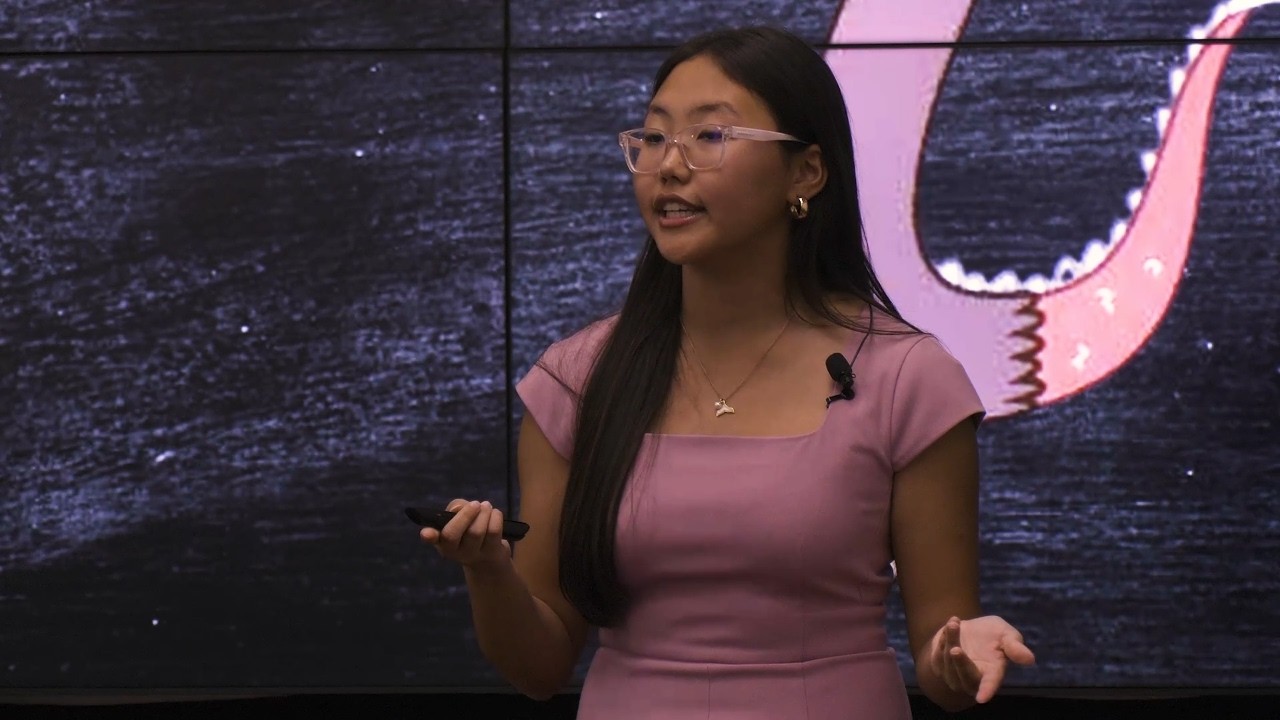
A Masterclass in Leadership | Marla Aubrey | TEDxNeoCity Academy Youth
Keywords
Summary
183 words
Critical Evaluation
Value of the Information & Strength of the Argument
The talk offers a fresh and engaging framework for understanding leadership by mapping abstract concepts onto familiar cultural references. The argumentation is logically structured, moving from self-awareness to social and situational awareness, with each section supported by character examples and practical advice. The speaker grounds her claims with a few external references (Forbes/Gartner, Skill Gym) and her own substantial leadership experience as a student, making the advice relatable and applicable. However, the reliance on a children’s cartoon as the primary illustration, while creative, sometimes oversimplifies complex leadership dynamics, and the cited studies are presented without critical evaluation or precise sourcing. The strength of the argument lies in its accessibility and the coherent integration of personal experience with widely accepted leadership principles, though it lacks empirical depth.
Scientific Rigor, Source Quality, Title Accuracy
The scientific rigor is moderate at best. The speaker cites two studies (Forbes via Cooperative Executive Board/Gartner and Skill Gym) without providing specific authors, years, or titles, which undermines verifiability. She also mentions Ruth Pierce, a certified coach, but again without concrete reference. The talk is opinion-driven rather than evidence-based, and while it touches on established concepts like emotional intelligence, it does not engage with the broader literature. The title ‘A Masterclass in Leadership’ is somewhat exaggerated for an introductory talk, but the content does deliver a structured overview of key leadership traits, so the title is acceptable. The adéquation titre/contenu is good, as the talk indeed provides a masterclass-style introduction to leadership principles, even if not exhaustive.
259 words
Title / Content Match
The title 'A Masterclass in Leadership' is somewhat grandiose for a 20-minute talk, but the content deliver structured, practical advice on three leadership awareness principles, so it matches the promise of a masterclass in style.
Quality & Reliability
6/10
The talk references a Forbes study (Cooperative Executive Board/Gartner) and Skill Gym, but provides no direct citations or methodological details. Claims are supported by personal anecdotes and anecdotal evidence rather than rigorous scientific literature. The speaker's practical experience adds face validity, but the scientific foundation is thin.
Key Moments
Markers derived by PSI from the transcript: the creator did not define chapters.
- Introduction: The speaker introduces My Little Pony as an unexpected blueprint for leadership and outlines the three S's framework.
- First S: Self-awareness illustrated with Starlight Glimmer's cult and redemption, and supported by a Forbes/Gartner study on self-awareness effectiveness.
- Second S: Social awareness, emphasizing empathy and strategic delegation, using Discord as an example of the power of empathy.
- Third S: Situational awareness via Twilight Sparkle's crisis leadership in the Crystal Empire, showcasing adaptation and self-sacrifice.
- Conclusion: Recap of the three S's, encouragement to apply them, and a call to view the ponies as role models for effective leadership.
Cited Sources
- TEDx Talks — General TEDx program page mentioned at the end of the description, indicating the event format and organization.
Contribution & Novelties
The talk’s originality lies in using My Little Pony characters as a vehicle to communicate leadership principles, making complex concepts accessible to a young audience. It synthesizes self-awareness, social awareness, and situational awareness into a memorable mnemonic (’three S’s’) and provides concrete examples from the show that map onto real-world leadership challenges. While not introducing new academic concepts, it offers a fresh pedagogical framing that could engage viewers who might otherwise overlook leadership theory.
Pour aller plus loin :
- Self-awareness — Wikipedia article explaining the psychological concept central to the first S, with links to research on self-awareness and performance.
- Emotional intelligence — Encompasses social awareness and empathy, offering a broader research context for the second S.
- Situational leadership theory — Academic model that aligns with the third S, emphasizing adaptability in leadership styles based on context.
- Transformational leadership — Relevant to the talk’s call for leaders to inspire and develop teams, connecting to the overall leadership framework.
158 words
Radar Profile
The profile shows a moderate level across all dimensions, with relatively higher quality of information (6) and quantity (6) compared to lower technical level (4) and moderate reliability (5). This suggests the talk is more inspirational and accessible than rigorous, appealing to a general audience interested in practical leadership tips rather than scientific depth.