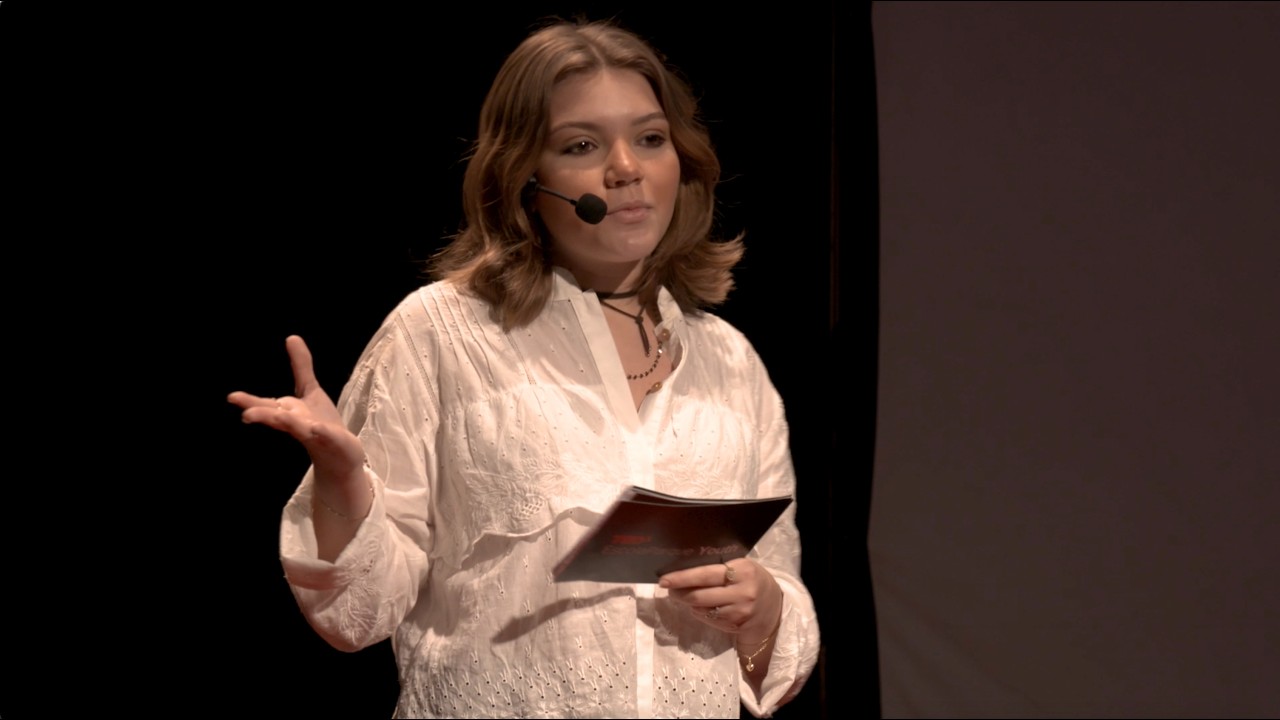
Como o construtivismo transformou quem eu sou | Natália Maia Tavares | TEDxEscola Parque Youth
How constructivism shaped who I am | Natália Maia Tavares | TEDxEscola Parque Youth
Keywords
Summary
160 words
Critical Evaluation
Value of the Information & Strength of the Argument
The value of this talk lies in its authentic personal testimony, which brings the theoretical concepts of constructivism to life through concrete examples. Natália effectively argues that constructivist education develops not only cognitive skills but also moral autonomy and social responsibility. Her argumentation is coherent and persuasive, as she connects her own experiences to broader societal issues like misinformation and emotional well-being. However, the talk lacks depth in scientific exposition, as many claims are presented without detailed evidence or direct references. The reliance on personal anecdote and general statistics weakens the robustness of the argument, though it remains engaging and credible on a personal level.
Scientific Rigor, Source Quality, Title Accuracy
The talk references several well-known educational theorists (Piaget, Vygotsky) and mentions institutions (OECD, USP, DataSenado) and publications, but it does not provide specific citations or URLs, limiting its scientific rigor. The only external source available is the general TEDx link in the description, which does not directly support the claims. The title accurately describes the content, as the speaker explicitly addresses how constructivism transformed her. The talk is presented as personal experience, which is appropriate for a TEDx youth event, but it falls short of a rigorous scientific review.
209 words
Title / Content Match
The title accurately reflects the content, as the speaker discusses how her constructivist education shaped her identity and thinking.
Quality & Reliability
5/10
The talk provides a personal testimony supported by references to educational theories and some statistics, but lacks direct citations or verifiable links within the video. The quality is adequate for a TEDx presentation but not highly rigorous.
Key Moments
Markers derived by PSI from the transcript: the creator did not define chapters.
- Introduction about her mother's wish for her to attend a constructivist school.
- Explanation of constructivism and its focus on active knowledge construction.
- Example of her first day of class discussing rules and developing moral autonomy.
- Project-based learning example simulating a family's budget.
- Discussion of Vygotsky's zone of proximal development and scaffolding.
- Comparison with traditional education and focus on critical thinking and misinformation.
Cited Sources
- TEDx Program — The official TEDx page, indicating that this talk is part of the TEDx program.
Contribution & Novelties
This talk offers a personal, first-hand account of the benefits of constructivist education, particularly in shaping moral character and critical thinking. It connects educational theory to contemporary issues like misinformation and social isolation, providing a relatable narrative for young audiences. The originality lies in the speaker’s vivid examples and the integration of Piaget and Vygotsky’s concepts into her own learning experiences.
Pour aller plus loin :
- Constructivism (philosophy of education) — This article provides a comprehensive overview of constructivist theory and its educational implications.
- Zone of proximal development — Vygotsky’s concept, central to the talk’s discussion of scaffolding and collaborative learning.
- Jean Piaget — Background on Piaget’s cognitive development stages, which underpin the constructivist approach.
115 words
Radar Profile
The scores show a balanced profile with moderate information quantity and quality, low technical depth, and average reliability. This reflects a talk that is accessible and engaging but not highly rigorous or detailed.