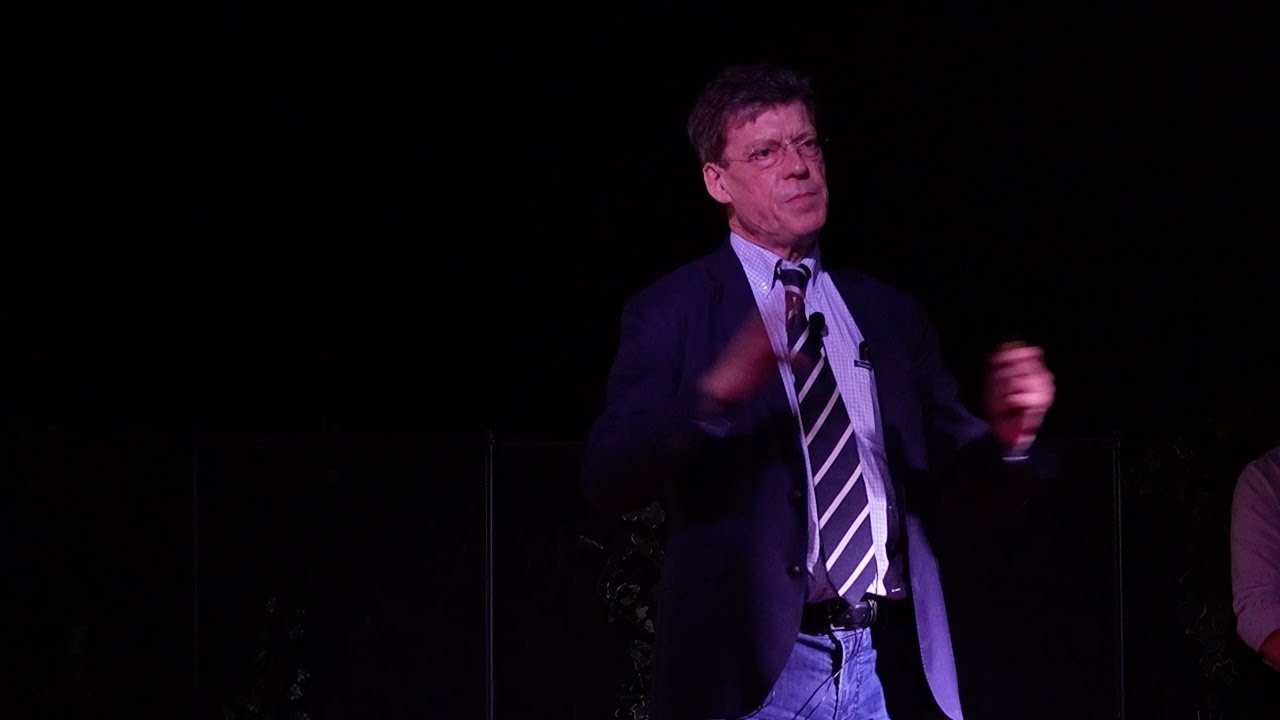
25 et 65 ans à l'ère de la SuperIA | Laurent Alexandre & Alexandre Tsicopoulos | TEDxCentraleSupelec
25 and 65 in the Age of SuperAI | Laurent Alexandre & Alexandre Tsicopoulos | TEDxCentraleSupelec
Keywords
Summary
114 words
Critical Evaluation
Value of the Information & Strength of the Argument
The information value is limited by the absence of empirical support. The speakers mix personal anecdotes with grand claims about Near-term immortality, genetic selection, and AI-driven societal collapse, often without nuance. The argumentation relies on fear-inducing hypotheticals and rhetorical contrasts rather than data or references. However, the dialogue effectively raises ethical and political questions about AI governance, cognitive enhancement, and generational equity, providing la résonance culturelle mais peu de substance scientifique.
Scientific Rigor, Source Quality, Title Accuracy
Scientific rigor is weak: claims about AI curing all diseases, life expectancy doubling, and embryonic selection rely on isolated quotes from industry figures (e.g., Demis Hassabis, Dario Amodei) without peer-reviewed support. The sources cited are limited to TEDx guidelines and the TED main site, providing no evidence for the futuristic assertions. The title adequately reflects the generational comparison, though the content sometimes drifts into unrelated geopolitical rants. No public comments were provided to analyze.
160 words
Title / Content Match
The title accurately reflects the generational dialogue between a 65-year-old and a 25-year-old on the societal impact of super-intelligent AI, though content is broader than the title suggests.
Quality & Reliability
3/10
The talk presents highly speculative and unverifiable claims about AI-driven immortality, cognitive enhancement, and geopolitical collapse, with no supporting data or citations. TED explicitly flags that the claims lack scientific support, undermining reliability.
Key Moments
Markers derived by PSI from the transcript: the creator did not define chapters.
- Introduction of the generational gap and the speaker's 65-year-old perspective.
- Discussion on Alzheimer's as a destiny for the older generation and AI as a cure.
- Declaration that intelligence becomes free, and the shift to a civilisation revolution.
- Critique of Europe's technological decline and the US-China AI race.
- Introduction of the 'Chief Cognitive Officer' as a future key role.
Cited Sources
- TEDx Content Guidelines — Used to support the TEDx event format and independent organization.
- TEDx official page — Explains the TEDx licensing and independent organization context.
Contribution & Novelties
The talk offers a provocative generational comparison, framing AI as a civilisation-changing force that requires new societal responses, such as the proposed ‘Chief Cognitive Officer’ role. Its novelty lies in blending biotech, AI, and geopolitics into a coherent narrative aimed at a young engineering audience.
Pour aller plus loin :
- Homo Deus: A Brief History of Tomorrow — Discusses the concept of ‘homo deus’ and the divide between ‘gods and useless’, relevant to the talk’s central theme.
- Attention Is All You Need — The 2017 paper introducing the Transformer architecture, foundational to modern superintelligent AI claims.
- NBIC convergence — The Quadruple Helix concept of integrating Nanotechnology, Biotechnology, Information technology, and Cognitive science, referenced by the speakers for enhancing human abilities.
120 words
Radar Profile
The radar shows high scores on information quantity but very low on quality and reliability, reflecting a content-rich yet scientifically unsupported presentation. The technical level is moderate, indicating broad concepts without depth.