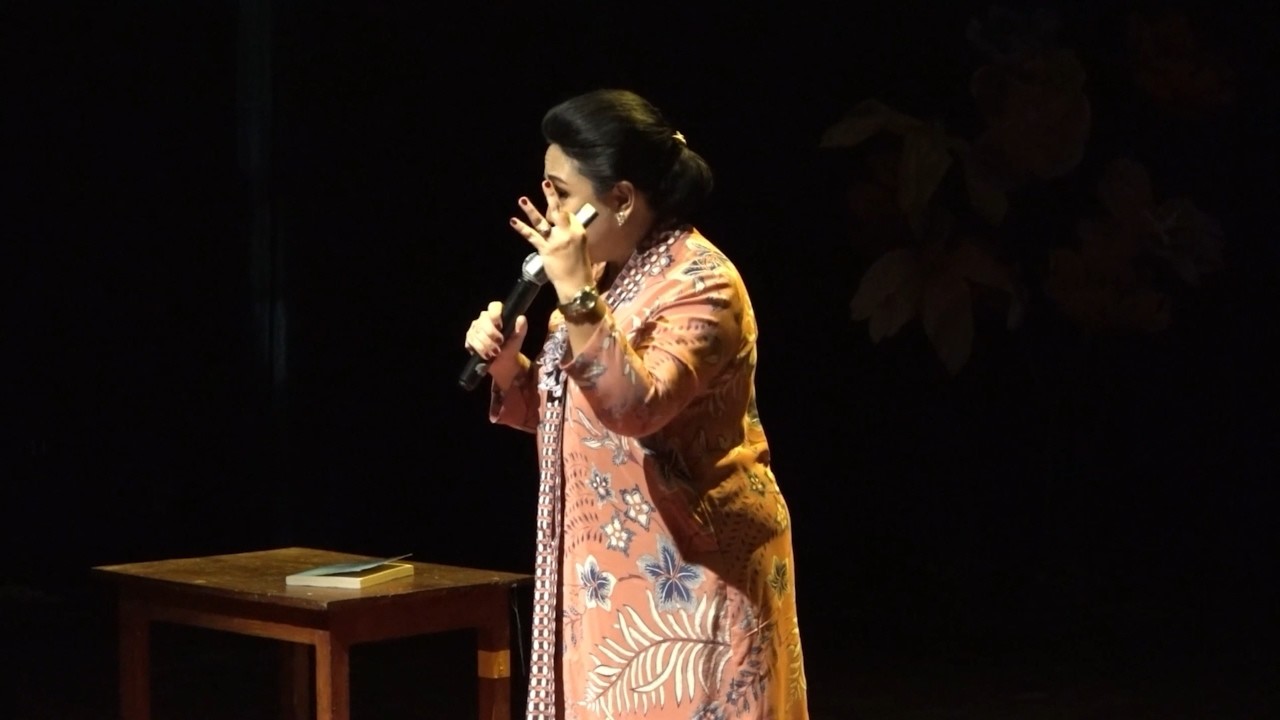
Return To Yourself | R.Ay. Febri Hapsari Dipokusumo | TEDxUNS
Keywords
Summary
117 words
Critical Evaluation
Value of the Information & Strength of the Argument
The talk offers a refreshing integration of Javanese cultural wisdom with modern mindfulness practices. The argumentation is primarily emotional and experiential, relying on anecdotal evidence and philosophical tenets rather than scientific data. The speaker’s personal authority as a member of the Surakarta royal family and a global motivational speaker lends some weight, but the reasoning is not systematically developed. The discussion of motivation types is simplified and does not reference established psychological theories. Nevertheless, the call to reconnect with one’s inner self is compelling and potentially valuable for audiences seeking personal growth.
Scientific Rigor, Source Quality, Title Accuracy
The talk lacks explicit citations or references to scientific literature, which undermines its scientific rigor. The only source mentioned in the description is the generic TEDx link, and the speaker references a book by Sri Chinmoy without providing a title or URL. The title ‘Return To Yourself’ is well-aligned with the content, capturing the central theme of self-reclamation. However, the absence of verifiable sources and the reliance on cultural anecdotes limit the talk’s credibility as a source of evidence-based information.
187 words
Title / Content Match
The title accurately reflects the core message of the talk, which urges the audience to reconnect with their inner selves.
Quality & Reliability
5/10
The talk is anecdotal and philosophical, relying on personal experience and traditional wisdom rather than empirical evidence. No sources are cited, and the claims are not verifiable. However, the content is coherent and resonates with established mindfulness concepts, though it lacks scientific rigor.
Key Moments
Markers derived by PSI from the transcript: the creator did not define chapters.
- Speaker opens with a question about energy and connection.
- Discussion on FOMO and overstimulation in a connected world.
- Introduction of the Javanese concept 'Mulat Sarira' and mindfulness as ancient practice.
- Explanation of three sources of motivation: reward, fear, and attitude.
- Personal reflection on royal heritage and the importance of cultural roots.
- Guided meditation session encouraging inner dialogue and gratitude.
- Closing message: 'Return to yourself' and embrace inner peace.
Cited Sources
- TEDx Program — Description link about the TEDx event format and independently organized talks.
Contribution & Novelties
The talk’s original contribution lies in bridging Indonesian cultural heritage—particularly Javanese court traditions—with contemporary mindfulness discourse. It offers a non-Western perspective on inner peace and self-knowledge, emphasizing that mindfulness has deep roots in local wisdom. The integration of a guided meditation session within the talk provides a practical element that goes beyond mere theoretical discussion.
Pour aller plus loin :
- Mindfulness — Overview of the psychological concept of mindfulness and its modern applications.
- Meditation — General background on meditation practices across cultures.
- Sri Chinmoy — Reference to the spiritual teacher whose book the speaker opened, though the exact work was not cited.
102 words
Radar Profile
The radar profile shows low scores in technical level and reliability, reflecting the anecdotal and non-scientific nature of the talk. Information quality and quantity are moderate, as the talk presents several ideas but without depth or evidence. The overall score is average, consistent with an inspiring but not rigorous motivational speech.