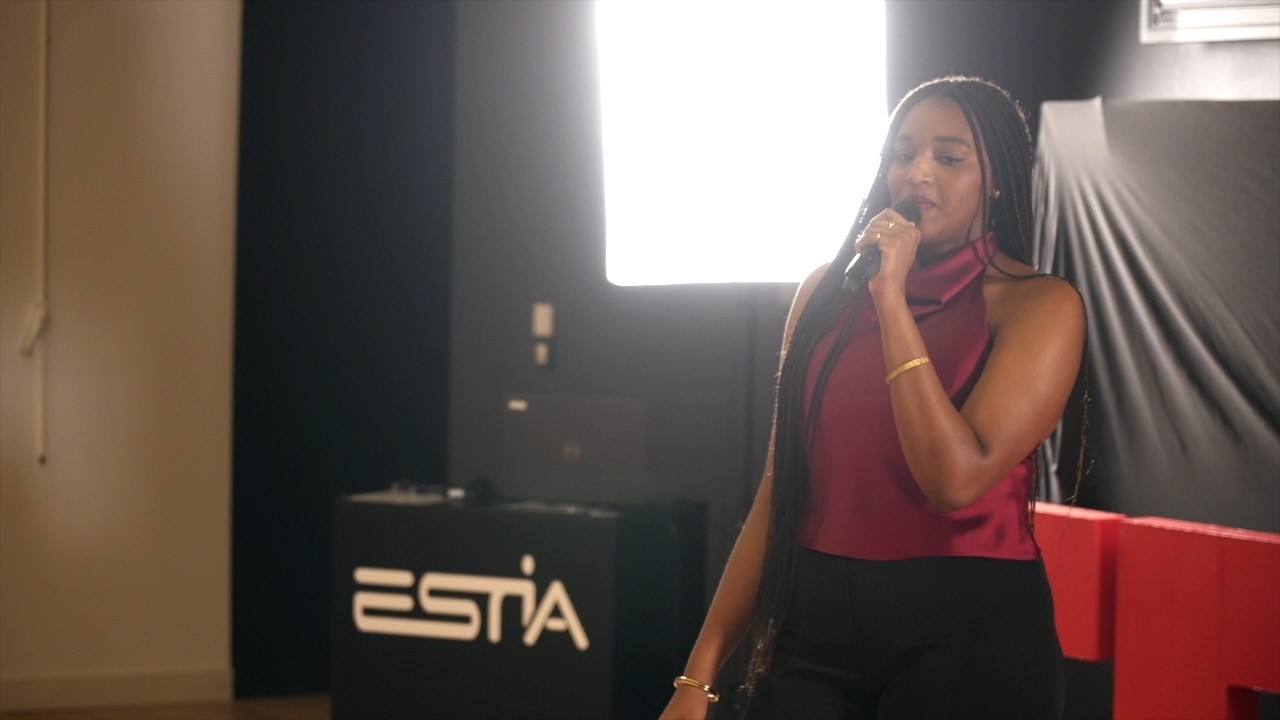
Le serment que les ingénieurs n’ont jamais prêté | Amaelle Diop | TEDxESTIA
The Oath Engineers Never Took | Amaelle Diop | TEDxESTIA
Keywords
Summary
207 words
Critical Evaluation
Value of the Information & Strength of the Argument
The talk provides significant value by framing the accountability of engineers in a way that bridges historical precedent and contemporary practice. The argumentation is solid: it moves from a general principle (the Hippocratic oath) to a concrete historical case (the Quebec Bridge) that demonstrates the fatal costs of neglecting professional ethics, and then proposes a practical, actionable framework adapted from biomedical ethics. The speaker’s personal narrative from Senegal to France and England adds a unique and credible perspective, particularly in her critique of the Western-centric bias in technology. The reasoning is persuasive, well-paced, and grounded in a clear logical progression from problem (lack of oath) to solution (adapting bioethical principles), although it remains largely philosophical and lacks a detailed implementation roadmap for institutions or governance bodies.
Scientific Rigor, Source Quality, Title Accuracy
The scientific rigor is moderate. The speaker accurately cites the historical facts of the Quebec Bridge collapses and the initiation of the Iron Ring ceremony, which are verifiable events. She also correctly identifies the four core principles of principlism (autonomy, beneficence, non-maleficence, justice) in biomedical ethics. However, the talk does not reference specific studies, academic papers, or legal texts, and the AI ‘giants’ mentioned are not named, which slightly weakens the verifiability of the contemporary examples. The title is strongly aligned with the content, serving as a provocative and precise teaser for the central question posed by the speaker. The presentation format is a deeply personal and passionate opinion piece rather than a systematic scientific review, which is generally appropriate for the TEDx context and clearly communicated through its rhetoric.
271 words
Title / Content Match
The title perfectly encapsulates the core thesis of the talk: the absence of a solemn professional oath for engineers, contrasted with the Hippocratic oath.
Quality & Reliability
7/10
The argumentation is coherent and well-structured, drawing on well-established historical events (the Quebec Bridge collapse) and recognized ethical frameworks (biomedical principlism). The reliability is slightly reduced by a lack of direct empirical data or academic citations; the talk relies on anecdotal evidence and qualitative argumentation rather than quantitative research.
Key Moments
Markers derived by PSI from the transcript: the creator did not define chapters.
- Introduction to the Hippocratic oath and the fundamental principle of 'do no harm' for physicians.
- The speaker describes her own graduation ceremony and the seemingly joking oath she was asked to take.
- The speaker highlights the power of engineers to affect hundreds of lives and the absence of solemn promises to protect human dignity.
- She discusses the 'Promethean complex' and criticizes AI representatives who call for brakes on AI while releasing even more powerful and opaque models.
- Recount of the 1907 and 1916 Quebec Bridge collapses, their causes, and the 88 deaths that resulted from ignored warnings.
- Introduction of the Iron Ring ritual for engineers in 1925, symbolizing the constant reminder of societal responsibility.
- Proposal to transpose the four core biomedical ethics principles (autonomy, non-maleficence, beneficence, justice) to engineering practice.
- Discussion of technological justice, using the example of AI that values Western languages but lacks proficiency in Wolof, Bambara, or Swahili.
- The speaker emphasizes the power of engineers to say 'no' to morally indefensible projects, redefining prestige as ethical choice.
- The speaker recites her own personal solemn oath, placing science at the service of life and future generations.
Cited Sources
- TEDx Program — The talk was given at a TEDx event, which is stated in the description and provides the contextual framework for the speech.
Concurring Sources
- Iron Ring — The Iron Ring is a symbol of professional responsibility worn by Canadian engineers, which the speaker mentions as a direct historical outcome of the Quebec Bridge disaster.
Contribution & Novelties
The novel contribution of this talk lies in the concrete application of a well-established biomedical ethical framework to the modern challenges of engineering and AI development. While the premise (engineers lack an oath) is not entirely new, the speaker’s specific suggestion to operationalize principlism (autonomy, beneficence, non-maleficence, justice) as a direct professional code of conduct for technologists provides a practical and memorable heuristic that can be easily adopted by individual engineers or used in design reviews. The call for ’technological justice’ (e.g., AI valuing non-Western languages) offers a fresh perspective on equity and user sovereignty that moves beyond typical Western-centric discussions of algorithmic fairness.
Pour aller plus loin :
- Hippocratic Oath — A historical and foundational text in medical ethics, directly linking health professionals to the duty of ‘first, do no harm’.
- Quebec Bridge — Details of the two collapses that occurred in 1907 and 1916, highlighting the engineering failures and the human cost that spurred the creation of the Iron Ring.
- Principlism — A framework for bioethics that defines the four principles (autonomy, beneficence, non-maleficence, justice) which the speaker proposes to adapt for engineering ethics.
- Precautionary principle — A related concept applicable to engineering responsibility, suggesting that action should be taken to avoid harm even in the absence of full scientific certainty.
213 words
Radar Profile
The radar chart would likely show a high score for argumentation and quality of information, reflecting the clear structure and strong ethical framework. However, the quantity of information might be moderate due to the concise nature of the 14-minute talk, and the technical depth might be lower since it focuses on philosophical principles rather than engineering specific formulas or case-study data. Overall, a balanced and human-centric profile with a strong emphasis on qualitative insight.