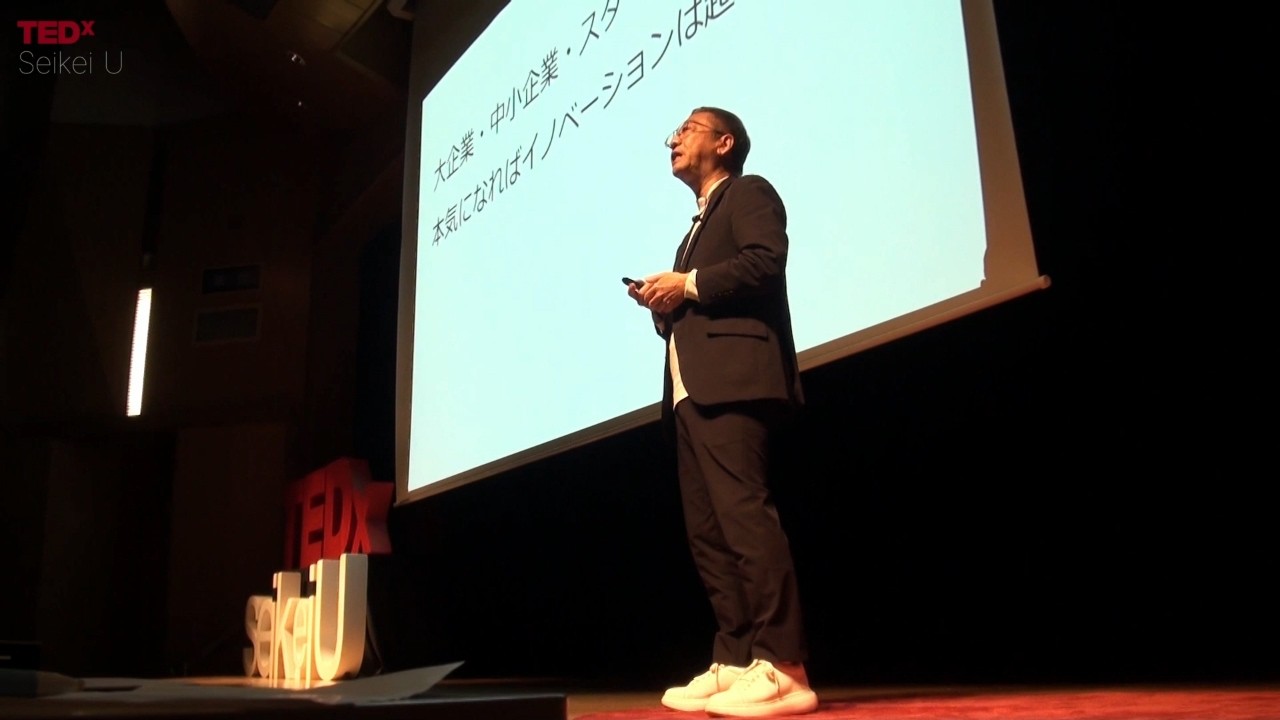
人とビジネスをつなぐ力 | Akihito Ishi | TEDxSEIKEI U
The Power of Connecting People and Business | Akihito Ishii | TEDxSEIKEI U
Keywords
Summary
147 words
Critical Evaluation
Value of the Information & Strength of the Argument
The talk’s core value lies in the actionable presentation tips, framed by a compelling personal success story. Ishi’s argument that data-driven persuasion can overturn opposition is illustrated through the store relocation example, where he counted departing customers and surveyed the area to build a case. The five golden rules are practical and grounded in his experience. However, the argumentation is entirely anecdotal. He offers no comparative analysis, no alternative approaches, and no discussion of potential weaknesses in his methods. The claim that presentation is the ‘only method’ to gain consensus is oversimplified and unsubstantiated. The success story, while inspiring, is presented without external validation or consideration of situational factors. Overall, the argument is persuasive in its style but weak in its evidence and scope.
Scientific Rigor, Source Quality, Title Accuracy
As a TEDx talk, this is an opinion-based presentation rather than a scientific study. The speaker cites no external sources, publications, or data beyond his own observations and metrics (daily revenue before and after relocation). The provided description link to TED.com is general and not a direct source reference. The title accurately reflects the content. There are no comments provided, so no analysis of audience feedback is possible.
207 words
Title / Content Match
The title accurately reflects the content, which focuses on the speaker's experience using presentation skills to connect people and business and drive innovation.
Quality & Reliability
5/10
This is a personal TEDx talk based on the speaker's 30-year career in the convenience store industry. The speaker provides anecdotal evidence of a successful store relocation project, but no external data, scientific references, or verifiable sources are cited. The advice on presentation skills is practical and experience-based, but lacks empirical backing. The talk is inspirational and motivational rather than rigorously scientific.
Key Moments
Markers derived by PSI from the transcript: the creator did not define chapters.
- Introduction: the speaker's life is full of opposition.
- The story of a successful convenience store with daily sales of 600,000 yen.
- Proposing store relocation despite opposition; counting departing customers as data.
- Successful relocation: daily sales increased from 600,000 to 900,000 yen; new store added, total 1.7 million yen.
- Key message: anyone can innovate anywhere if they use the power of presentation.
- Golden rule 1: thorough preparation.
- Golden rule 2: use simple language; example of IT jargon vs. plain phrase.
- Golden rule 3: no need to be nervous; audiences look at materials.
- Golden rule 4: daily practice; one-minute presentation on the train.
- Golden rule 5: the purpose of a presentation is to gain consensus.
Cited Sources
- TEDx Program — General information about the TEDx event format from the video description.
Concurring Sources
- TEDx Program — The talk follows the TEDx format of sharing personal, expert-driven insights for a public audience.
Contribution & Novelties
The talk’s originality lies in framing presentation skills as the key to overcoming organizational resistance to change, using a specific business case. It offers accessible, practical advice for non-professional speakers. However, the concepts are not new; they echo standard business communication best practices.
Pour aller plus loin :
- Rhetoric — Classical and modern perspectives on persuasion, relevant to the talk’s core argument.
- Persuasion — Psychological research on how attitudes are changed, complements the speaker’s practical advice.
- Business communication — Overview of the field, aligning with the talk’s application of presentations in corporate settings.
93 words
Radar Profile
The radar profile shows high scores for quantity and quality of information, typical of a TEDx talk with rich anecdotes and practical tips. The level of technical expertise is low, as the content is non-technical and personal. The overall reliability is moderate, reflecting the anecdotal nature of the evidence.