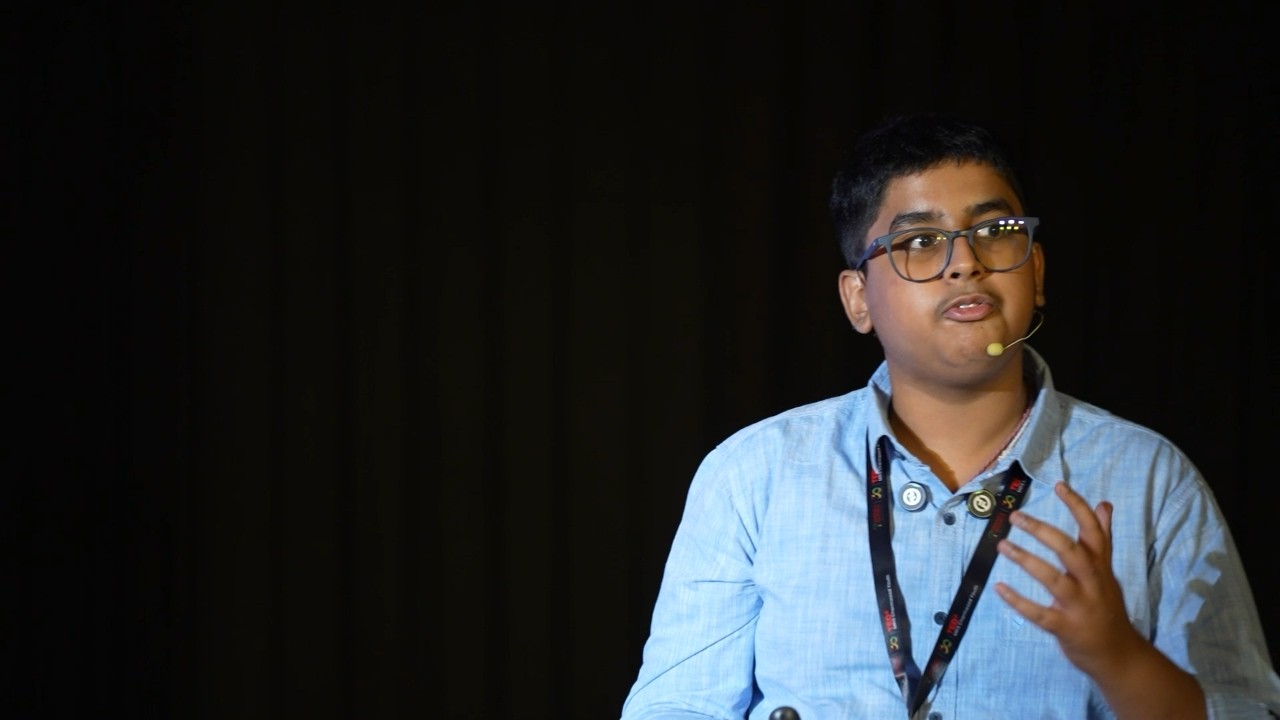
Weaponisation Of Biological Data | Aditya Nanda | TEDxMRIS Charmwood Youth
Keywords
Summary
175 words
Critical Evaluation
Value of the Information & Strength of the Argument
The informational value lies in raising awareness about a relatively niche but significant vulnerability in modern healthcare digitization. The talk effectively uses concrete scenarios (blood type tampering, battlefield misinformation) to make the abstract threat tangible. However, the argumentation, while convincingly structured, relies on plausible hypotheticals rather than documented evidence. The speaker’s passion is evident, and the call for preparedness is reasonable, but the lack of expert testimony or detailed case studies weakens the technical and scientific depth.
Scientific Rigor, Source Quality, Title Accuracy
Scientific rigor is low, as the presentation is primarily an opinion piece. No specific studies, statistics, or named experts are cited; the only source is the general TEDx platform. The quality of sources is therefore not verifiable. The title is fully appropriate and matches the content. The talk does not engage with counterarguments or existing cybersecurity measures, which also limits its rigor.
154 words
Title / Content Match
The title accurately reflects the core topic: the concept of weaponizing biological data through cyberattacks on healthcare systems is the central focus throughout.
Quality & Reliability
5/10
The talk is a TEDx presentation by a grade 9 student, offering a broad overview of the weaponization of biological data. It raises valid concerns but lacks deep technical detail, original research, and academic sourcing. The reasoning is accessible but not rigorously substantiated.
Key Moments
Markers derived by PSI from the transcript: the creator did not define chapters.
- Introduction with smart watch and hospital data storage
- Definition of weaponization of biological data
- Example of blood type alteration leading to fatal transfusion
- Warfare scenario: EHR manipulation causing mass casualty events
- Ransomware attacks on hospital systems like NHS
- Importance of analog backups and resilient infrastructure
- Call to action and conclusion about building resilience
Cited Sources
- TEDx Talks — Official TEDx page for this event and general information about independently organized TED-like talks.
Contribution & Novelties
The talk contributes a concise, accessible overview of a niche cybersecurity topic – weaponization of biological data – framed for a general audience. It highlights the intersection of healthcare, data security, and geopolitical conflict, which is an underappreciated risk. Its originality lies in presenting the concept through vivid narratives (blood type tampering, battlefield medics) rather than mere technical jargon.
Pour aller plus loin :
- Cyberbiosecurity – This concept directly extends the idea of protecting biological data against malicious use.
- Ransomware – Provides background on the type of attacks mentioned on hospital systems.
- Electronic health record – Explains the digital infrastructure that is vulnerable to manipulation.
105 words
Radar Profile
The radar profile shows a moderate presence across all axes, with the highest score in information quantity and quality, and lower scores in technical level and reliability. This indicates a generally accessible talk that sparks awareness but lacks the depth and evidence expected in expert-level discourse.