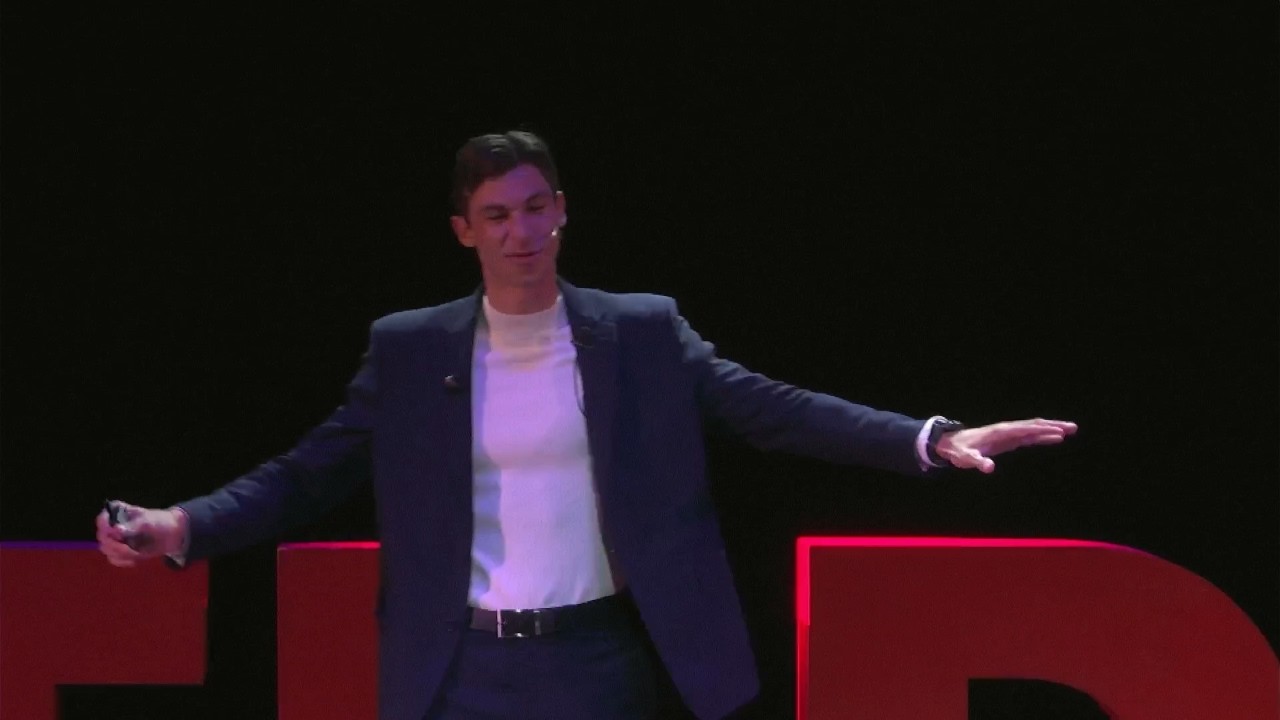
La única condición perfecta es empezar | Gael Priego | TEDxTecDeMty
The only perfect condition is to start | Gael Priego | TEDxTecDeMty
Keywords
Summary
168 words
Critical Evaluation
Value of the Information & Strength of the Argument
The value of the information lies in its relatable, real-life examples and the practical metaphor of a lottery ticket. The speaker’s argument is built on narrative anecdotes rather than empirical evidence, which is typical for motivational talks. He effectively illustrates the negative impact of perfectionism and the importance of iterative learning, but the lack of data or references weakens the scientific rigor. The argumentation is coherent and emotionally persuasive, though not analytically deep.
Scientific Rigor, Source Quality, Title Accuracy
The talk provides no external sources or citations, aside from a general link to TEDx. The speaker’s credibility comes from his personal experience as a content creator with over 200,000 TikTok followers. The title accurately matches the content, and the talk stays on-topic throughout. The absence of verifiable claims and the subjective nature of the narrative limit its scientific reliability, but it is consistent with the TEDx format of personal storytelling.
159 words
Title / Content Match
The title accurately reflects the central message of the talk: the only perfect condition to start something is simply to begin.
Quality & Reliability
4/10
Personal anecdotal testimony without scientific data or external references; relies on subjective experience and a motivational message, which limits its scientific credibility but offers practical inspiration.
Key Moments
Markers derived by PSI from the transcript: the creator did not define chapters.
- Speaker asks the audience what is on their mind, relating to his previous TEDx experience.
- Describes his 8-month trip to 27 countries and the start of his desire to share experiences.
- Reveals the 507-day delay before uploading his first video on December 28, 2024.
- Introduces the metaphor: each video is a free lottery ticket.
- Viral supermarket video that changed his career trajectory.
- Creation of 'Ideas de Altura' with his friend Mau and the subsequent success.
- Final message: you don't need to be good to start, but you must start to be good.
Cited Sources
- TEDx Program — Official TEDx page mentioned in the video description, confirming the talk as an independent TEDx event.
Concurring Sources
- TEDx Program — The talk is delivered within the TEDx framework, which often features personal stories and motivational content.
Contribution & Novelties
The talk’s original contribution is the practical metaphor of a ‘free lottery ticket’ to reframe the act of starting as an opportunity, rather than a risk. It also emphasizes overcoming perfectionism through forced consistency (365 daily videos). While not scientifically novel, it offers a relatable framework for personal action.
Pour aller plus loin :
- Perfectionism (psychology) — Explores the psychological dimensions of perfectionism and its effects on behavior.
- Procrastination — Discusses the habitual delay of tasks and its underlying causes, directly relevant to the speaker’s experience.
- Growth mindset — Carol Dweck’s concept of embracing challenges and learning from failure, which aligns with the talk’s core message.
106 words
Radar Profile
The radar profile shows low scores on information quantity, quality, technical level, and reliability, reflecting the talk's anecdotal and non-scientific nature. The highest score is in quantity, but still low, indicating a content-rich but depth-poor presentation.