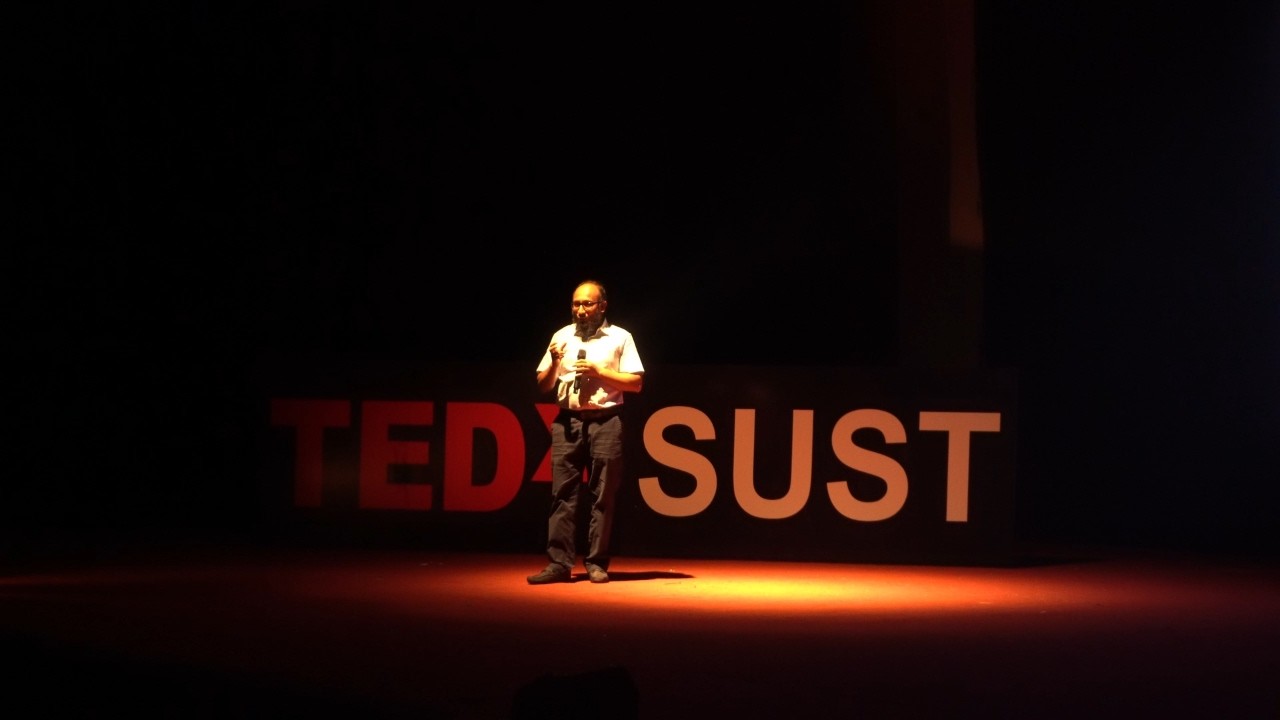
Who Is Responsible When AI Decides? | Dr. Choudhury Abul Anam Rashed Anam Rashed | TEDxSUST
Keywords
Summary
167 words
Critical Evaluation
Value of the Information & Strength of the Argument
The talk provides an accessible overview of AI’s role in engineering and the accompanying ethical dilemmas. The speaker argues effectively that accountability cannot be fully delegated to machines, using relatable examples like traffic navigation issues and maintenance challenges. However, the argumentation is largely descriptive and relies on common knowledge, with little critical analysis or evidence. The value lies in raising awareness and framing the responsibility question, but it lacks depth in exploring potential solutions or regulatory frameworks.
Scientific Rigor, Source Quality, Title Accuracy
The talk is a reflective expert opinion rather than a rigorous scientific presentation. No specific studies, papers, or data are cited; only the general TEDx platform is referenced. The speaker’s credentials as a professor lend some credibility, but the content remains largely anecdotal. The title accurately reflects the talk’s central theme, and the content stays on-topic throughout, making the title-content alignment strong.
154 words
Title / Content Match
The title directly addresses the core question of responsibility in AI decisions, which the talk explores throughout, making it well-aligned.
Quality & Reliability
6/10
The talk is informative but anecdotal, lacking citations or empirical data. It offers a general overview rather than deep technical analysis. The speaker is a professor, but the content is introductory and emphasis is on raising awareness rather than rigorous scientific contribution.
Key Moments
Markers derived by PSI from the transcript: the creator did not define chapters.
- Introduction and definition of AI as a branch of computer science with human interaction.
- Applications in civil engineering: smart city traffic control and challenges like outdated data.
- Discussion of mechanical and electrical engineering applications: collaborative robots, predictive maintenance, and power grid balancing.
- Chemical and software engineering applications: process optimization, safety monitoring, and cybersecurity issues.
- Challenges: large data, privacy, bias, workforce fears, regulatory gaps, and lack of standardization.
- Conclusion emphasizing human responsibility and call for adapting to AI-driven changes.
Cited Sources
- TEDx Program — The talk was given at a TEDx event using the TED conference format, as stated in the video description.
Concurring Sources
- TEDx Program — The video description references TED's official platform, which supports the talk's context.
Contribution & Novelties
The talk presents a structured overview of AI applications across engineering disciplines and links them to the accountability question. Its originality lies in framing AI’s limitations in decision-making from an engineering perspective, emphasizing the need for human oversight. While not groundbreaking, it offers a practical introduction for students and professionals.
Pour aller plus loin :
- Artificial intelligence — Provides a comprehensive overview of AI concepts and history, relevant to the talk’s foundation.
- Machine learning — Explores the technical methods discussed, including supervised and unsupervised learning.
- Accountability — Discusses the ethical and legal dimensions of responsibility, central to the talk’s theme.
- Explainable artificial intelligence — Addresses how AI decisions can be made transparent, directly relating to the responsibility question.
118 words
Radar Profile
The radar profile shows moderate scores across all dimensions, with quantity of information slightly higher than reliability. This indicates a talk that covers many topics but lacks deep factual grounding, fitting an introductory expert opinion rather than rigorous research.