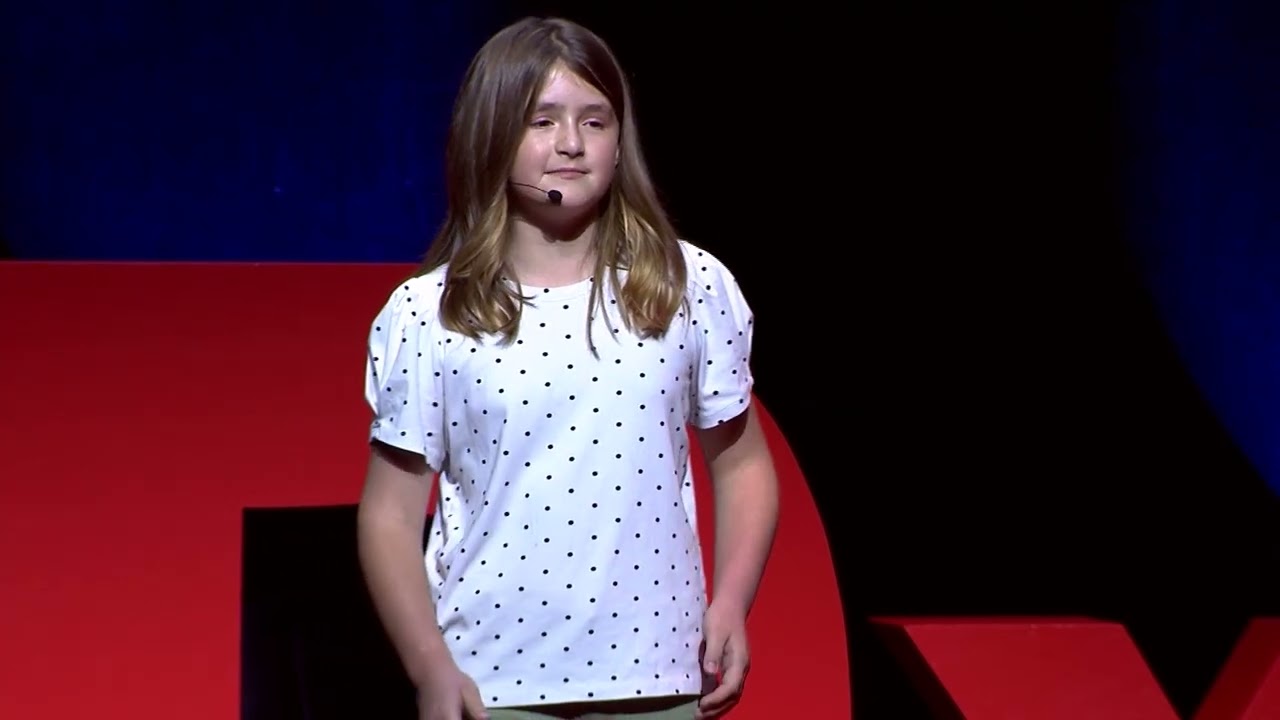
Never Decide on Nuclear War | Anya Ackerson | TEDxAlpha School Austin Youth
Keywords
Summary
158 words
Critical Evaluation
Value of the Information & Strength of the Argument
The talk provides a clear, accessible overview of well-established decision-making biases, grounding each in concrete historical events that make the concepts memorable. The argumentation is structured logically, moving from problem to cause to solution. However, it remains superficial: concepts are introduced without rigorous explanation of the underlying research, and the examples are simplified to fit the narrative. The speaker’s recommendation to ‘consider opponents’ views’ and ‘step away’ is supported by anecdotal evidence but lacks nuance. Overall, the value lies in its engaging presentation of validated psychological principles rather than in novel insights or deep analysis.
Scientific Rigor, Source Quality, Title Accuracy
The talk references several documented sources: Sheena Iyengar’s research on choice overload, Cornell University’s 35,000 daily decisions, the ‘When Prophecy Fails’ study, and the Challenger disaster. However, these are mentioned without precise citations or URLs, and some details are slightly inaccurate (e.g., the cost of Sydney Opera House is reported as $12 million, but verified figures are higher). The only explicit link provided is the general TEDx page, not the specific studies. The title, ‘Never Decide on Nuclear War’, grabs attention but slightly misrepresents the scope, which is about everyday decision-making. No comments were provided for analysis.
207 words
Title / Content Match
The title is catchy and refers to the opening example of Vasily Arkhipov preventing nuclear war, but the talk actually covers general decision-making, so it is somewhat sensational but relevant.
Quality & Reliability
5/10
Talk by a 6th grader presenting well-known psychological concepts and historical case studies, but with superficial treatment and some internal inaccuracies (e.g., mispronunciation of Vasily Arkhipov). Reasoning is sound but lacks depth and direct source citations.
Key Moments
Markers derived by PSI from the transcript: the creator did not define chapters.
- Opening scenario: submarine story with Vasily Arkhipov introduced.
- First reason for bad decisions: not preparing or considering reality; planning fallacy and Sydney Opera House example.
- Tip: run scenario analysis before deciding.
- Second reason: getting overwhelmed; choice overload and Three Mile Island example.
- Third reason: protecting decisions; sunk cost fallacy and Challenger disaster.
- Conclusion: summary of strategies and final advice to pause, think, and question.
Cited Sources
- TEDx Talks official page — General TEDx resource; the talk is part of the TEDx program, though no specific study links are provided.
Concurring Sources
- Planning fallacy - Wikipedia — Supports the talk's claim about systematic underestimation of project durations and costs.
- Overchoice - Wikipedia — Corroborates the choice overload phenomenon described in the talk.
- Sunk cost - Wikipedia — Validates the concept of escalating commitment to failing decisions.
Contribution & Novelties
The talk’s contribution is a motivational, youth-led synthesis of established decision-making pitfalls, framed around a dramatic historical anchor. It repackages known concepts (planning fallacy, choice overload, sunk cost) with memorable anecdotes and simple heuristics, making them accessible to a broad audience. The ’tower’ metaphor reinforces a systematic approach to decision-making. However, it does not present original research or new frameworks.
Pour aller plus loin :
- Planning fallacy — Core concept explaining underestimation of time and costs.
- Choice overload — Psychological phenomenon where excessive options hinder decision-making.
- Sunk cost fallacy — Tendency to continue failing ventures due to prior investment.
99 words
Radar Profile
The radar profile shows moderate scores across all dimensions, with slightly higher quantity of information and lower technical depth. This reflects a talk that covers several key topics but at a basic, accessible level, suitable for a general audience but limited in scholarly rigor.