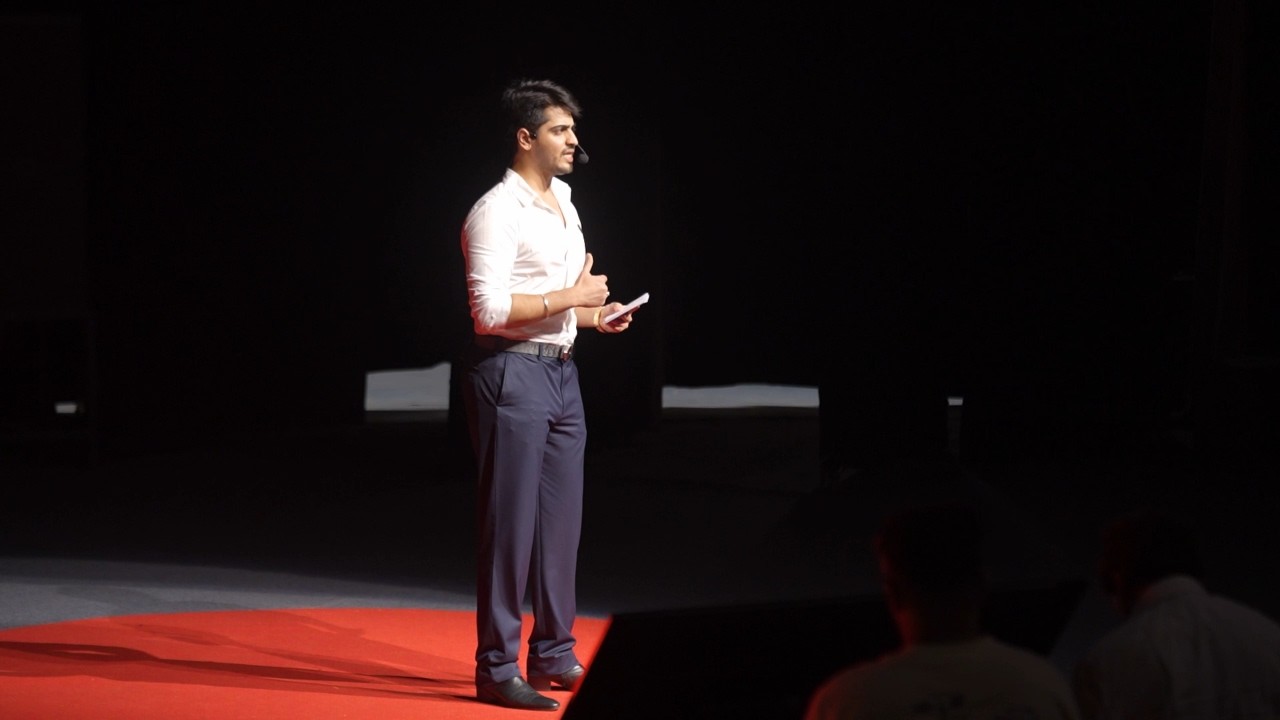
What Losing Money Taught Me About Winning | Divam Juneja | TEDxSukhna Lake
Keywords
Summary
148 words
Critical Evaluation
Value of the Information & Strength of the Argument
The talk provides a personal narrative that illustrates the value of learning from failures in investing. The argumentation is based on anecdotal evidence and reflective insights rather than rigorous data. The speaker’s emphasis on discipline, capital protection, and long-term consistency aligns with established investment principles, though the lack of concrete examples or references weakens the depth. The discussion of India’s financialisation and specific market opportunities offers an interesting but speculative perspective, grounded in personal observation rather than substantiated research.
Scientific Rigor, Source Quality, Title Accuracy
The talk lacks scientific rigor; it is a personal testimony with no citations or verifiable sources. The only source mentioned is the TEDx program itself. The title accurately mirrors the content, but the video does not meet academic standards. There are no comments provided to analyze public reception; therefore no conclusion can be drawn about audience feedback.
151 words
Title / Content Match
The title accurately reflects the content: the speaker shares how losing money taught him discipline and a protective approach to investing.
Quality & Reliability
5/10
The talk is a personal anecdote with no verifiable data or scientific sources. It offers subjective investment lessons and reflections on Indian markets, with no empirical evidence or rigorous analysis.
Key Moments
Markers derived by PSI from the transcript: the creator did not define chapters.
- Introduction : background in an entrepreneurial family and early exposure to business decisions.
- First investment at 16, losing borrowed money and realizing YouTube alone doesn't make you an investor.
- Learning from failures, developing curiosity, and shifting from 'how much can I make' to 'how much can I afford to lose'.
- Discussion of family office concept and the importance of asking the right questions and saying no to 99% of opportunities.
- Conclusion : staying consistent, not predicting the future, and a quote from the Bhagavad Gita about acting without attachment to results.
Cited Sources
- TEDx Program — The talk was delivered at a TEDx event; the description links to the TEDx page for context.
Contribution & Novelties
The talk offers a youthful perspective on investing, emphasizing the value of early failure and the shift from speculation to disciplined investment. It provides an insider view of family offices and emerging market opportunities in India, which may be less familiar to western audiences. The main novelty lies in the personal story linking emotional maturity with financial prudence.
Pour aller plus loin :
- Behavioral economics — Explores psychological influences on financial decisions, relevant to the speaker’s lessons on discipline.
- Position sizing — A key concept in risk management, directly related to the speaker’s emphasis on protecting capital.
- Family office — Institutional framework for managing wealth of a single family, central to the speaker’s current role.
115 words
Radar Profile
The radar profile shows moderate scores across all dimensions, with slightly higher on quantity of information and lower on technical depth and reliability. This reflects a subjective narrative rather than a data-driven analysis, balancing engaging storytelling with limited scientific support.