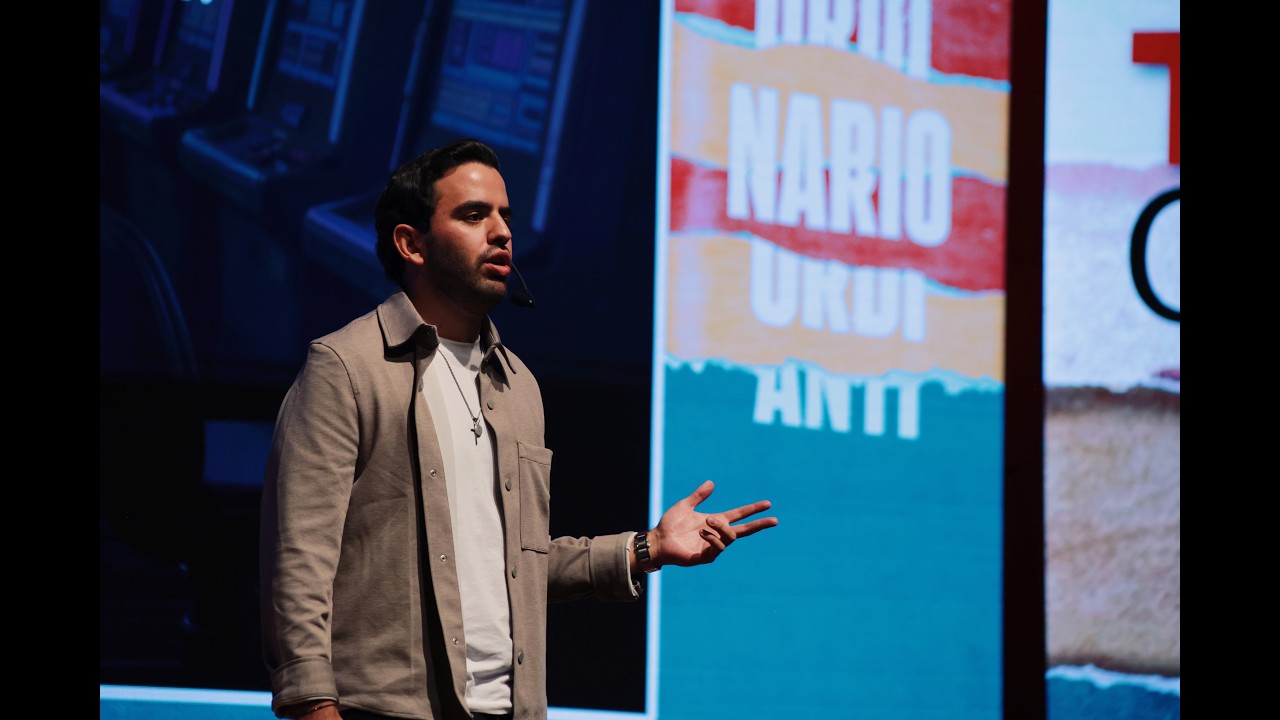
¿Cuánto estás dispuesto a perder? | Diego Zepeda | TEDxCalzadaDeLosHéroes
How much are you willing to lose? | Diego Zepeda | TEDxCalzadaDeLosHéroes
Keywords
Summary
138 words
Critical Evaluation
Value of the Information & Strength of the Argument
The principal value of this talk lies in its raw honesty and ability to put a human face on a hidden addiction. It effectively conveys the emotional turmoil, the impact on family relationships, and the cycle of relapse and consequence. However, the argumentation is primarily anecdotal and emotional rather than analytical or data-driven. While he cites a few statistics, they are not contextualized or referenced, weakening the evidential foundation. The strength of the talk is its persuasive personal testimony, which may resonate deeply with audiences, but it does not offer a systematic analysis of gambling addiction or its mechanisms.
Scientific Rigor, Source Quality, Title Accuracy
From a scientific standpoint, the talk lacks rigorous sourcing. The only external reference is the generic TEDx link in the description; the speaker does not cite studies or experts beyond mentioning a 21-question test used in recovery groups. The statistics presented (e.g., 24.5% of Mexicans have gambled) are given without attribution, making verification impossible. The title is highly appropriate: it encapsulates the core question of the talk and aligns with the emotional and ethical weight of the topic. Regarding public reception, no comment data was provided, so no analysis of audience trends can be made.
209 words
Title / Content Match
The title poses an evocative question that directly matches the central theme of the talk: the personal and familial costs of gambling addiction.
Quality & Reliability
6/10
The talk offers a deeply personal and honest account of gambling addiction, but it is not a scientifically rigorous study. It includes some statistics (e.g., 24.5% of Mexicans have gambled) without cited sources, and relies on anecdotal experience. The message is valuable for raising awareness, but the evidential basis is limited to the speaker's subjective narrative.
Key Moments
Markers derived by PSI from the transcript: the creator did not define chapters.
- Opening question: 'What if the most dangerous addiction doesn't start with a drug but with a click?' Introduction to the theme of immediate gratification.
- Statistics on gambling in Mexico: 24.5% of adults, 35.3% of minors, and over 900,000 minors gambled last year.
- Start of personal story: initial exposure to casinos at age 15-16, and the development of gambling habits hidden behind a mask of success.
- First request for help: revealing a debt to his father, who pays it, leading to a cycle of repeated debts and manipulation.
- Hospitalization after appendix surgery, where his father discovers the extent of the gambling debt, leading to a formal diagnosis of ludopathy and introduction to a support group.
- Relapse and second clinic stay; a family exercise forces confrontation, and the speaker later relapses again at the airport, leading to a year of further gambling.
- Family intervention: he is asked to leave home, feels hopeless, and attempts suicide with pills; afterwards, he enters a recovery retreat and finds faith.
- Conclusion: message of hope, emphasis on talking as healing, and the idea that 'your past does not define you'. Closing question: 'What masks am I wearing?'
Cited Sources
- TEDx Program — Link provided in the video description, referencing the TEDx event format and organization.
Contribution & Novelties
The talk offers an intimate, first-hand perspective on the reality of gambling addiction, particularly among younger generations in Mexico, and underscores the role of immediate gratification, social normalization, and hidden struggles. It provides a moving account of recovery via support networks and spiritual surrender, but does not introduce new scientific findings.
Pour aller plus loin :
- Gambling disorder — Provides clinical definitions, diagnostic criteria, and prevalence data, complementing the speaker’s personal account with medical background.
- Gamblers Anonymous — Describes the 12-step recovery program referenced by the speaker, offering a structured approach to overcoming gambling addiction.
- Behavioral addiction — Explores the concept of non-substance addictions, contextualizing the speaker’s assertion that gambling can be as dangerous as drug addiction.
117 words
Radar Profile
The radar profile shows moderate quantitative information (6) and quality (7), with a low technical level (3) and moderate global reliability (5), reflecting a personal testimony that is emotionally rich but not scientifically rigorous. This aligns with a talk aimed at raising awareness rather than providing technical depth.