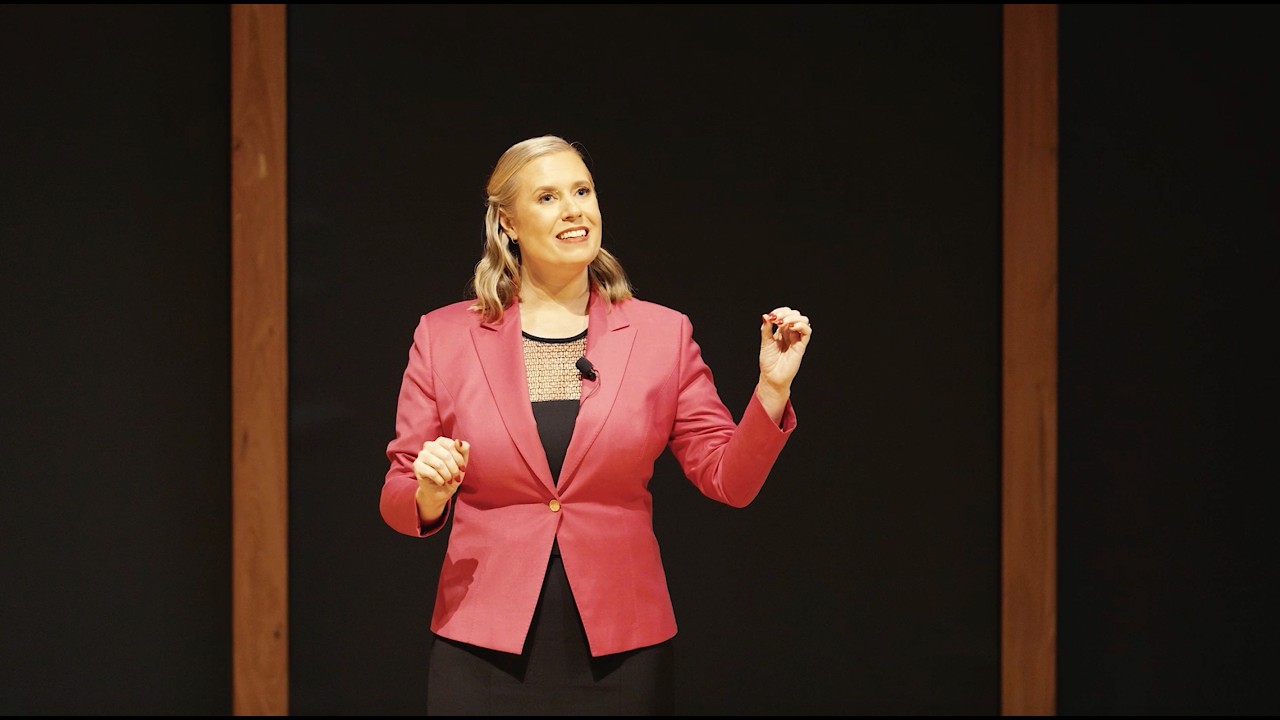
Stop Speaking to be Heard | Sally Prosser | TEDxUQ
Keywords
Summary
187 words
Critical Evaluation
Value of the Information & Strength of the Argument
The talk offers a compelling reframing of speaking goals—from mere audibility to lasting memorability—backed by relatable anecdotes and a practical, breath-centric methodology drawn from the speaker’s two-decade coaching career. The argumentation is persuasive on an emotional and experiential level, but relies heavily on personal stories and oversimplified neuroscience. While the concepts of the reticular activating system and limbic system are accurately named, their application to voice memorability is presented without nuance or citation to specific studies. The interactive hum exercise effectively demonstrates the physiological underpinnings, making the advice actionable. Overall, the value lies in its motivating content and practical tips, though the scientific rigor is moderate.
Scientific Rigor, Source Quality, Title Accuracy
The talk has no formal citations; the only provided source is the generic TEDx page. The speaker mentions several scientific terms (reticular activating system, limbic system, mirror neurons) but does not give references, which weakens the scientific credibility. However, these concepts are real and well-known in neuroscience, so the core claims are plausible. The title is perfectly aligned with the content, as it underscores the central message to ‘stop speaking to be heard’ and instead focus on being remembered. The delivery is polished and engaging, typical of TEDx events. The lack of references is a notable shortcoming for a scientific evaluation, but acceptable in a motivational talk.
228 words
Title / Content Match
The title directly mirrors the central message: the talk urges audiences to aim for being remembered, not merely heard.
Quality & Reliability
6/10
The talk integrates references to established neuroscience concepts (reticular activating system, limbic system, mirror neurons) and draws on two decades of coaching experience, but evidence is mostly anecdotal and no formal citations are provided.
Key Moments
Markers derived by PSI from the transcript: the creator did not define chapters.
- Introduction with vintage phone, telephobia, and the phenomenon of forgettable voices.
- Story of meeting Oprah Winfrey; introduces the concept of a 'voice print'.
- Breath as the driving force behind a memorable voice; explanation of its role in projection, endurance, and emotion.
- Interactive guided breathing and humming exercise with audience participation.
- Presentation of 'voice print confession phone' recordings; audience shares negative comments they've heard about their voices.
Cited Sources
- TEDx Talks - Official TEDx page — The talk was delivered at TEDxUQ and the description directs to this official TEDx page for more information.
Contribution & Novelties
The talk offers a fresh metaphor (‘voice print’) and reframes public speaking from achieving immediate audibility to creating lasting memory. The practical breathing exercise and the use of a ‘confession phone’ as a participatory research tool are creative extensions of typical voice coaching approaches. While not scientifically novel, it presents established concepts in an engaging, applicable format.
Pour aller plus loin :
- Reticular activating system — Integral to the talk’s claim about how monotone voices are filtered; good overview of the neural filtering mechanism.
- Limbic system — The emotional brain center referenced to explain why emotive voices are remembered.
- Mirror neuron — Mentioned as a neural basis for connection and empathy in vocal communication.
- Telephobia — The fear of phone calls, directly relevant to the opening example and a growing phenomenon in digital age.
134 words
Radar Profile
The radar chart shows a balanced profile with moderate scores across quantity, quality, technical level, and reliability. The talk is not highly rigorous (low reliability) but provides sufficient accessible information (moderate quantity/quality). The technical level is intentionally kept low to suit a general audience.