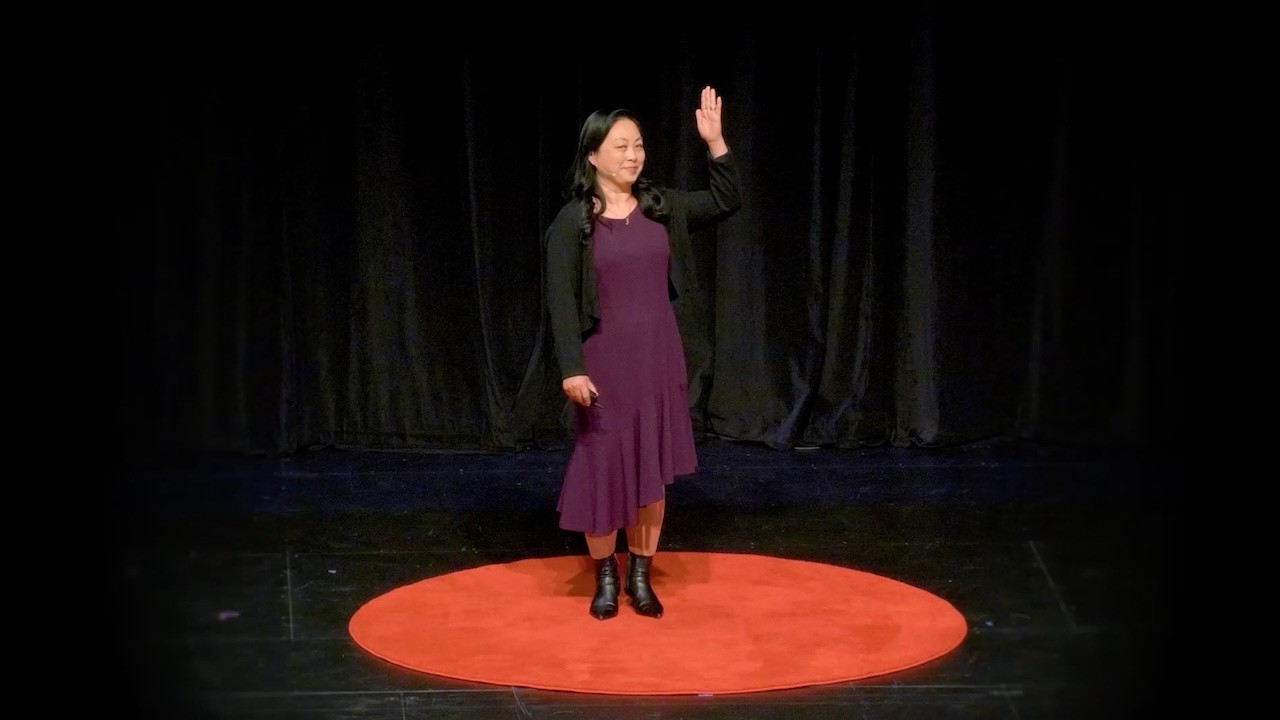
Say my name, say it right | Xiaoxiao Du | TEDxWinnipeg
Keywords
Summary
188 words
Critical Evaluation
Value of the Information & Strength of the Argument
The talk offers valuable insights into the often-overlooked significance of name pronunciation as a matter of respect and identity. The speaker’s personal narrative provides genuine emotional weight, making the argument compelling and relatable. She effectively connects her individual experience to broader social issues, including colonialism and gender identity, thereby strengthening the case for name respect as a fundamental aspect of dignity. The argumentation is coherent and builds logically from personal anecdote to universal principles, appealing to both emotion and reason. However, the reliance on a single reference (an article by Maya Kepler) and personal observations limits the evidentiary depth, but the overall message is persuasive and aligns with existing research on name-based discrimination and identity affirmation.
Scientific Rigor, Source Quality, Title Accuracy
The scientific rigor is moderate: the speaker has appropriate academic credentials in education and literacy, which lends credibility to her claims about language and identity. She references an article by Maya Kepler (2016) without providing a citation or link, but the mention is contextual. The talk does not rely on empirical data but draws on established scholarship in identity studies and personal experience. The title ‘Say my name, say it right’ precisely captures the central theme, and the content consistently stays on topic, fulfilling the title’s promise. The structure is clear, with explicit points announced and elaborated, enhancing the talk’s educational value. No discrepancies between title and content are apparent.
241 words
Title / Content Match
The title accurately reflects the talk's core message about the importance of pronouncing names correctly as a gesture of respect.
Quality & Reliability
7/10
The talk is based on personal experience and scholarly background in language and literacy education, but relies heavily on anecdote and a single external reference. The message is well-argued and aligns with broader research on name bias and identity, though it lacks systematic evidence.
Key Moments
Markers derived by PSI from the transcript: the creator did not define chapters.
- Interactive opening with audience hand-raising questions about name pronunciation.
- Personal anecdote about a professor who ignored her name tag and did not attempt her name.
- Explanation of the meaning and origin of her name, rooted in family and cultural heritage.
- Introduction of three key points: connection, affirmation, and transformation.
- Reference to indigenous naming ceremonies and the historical suppression of traditional names in residential schools.
- Discussion of chosen names and analogy to gender identity, emphasizing liberation and self-expression.
- Final call to action: 'Say my name. Say it right.' with concluding words in multiple languages.
Cited Sources
- TEDx Program — Platform for the talk
- Claiming a Name — Article mentioned in the talk (author Maya Kepler, 2016)
Contribution & Novelties
The talk adds a personal and heartfelt perspective on the everyday act of saying someone’s name, framing it as a micro-act of inclusion that counters systemic erasure. Its novelty lies in weaving together threads of cultural heritage, colonial history, and gender identity into a cohesive argument for name respect. The speaker’s own name story grounds the discussion in lived experience, offering an authentic and moving illustration. This talk contributes to the growing discourse on unconscious bias and dignity in interpersonal communication.
Pour aller plus loin :
- Name — A general overview of names, their functions, and cultural significance.
- Mispronunciation — Explores the social and psychological impacts of mispronouncing names.
- Naming ceremony — Describes traditional naming rituals across cultures, including indigenous practices.
- Deadnaming — Discusses the deliberate or accidental use of a former name for transgender or non-binary individuals, relating to the talk’s point about chosen names.
146 words
Radar Profile
The scores show a talk with moderate information density and reliability, but high quality in terms of message clarity and emotional resonance. The low technical level makes it accessible to broad audiences, while the moderate reliability reflects reliance on personal narrative and limited external citations. Overall, the talk is persuasive and informative within its scope.