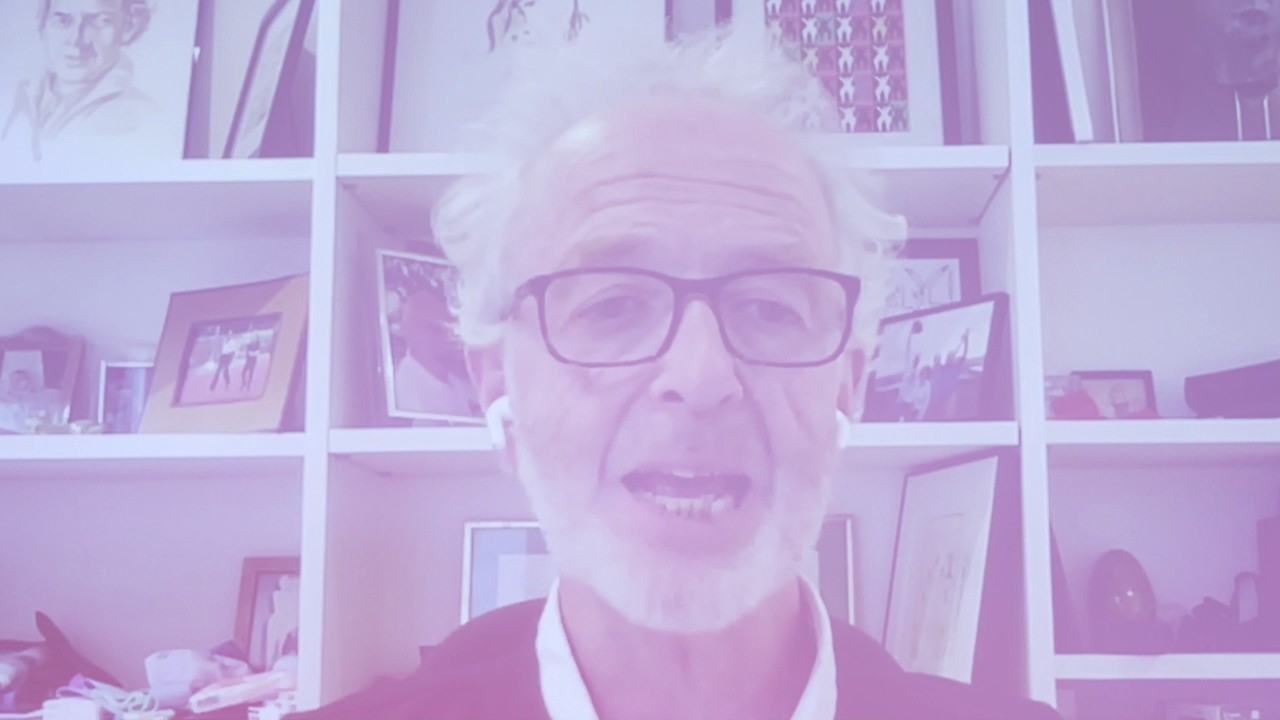
How Europe and middle powers should create a resillience club | Hugo Dixon | TEDxPlaka
Keywords
Summary
154 words
Critical Evaluation
Value of the Information & Strength of the Argument
The talk offers a well-structured and persuasive argument for a novel international coalition. Dixon’s key contribution is framing a climate club as a broader ‘resilience club’ that also addresses critical mineral supply chains and geopolitical intimidation, making it relevant to current political priorities. The argument is logically developed: he identifies obstacles (China, US), proposes a core (EU) and partners (middle powers), details a deal (clean tech for minerals), and outlines financing via existing institutions like the EIB and EBRD. He supports his claims with concrete figures (e.g., 30% Chinese emissions, 70% average share in critical mineral refining, Japan’s success in reducing rare earth dependence). The appeal to self-interest (‘our resilience, our security’) strengthens the motivational case. However, the argumentation is primarily based on opinion and selected examples; it lacks rigorous economic modeling or systematic comparison of policy outcomes. The reliance on a single narrative (that China’s leverage can be diminished) may oversimplify geopolitical complexities.
Scientific Rigor, Source Quality, Title Accuracy
The speaker cites the International Energy Authority (IEA) for critical mineral shares and mentions the Finance for Development Lab for EIB capacity analysis, but no specific reports are named or linked. The only link in the description is the generic TEDx page. The talk is an opinion piece from a Reuters commentator, not a peer-reviewed study. The title accurately reflects the content and tone. There is no evidence of misleading claims, but the lack of citable sources means scientific rigor is limited. The ad hoc nature of the argument is acknowledged by the speaker himself (‘I don’t pretend it would be a magic bullet’), which is transparent but still leaves gaps in empirical support. Overall, the title matches the content well, and the argumentation is internally consistent, though external verification is limited.
301 words
Title / Content Match
The title accurately reflects the content: the speaker proposes a 'resilience club' among Europe and middle powers to address climate change, critical mineral security, and geopolitical intimidation.
Quality & Reliability
6/10
The talk presents a coherent policy proposal with some cited figures (e.g., emissions shares, critical mineral processing), but it remains an opinion piece without peer-reviewed sources or systematic evidence.
Key Moments
Markers derived by PSI from the transcript: the creator did not define chapters.
- Introduction: Greece's experience with wildfires, migration, and need for allies
- Explanation of climate clubs and the EU's Carbon Border Adjustment Mechanism as a 'stick'
- Proposal of a 'resilience club' to address climate, critical minerals, and intimidation
- Details of the deal: clean tech industrialization in emerging markets in exchange for secure mineral supplies
- Financing through multilateral multipliers, highlighting the European Investment Bank and EBRD
Cited Sources
- TEDx Talks — General page for TEDx events, referenced in the video description.
- International Energy Authority (IEA) — Cited for data on critical mineral processing shares (e.g., 70% average market share).
- Finance for Development Lab — Cited for analysis of the European Investment Bank's spare financing capacity.
Contribution & Novelties
The original contribution is the conceptual expansion of a climate club into a ‘resilience club’ that integrates climate action, critical mineral security, and geopolitical resilience. This framing is timely and may appeal to policymakers concerned about supply chain vulnerabilities and great-power rivalry. The proposal to use existing multilateral banks as ‘multipliers’ is a practical financing innovation. While not entirely novel (similar ideas exist), the synthesis is distinctive.
Pour aller plus loin :
- Climate club — Relevant to the core concept of club-based cooperation on climate policy.
- Carbon border adjustment mechanism — The EU’s policy that serves as the ‘stick’ in the club.
- Critical minerals — Background on the strategic importance of these resources and China’s dominance.
116 words
Radar Profile
The profile shows moderately high information quantity (7) and quality (6), with lower technical level (4) reflecting the non-technical nature of the talk. Global reliability (6) is moderate, consistent with an expert opinion lacking formal verification.