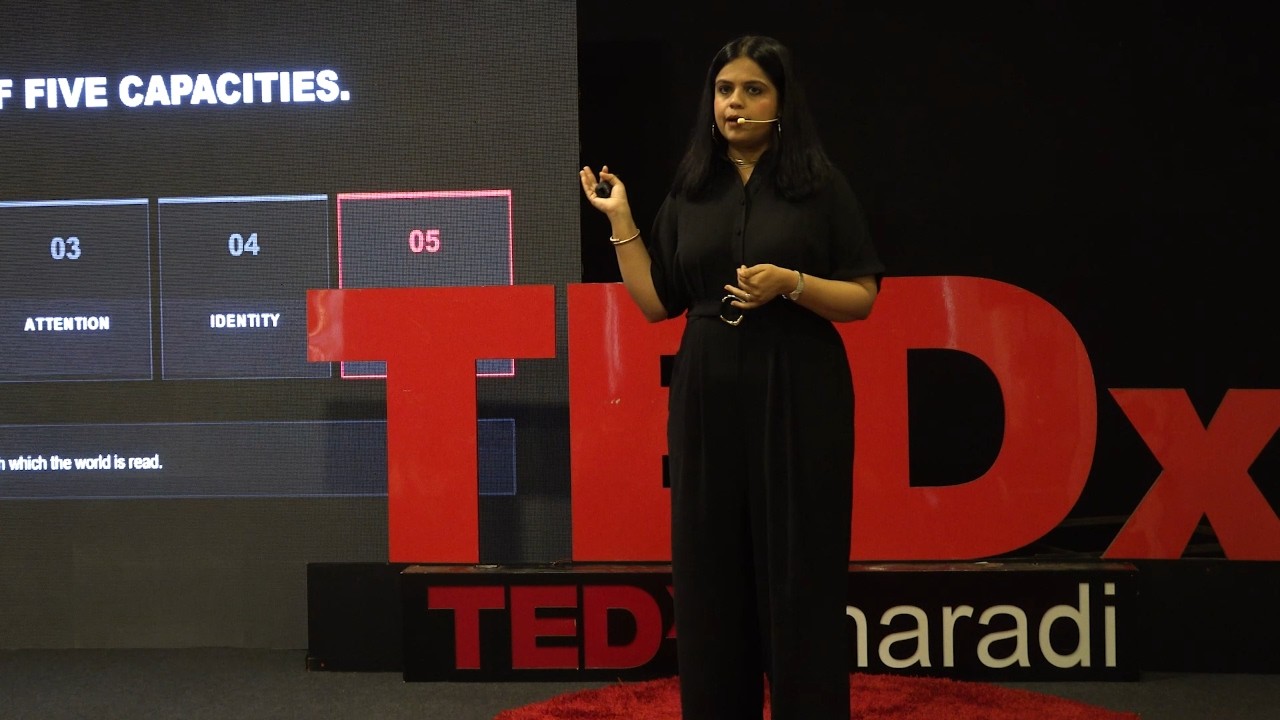
From which O? | Prerna Butani | TEDxKharadi
Keywords
Summary
197 words
Critical Evaluation
Value of the Information & Strength of the Argument
The talk offers a fresh perspective on behavioral design by emphasizing the often-neglected ‘Organism’ in the SOR model. The speaker’s argument is logically structured: she presents a known framework, critiques its application, and introduces a more nuanced multi-layered model for understanding human responses. Her proposed five capacities for the O are intuitively appealing but are not backed by empirical evidence in the talk; the mention of her dissertation is brief and lacks specifics. The argument that builders’ inner states shape system design is compelling and adds a meta-level to the discussion. However, the reasoning occasionally relies on rhetoric and personal experience rather than rigorous data, making the scientific basis somewhat thin. The illustrative example of the child and the digital assistant is powerful and emotionally resonant, effectively clarifying the ethical stakes.
Scientific Rigor, Source Quality, Title Accuracy
The talk references established concepts such as the SOR framework, the OCEAN personality model, neuromarketing, and nudge theory, but it does not provide specific citations or publications. The speaker mentions her MSc dissertation and a professor at UCL, yet no study details are given. The Buddhist reference to Abhidharma is used to support the notion of a pause before action, but without academic sourcing. The only external link provided in the description is the generic TEDx page. The title is catchy and thematically linked to the core question but does not describe the content in a straightforward manner; this is acceptable for a TEDx talk. Overall, while the talk is thought-provoking, it lacks the rigorous sourcing expected in a scientific review.
267 words
Title / Content Match
The title 'From which O?' cleverly encapsulates the core question about the organism (O) in the SOR framework, though it is cryptic and only becomes clear during the talk.
Quality & Reliability
6/10
The talk builds on established frameworks (SOR, OCEAN, nudge theory) and the speaker's dissertation, but many claims rely on anecdotal or personal experience rather than rigorous peer-reviewed evidence. The scientific basis is present but underdeveloped.
Key Moments
Markers derived by PSI from the transcript: the creator did not define chapters.
- Introduction: question of unintended purchases and the SOR framework.
- Explanation of the Stimulus-Organism-Response framework and the neglect of the organism.
- Discussion of personality (OCEAN) and its impact on response to stimuli.
- Intro of the five capacities of the organism: personality, state, attention, identity, values/consciousness.
- Critique of frictionless design and the need for reflection in consumer journeys.
- Example of a child not wanting to go to school vs. a digital assistant optimizing for output.
- Conclusion: the question 'From which O?' – examined vs unexamined builder.
Cited Sources
- TEDx Program — The talk was given at a TEDx event; this is the official TEDx page.
Contribution & Novelties
The talk contributes a framework for understanding the ‘Organism’ in consumer psychology by proposing five distinct capacities (personality, state, attention, identity, values/consciousness) that mediate between stimulus and response. It extends nudge theory into ‘consciousness architecture’ – designing experiences that foster reflection rather than mere automated reactions. The meta-argument that the builder’s inner state shapes the system’s design is original in the context of marketing technology.
Pour aller plus loin :
- Big Five personality traits — The OCEAN model is central to the speaker’s argument about personality.
- Nudge theory — The speaker contrasts her proposal with the established nudge approach.
- Abhidharma — The Buddhist concept of pause before action is a key inspiration.
- Stimulus–organism–response model — The theoretical base of the talk.
121 words
Radar Profile
The radar profile shows moderate scores across all dimensions, with the highest being quantity of information (7) and the lowest being technical level (5). This indicates a talk that delivers a fair amount of content but at a conceptual level accessible to a non-specialist audience, with a moderate emphasis on scientific rigor.